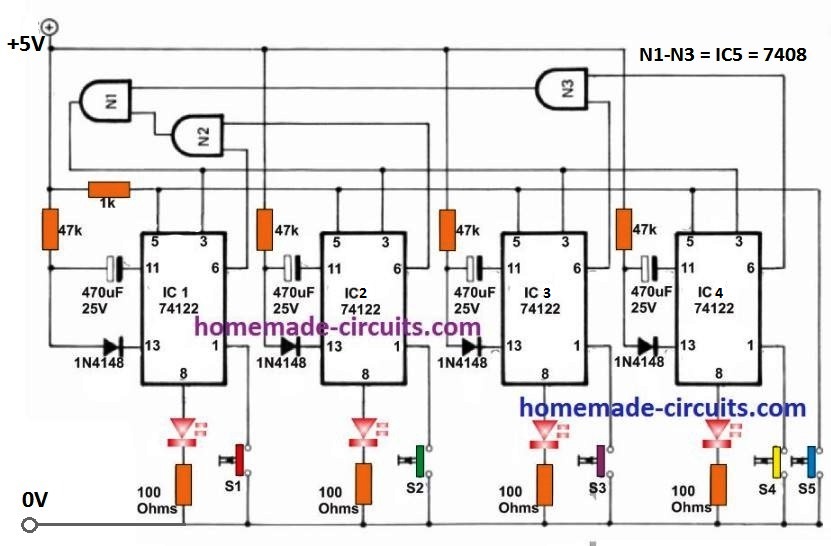
The 5 simple fastest finger first indicator circuits presented here can be used for indicating which candidate was the first to press the answer button out of the 4 participating candidates in a quiz contest. We all have probably seen the famous game show “who wants to be a millionaire” and many similar quiz shows, […]
Newly Updated Circuit Projects:
Touch Operated Code Lock Switch Circuit
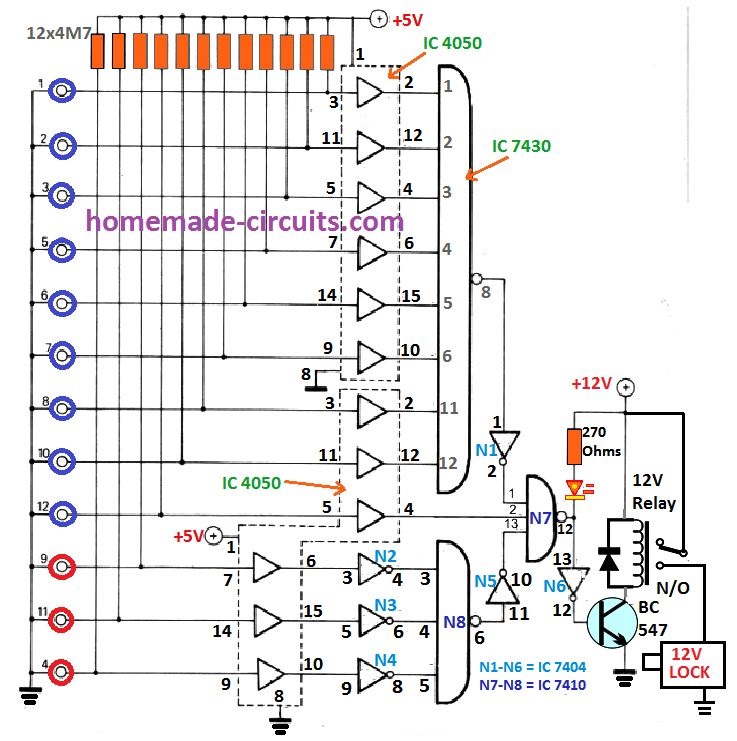
This touch operated electronic door lock can be used for locking any entrance through a touch keypad. The lock’s touch feature is foolproof and impossible to crack since the touch function is required to be on 3 programmed pads together or simultaneously, otherwise the lock doesn’t respond. It is a lot convenient to open a […]
30 Watt Amplifier Circuit using Transistors
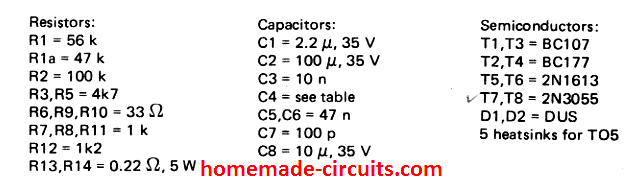
The three watt amplifier circuit discussed in the earlier post could be effectively upgraded into a 30 to 40 watt transistorized amplifier circuit, simply by adding a 2N3055 power output stage. The entire procedure for this is explained in the following article. The circuit was requested by Mr. Clifford. The requested specifications can be viewed […]
Circuit Tester Probe – PCB Fault-Finder
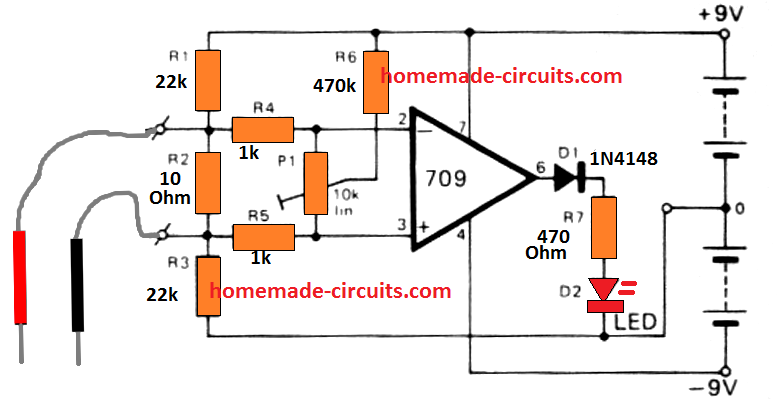
This simple circuit tester probe can be used for detecting short circuits, abnormal resistance conditions, continuity breaks etc inside an assembled circuit board or a PCB. The indication will be through an audible buzzer sound or an LED illumination. The described designs are all extremely safe to use even with PCBs that may have highly […]
5 Watt Stereo Amplifier Circuit with Bass Treble Controls
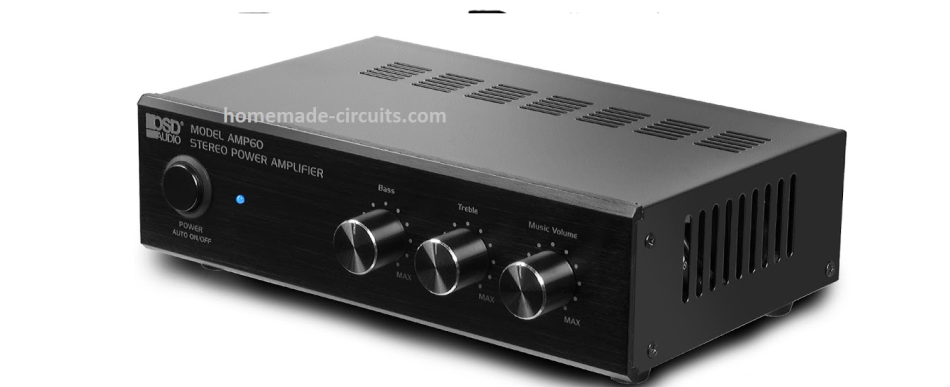
A complete, self-contained, small and compact Hi-Fi stereo amplifier circuit with bass, treble, volume control is presented in the following article. This small compact stereo amplifier can be used for amplifying music from mobile phones, computer USB, Ipod or any source capable of producing as low as 50 millivolt signal. Due to the high bass […]
Touch Dimmable LED Light Bar Circuit
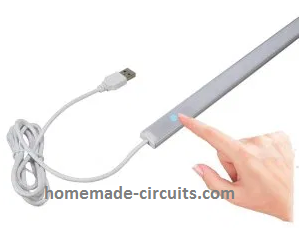
This LED light bar with dimmable feature will allow the user to adjust the brightness of the lamp in 4 steps, with100%, 50%, 10% and 0% illumination control at each subsequent steps. The idea was requested by one of the avid readers of this blog. Here’s the required working concept. The Design The basic design […]