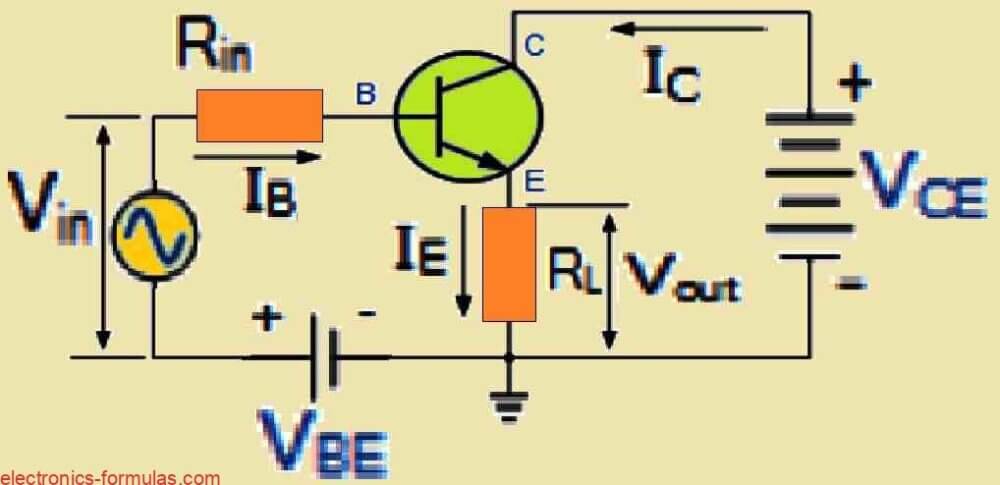
If we look at the diodes, their internal construction look very simple. They are made by joining two pieces of semiconductor material, and this is called a pn-junction. But when we talk about bipolar junction transistor or bjt, then things get little more complicated. It needs adding one more layer of semiconductor material, and that […]
Transistors
Simple Boost Converter Circuit Diagrams using Transistors
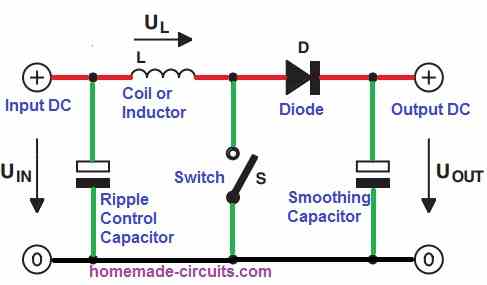
In this post I have explained a few very simple boost converter circuits using only BJTs, or transistors. Let’s learn more. What is a Boost Converter A DC boost converter circuit is designed for stepping-up or boosting a small input voltage levels to a desired higher output voltage level, hence the name “boost” converter. Since […]
LM195/LM395 Power Transistors Explained [Enhanced Power Transistors with Full Internal Protections]
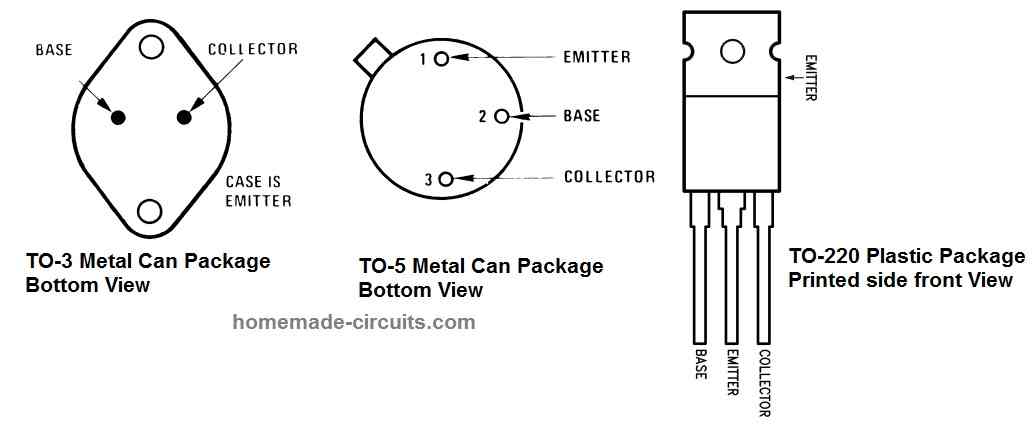
The LM195 and LM395 are both high efficiency power transistors that were initially manufactured by National Semiconductor Corporation, and later acquired by “Texas Instruments”. These special power transistors are intended to be used in high power switching applications, where low power dissipation and high current gain are critical parameters. These special power transistors are virtually […]
Simple Buck Converter Circuits using Transistors

In this post I have explained some basic facts about DC to DC buck converters and also learn how to build a simple buck converter circuit. A buck converter is also popularly known as a step-down converter, since its basic function is to step down a higher input voltage level to a lower output voltage […]
How to Make Logic Gates using Transistors
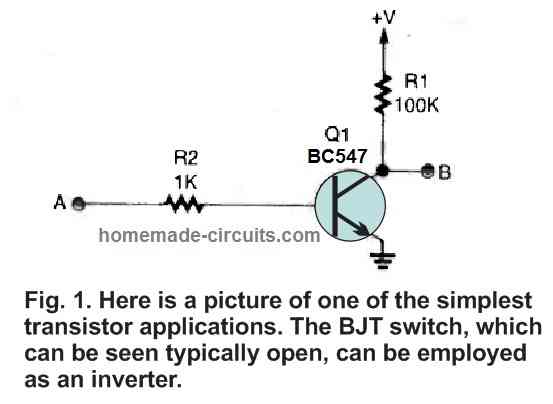
In this post I have explained how to build NOT, AND, NAND, OR, and NOR logic gates using discrete transistors. The main advantage of using transistor logic gates is that they can work even with voltages as low as 1.5 V. In some electronic applications the available voltage may be inadequate to power TTL or […]
Simple 10 Watt Amplifier Circuits using Transistors
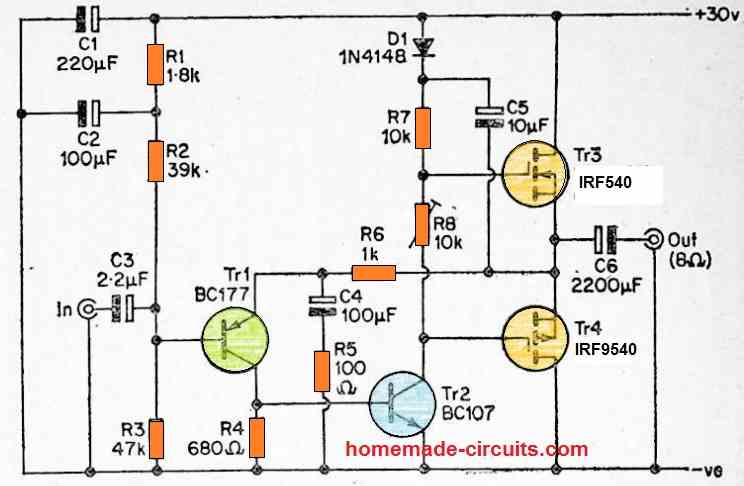
In this post I will comprehensively explain 3 easy to build 10 watt power amplifier circuits, which can be built using discrete parts, such as resistors, transistors, and MOSFETs. The MOSFETs used in these designs are the ordinary IRF540 and IRF9540, that are easily avail;able in the market and are quite inexpensive. True Complementary 10 […]