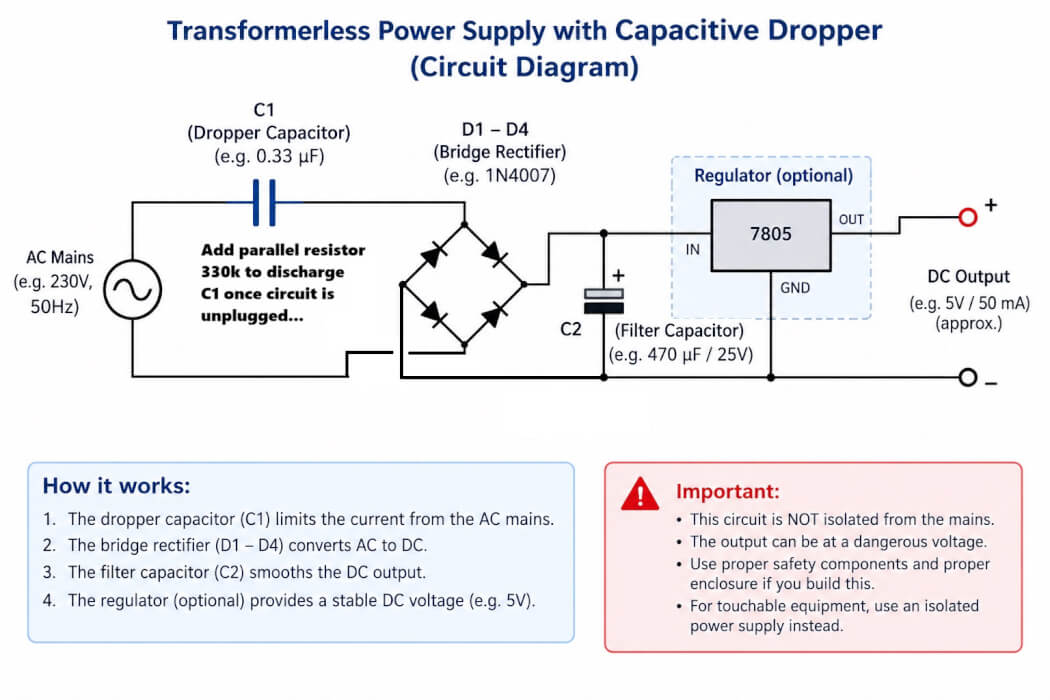
A capacitive dropper is one simple method used in some transformerless power supply circuits. In this method a capacitor is connected in series with the AC supply to limit the current going into the circuit. This calculator helps us to find the theoretical capacitor value according to the input AC voltage and required current. Capacitive […]
Electronics Theory
Capacitive Voltage Divider Calculator
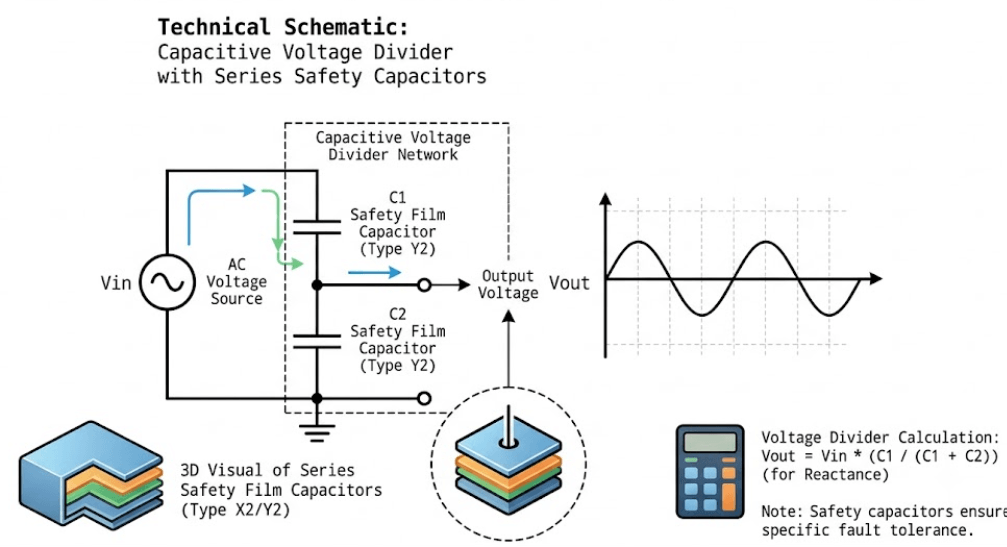
This capacitive voltage divider calculator helps us to find the C1 and C2 capacitor values for dividing an AC input voltage into a lower AC output voltage. We just have to enter the input AC voltage and the required output AC voltage. We also have to enter the AC frequency and the assumed AC current […]
Op-Amp Hysteresis Resistor Calculator
Many times you make simple op-amp comparator circuit, but output starts jumping up and down like anything near the triggering point just because of small electrical noise. Relay and microcontroller will get totally confused with this nonsense. Only proper solution is adding positive feedback to make it a Schmitt trigger. But doing paper maths for […]
How to Connect Two TRIACs in Series for High Voltage Loads
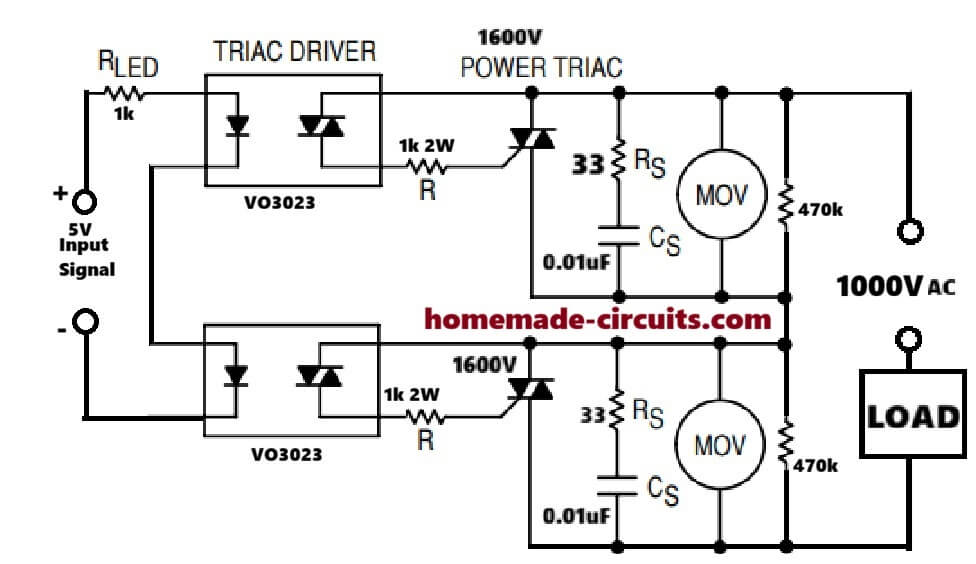
Normally, for standard 220V AC household projects, a single 600V or 800V TRIAC is more than enough. But what if you are working with a very high voltage line, like 1000V AC? A single common TRIAC will immediately burn and short circuit because it cannot handle that much voltage stress. To solve this, we can […]
How to Connect Triacs in Parallel for High Current Loads: Circuit Diagram
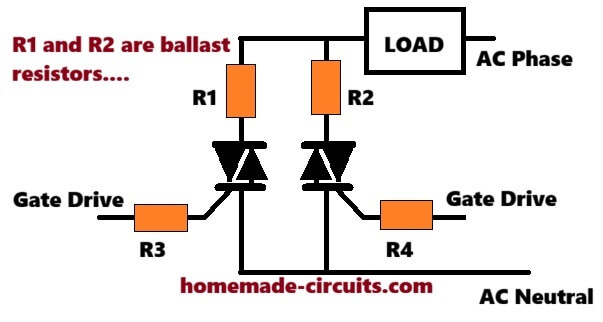
Sometimes we make electronic circuit designs, and then we see that one single TRIAC cannot take all the big current of a very heavy load. This heavy load can be a huge heater, a big motor, or too many lights. In this condition, we get a simple idea. We think that we can connect two […]
How To Use And Program ATmega Microcontrollers From Scratch Without Arduino
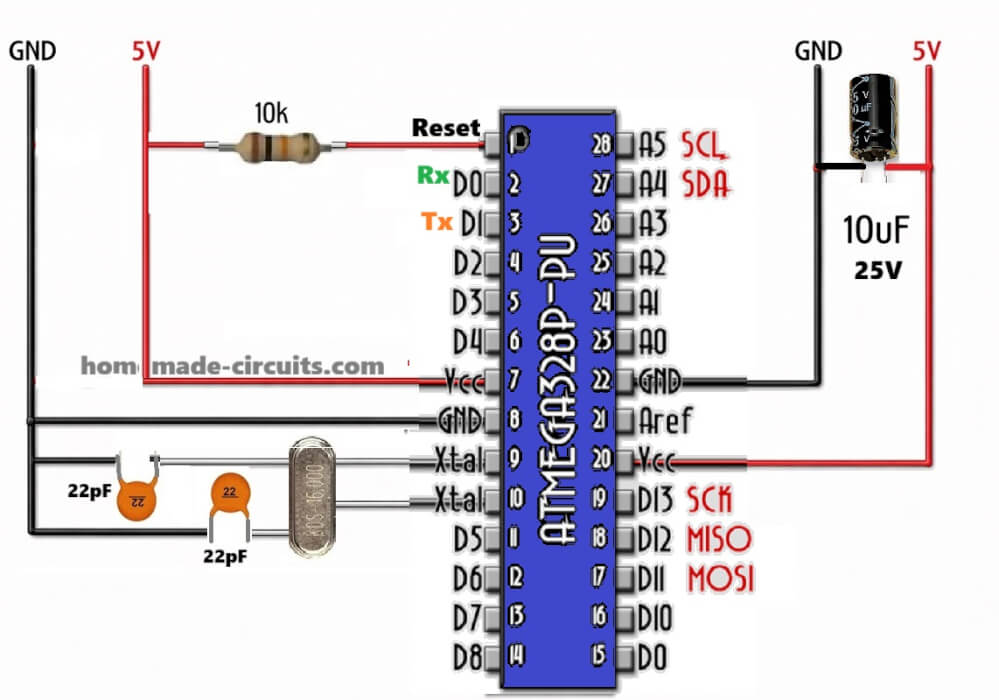
ATmega microcontrollers, they are coming from the AVR family which Atmel developed long back, and later this Atmel company was taken by Microchip. So now officially Microchip owns it but still people say Atmel AVR only. These MCUs became very popular slowly because they are easy to understand, quite affordable, stable in long run and […]