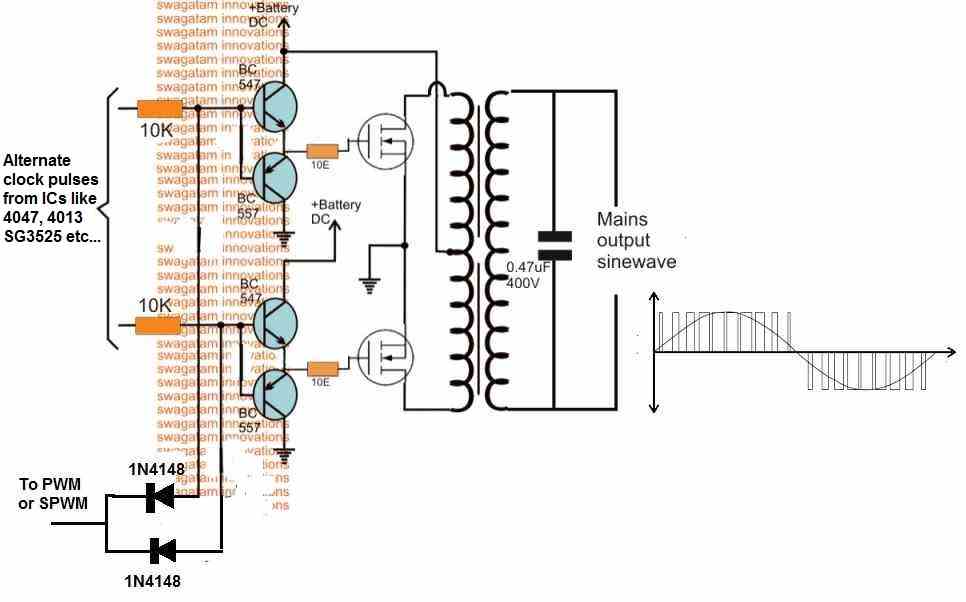
In this article I have explained comprehensively regarding how to design a sine wave inverter without any form of coding or complex circuit designs. The included designs are simple yet extremely precise with their sine waveform structure. You might have often felt discouraged, thinking that making a sine wave inverter from the scratch can be […] READ MORE:
Inverter Circuits
Different Types of UPS systems – Explained

In this post I am going to explain different types of uninterruptible power supply (UPS) that are available in the market and how they are classified according to the consumer’s requirement. We will also explore the different types of UPS’s block diagram to understand their technical difference between them. UPS systems are a type of […] READ MORE:
Inverter Circuit with Feedback Control
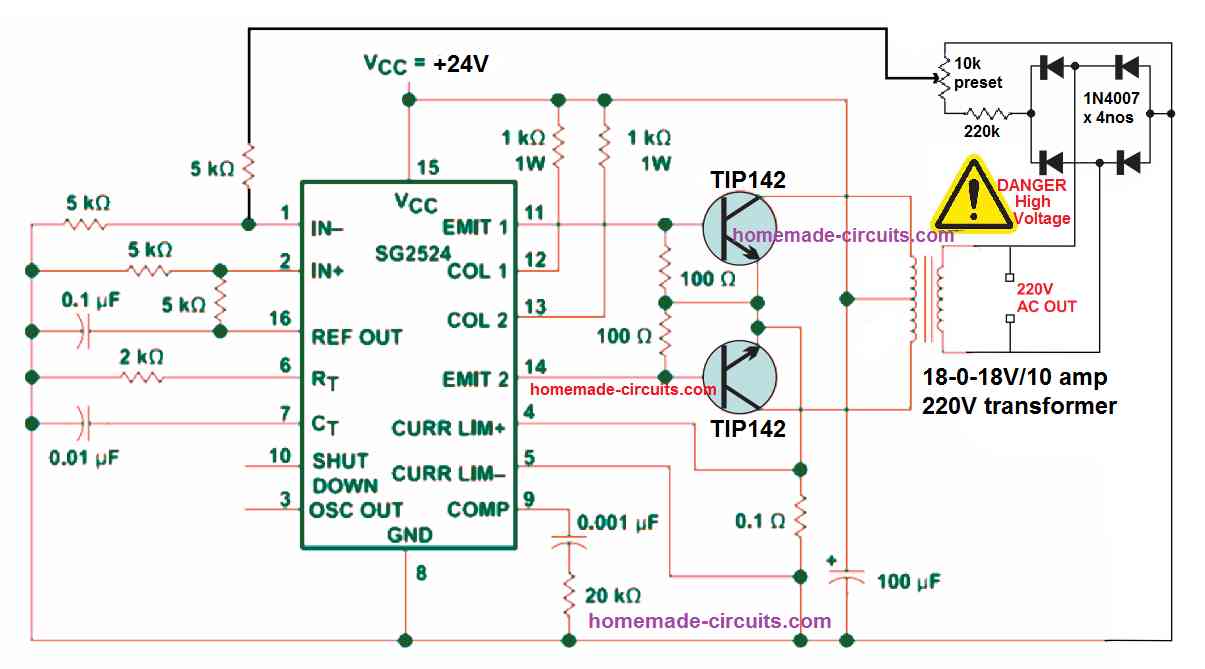
In this article I have explained a couple of inverter circuits featuring an automatic feedback control for ensuring that the output does not exceed the normal specified AC output level, and also does not exceed the specified overload conditions. What is Feedback Control in Inverters A feedback control in inverter is generally incorporated to control […] READ MORE:
250 Watt Pure Sine Wave Inverter Circuit
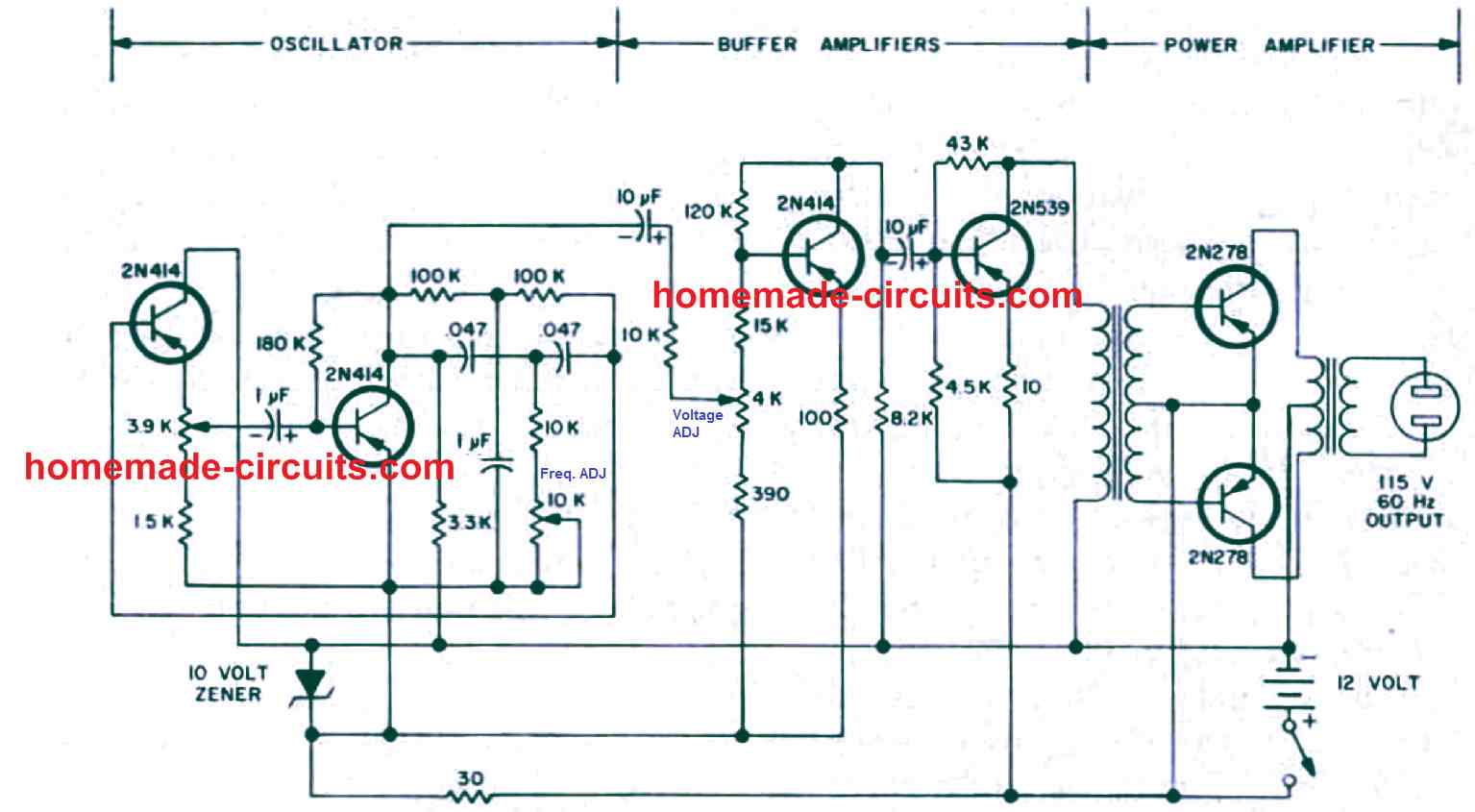
The cost and quantity of parts necessary to develop the proposed 250 watt sine wave power inverter circuit is actually much less compared to a noisy square wave switching-type inverter circuit. Only an extra three or four tiny transistors, a some resistors and capacitors, a couple of pots and a small driver transformer are all […] READ MORE:
1.5V, 3V, 6V Inverter Circuit Diagram
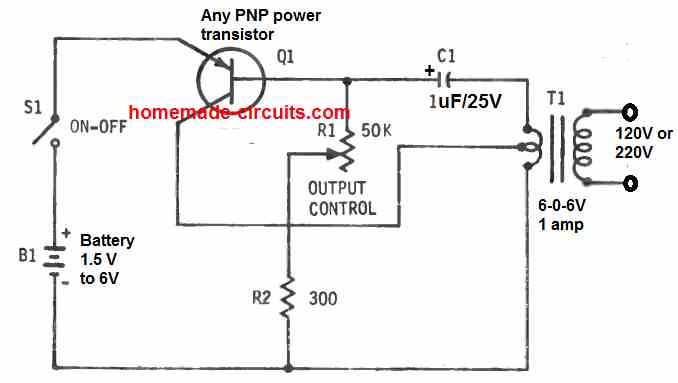
In this post I have explained a few miniature inverter circuits that can convert 1.5 V to 220 V or 3 V to 220 V or 6 V to 220 V. All the designs employ a single PNP transistor and transformer, connected in the feedback mode for generating the oscillations. 1.5 V to 220 V […] READ MORE:
Class-D Sinewave Inverter Circuit
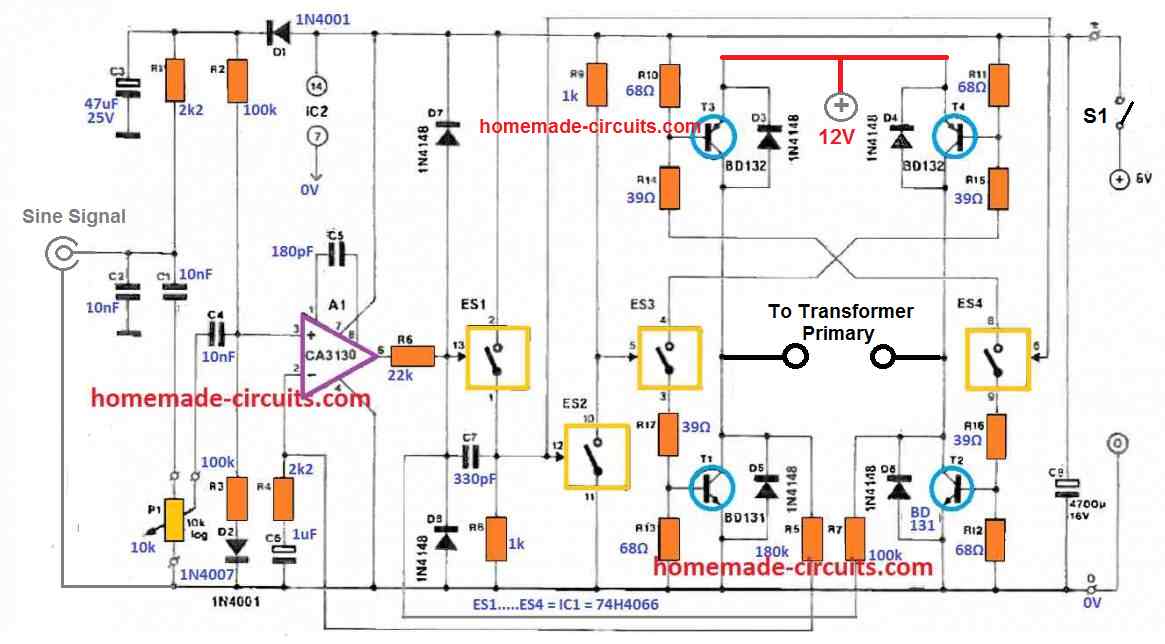
A sinewave inverter using class-D amplifier functions by converting a small sinewave input frequency into equivalent sine PWMs, which is finally processed by an H-bridge BJT driver for generating the mains sinewave AC output from a DC battery source. What is Class-D Amplifier The working principle of a class-D amplifier is actually simple yet extremely […] READ MORE: