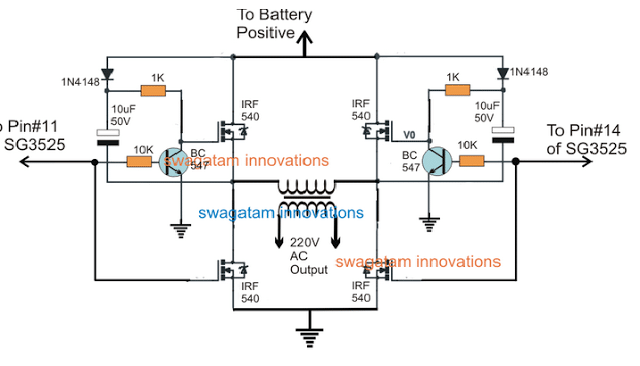
In this post we try to investigate how to design a SG3525 full bridge inverter circuit by applying an external bootstrap circuit in the design. The idea was requested by Mr. Mr. Abdul, and many other avid readers of this website. Audio/Video Representation Why Full-Bridge Inverter Circuit is not Easy Whenever we think of a […]
Inverter Circuits
3 phase Solar Submersible Pump Inverter Circuit
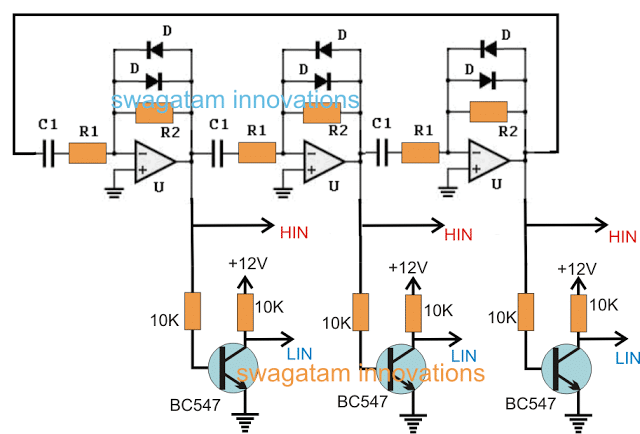
In this post I have explained a simple 3 phase solar submersible pump inverter circuit which can be made by configuring a few ICs and a few power devices. The idea was requested by Mr. Lufono and Mr. Sami. Circuit Objectives and Requirements First of all i must say thanks to you and Mr. Lufono, […]
Arduino Modified Sine Wave Inverter Circuit
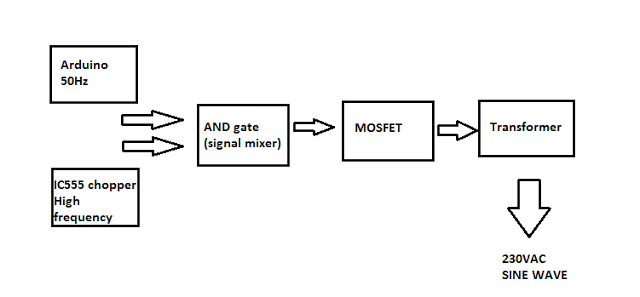
In this post I will show how to construct a modified sine wave inverter using Arduino. We will explore the methodology of the proposed sine wave inverter and finally, we will take a look at simulated output of this inverter. By Difference Between Squarewave and Modified Squarewave Inverter Inverters saved us from short term power […]
Automatic Inverter Fan Switch ON while Charging and Inverting Modes
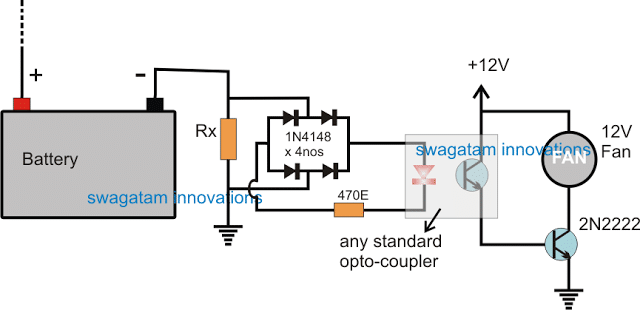
In this post I have explained a simple method of automatically switching ON an inverter fan whenever the unit is operating in the charging mode or inverter mode, in order to ensure optimum cooling of the internal power devices. The idea was requested by Mr. Sudip Bepary. Circuit Objectives and Requirements I have just bought […]
Simple IC 555 Inverter Circuit: 6 Designs Explored
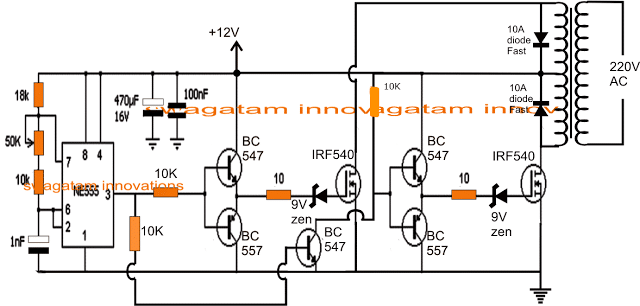
The 6 unique designs below explains us how an ordinary single IC 555 astable multivibrator could be used effectively to make an inverter without involving complex stages. No doubt IC 555 is a versatile IC which has many applications in the electronic world. However when it comes to inverters, IC 555 becomes ideally suitable for […]
Simple SG3525 Sine Wave Inverter Circuit Explained
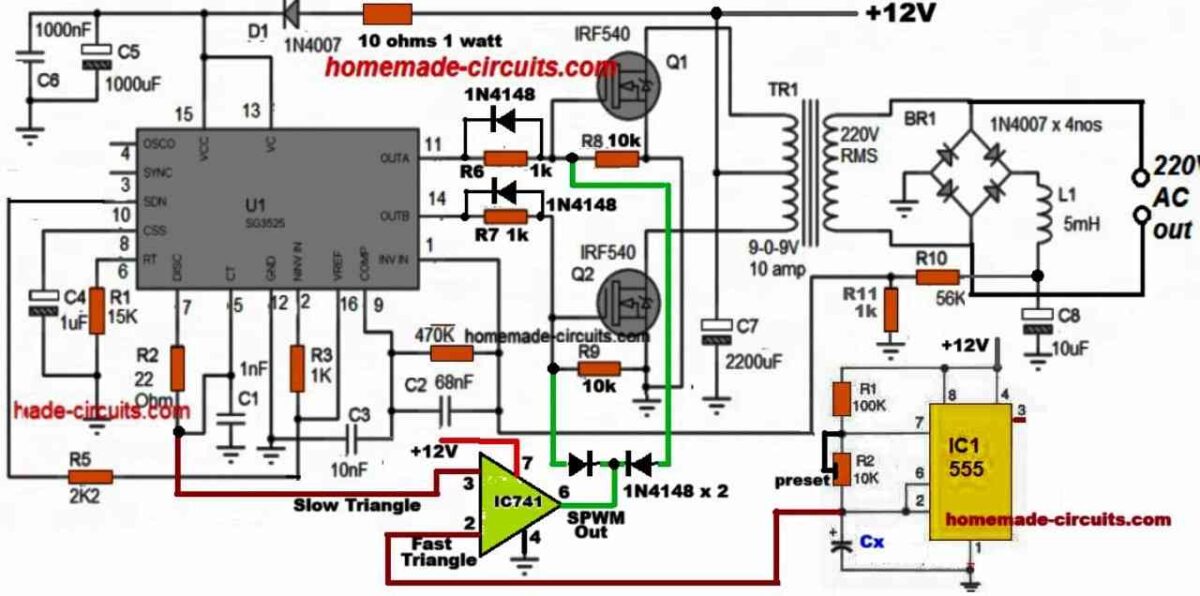
In this post we will discuss two methods of designing pure sine wave inverter circuits using 555 IC based SPWM processing. In the first concept we connect the 555 processors directly with the SG3525 outputs and do the sine wave conversion directly at the MOSFET gates. In the second concept we do it externally and […]