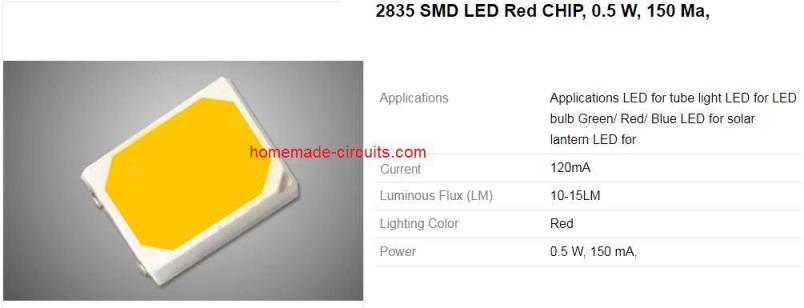
Obstruction lights are warning lights that we see at the top of tall structures like towers and skyscrapers, installed for indicating the aircrafts and other flying objects about these obstructions. These lights alert the flying aircrafts regarding the minimum height they should maintain above these tall structures to avoid a possible collision and accidents. Obstruction […]
Newly Updated Circuit Projects:
Schottky Diodes – Working, Characteristics, Application
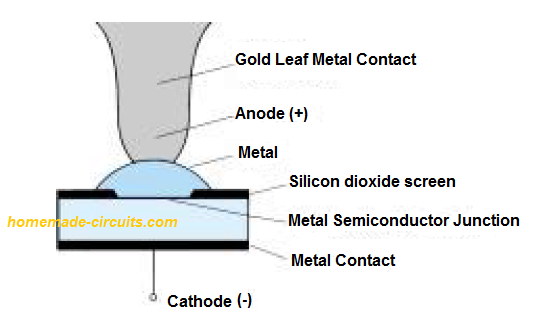
Schottky barrier diodes are semiconductor diodes designed with minimal forward voltage and fast switching speeds which may be as low as 10 ns. These are manufactured in current ranges of 500 mA to 5 amps and up to 40 V. Due to these features they become specifically suitable in low voltage, high frequency applications such […]
Diode Rectification: Half-Wave, Full-Wave, PIV
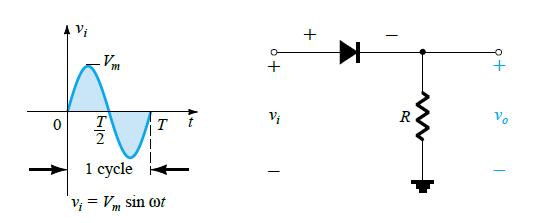
In electronics, rectification is a process in which a rectifier diode converts an alternating full cycle AC input signal into a half cycle DC output signal. A single diode produces half wave rectification, and a network of 4 diodes produces a full wave rectification In this post we will analyze both half wave and full […]
Bidirectional Switch
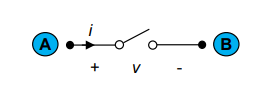
In this post I have explained about MOSFET bidirectional power switches, which can be used for operating a load across two points bidirectionally. This is simply done by connecting two N-channel, or P-channel MOSFETs back to back in series with the specified voltage line. What is a Bidirectional Switch A bidirectional power switch (BPS) is […]
Comparator Circuits using IC 741, IC 311, IC 339
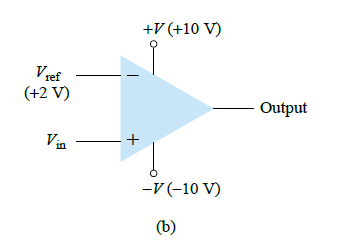
The basic function of a comparator circuit to compare two voltage levels at its input pins and produce an output to show which input voltage has higher potential than the other. In this article we will elaborately learn how to correctly design comparator circuits using popular ICs like IC 741, IC 311 and IC LM339 […]
How Transformers Work
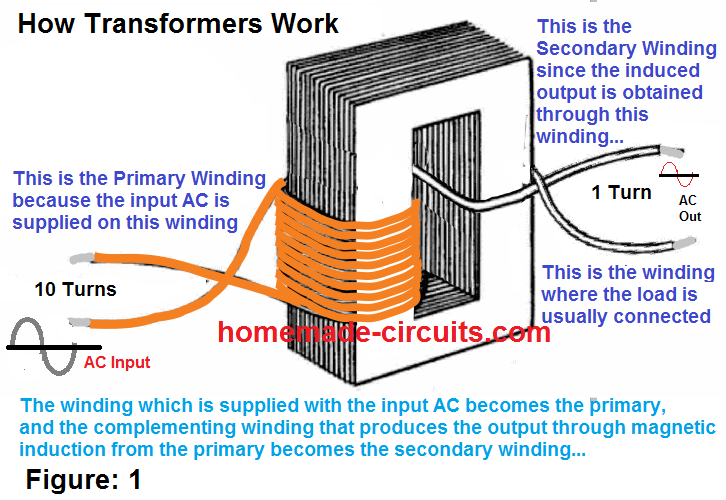
According to the definition given in Wikipedia an electrical transformer is a stationary equipment that exchanges electrical power across a couple of closely wound coils, through magnetic induction. A constantly altering current in one winding of the transformer generates a varying magnetic flux, which, consequently, induces a varying electromotive force over a second coil built […]