
A rather easy way of disinfecting humans and objects on a large scale and in public places could be by irradiating them with ultraviolet rays (UV-C), in special UV-C illuminated chambers or passages. This includes the pandemic COVID-19, which can be suppressed by installing and implementing these specially created UV-C germicidal lamps. The following article […]
Newly Updated Circuit Projects:
10 Useful Function Generator Circuit Diagrams Explained
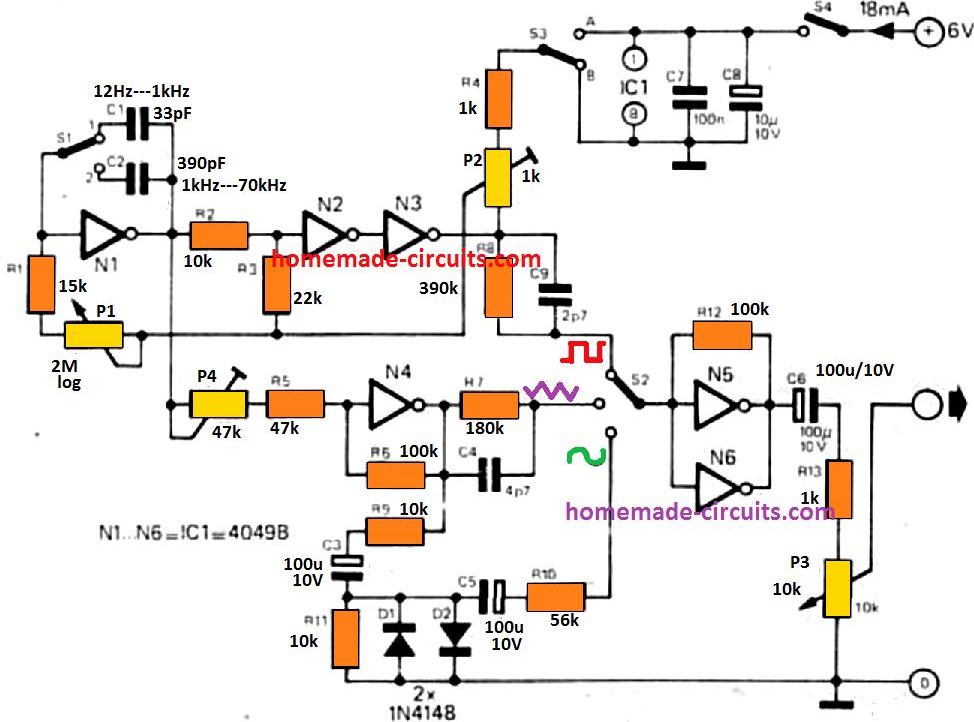
In this post I have explained how to build 10 simple yet useful function generator circuits using IC 4049, IC 8038, IC 741, IC 7400, transistors, UJTs etc. for generating accurate square waves, triangle waves, and sinewaves through easy switch operations. 1) Using IC 4049 Using only one low-cost CMOS IC 4049 and a handful […]
How to Make a Solar Cell from a Transistor
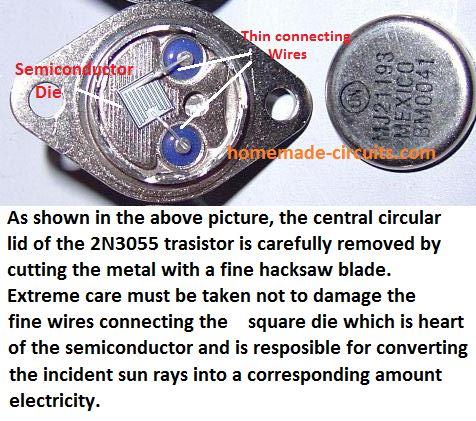
The majority of newbie electronic hobbyists would certainly have a couple of burned up power transistors such as 2N3055 hiding inside their junk box. Supposing we have their internal semiconductor junctions still intact, the device could be transformed into a nice little solar cell by filing or sawing off the top cap of the device, […]
12 V to 30 V High Current Boost Converter Circuit [Variable]
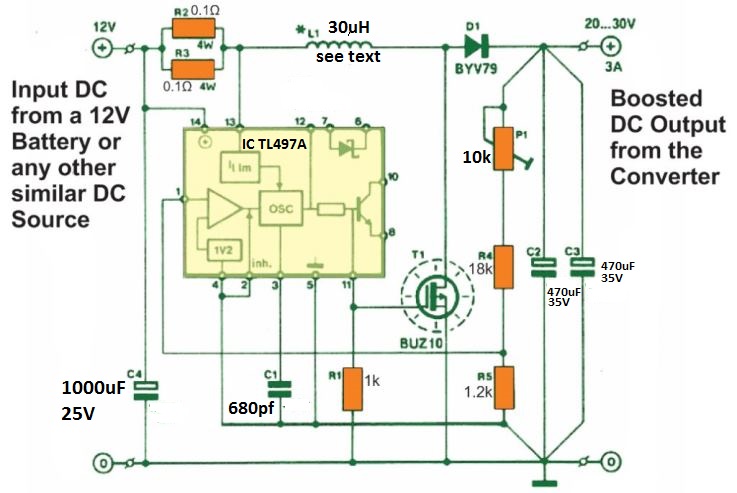
In this post I have explained how to make a high current boost converter circuit which will step up a 12 V DC to any higher level up to 30 V maximum, and at an impressive 3 amp current rate. This high current output can be further enhanced by suitably upgrading the inductor wire gauge […]
Grid Dip Meter Circuit
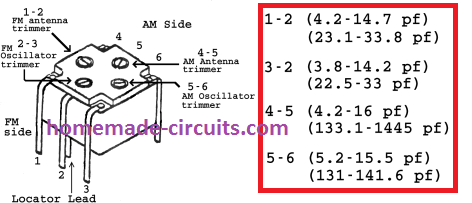
A dip meter or a grid dip meter can be considered as a kind of frequency meter whose function is to determine the resonant frequency of an LC circuit. For this, the circuits don’t have to ‘radiate’ any waves or frequency across each other. Instead, the procedure is implemented simply by placing the coil of […]
Diac – Working and Application Circuits
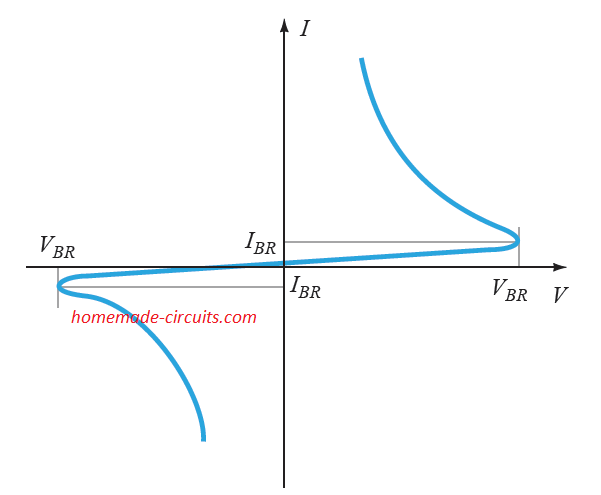
The diac is a two-terminal device having a combination of parallel-inverse semiconductor layers, which allows the device to be triggered through both directions regardless of the supply polarity. Diac Characteristics The characteristics of a typical diac can be seen in the following Figure, which distinctly reveals the presence of a breakover voltage in across both […]