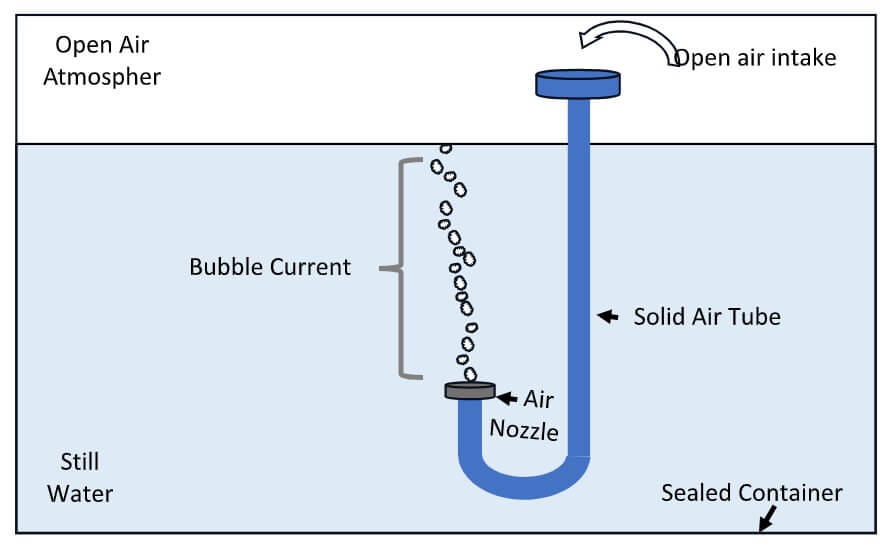
Special thanks to Mr. Ike Higgins for emailing me this article exploring a theoretical concept known as the Bubble Current Machine. Please note that this is presented purely as a conceptual thought experiment and design proposal. In practical physics, pushing air through a submerged nozzle against hydrostatic pressure requires external work equal to (or greater […]
Current
How to Connect Triacs in Parallel for High Current Loads: Circuit Diagram
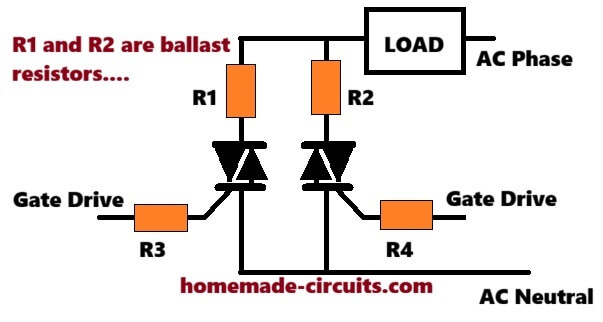
Sometimes we make electronic circuit designs, and then we see that one single TRIAC cannot take all the big current of a very heavy load. This heavy load can be a huge heater, a big motor, or too many lights. In this condition, we get a simple idea. We think that we can connect two […]
How to Add Adjustable Current and Voltage feedback Control to SG3525 High Power Inverters
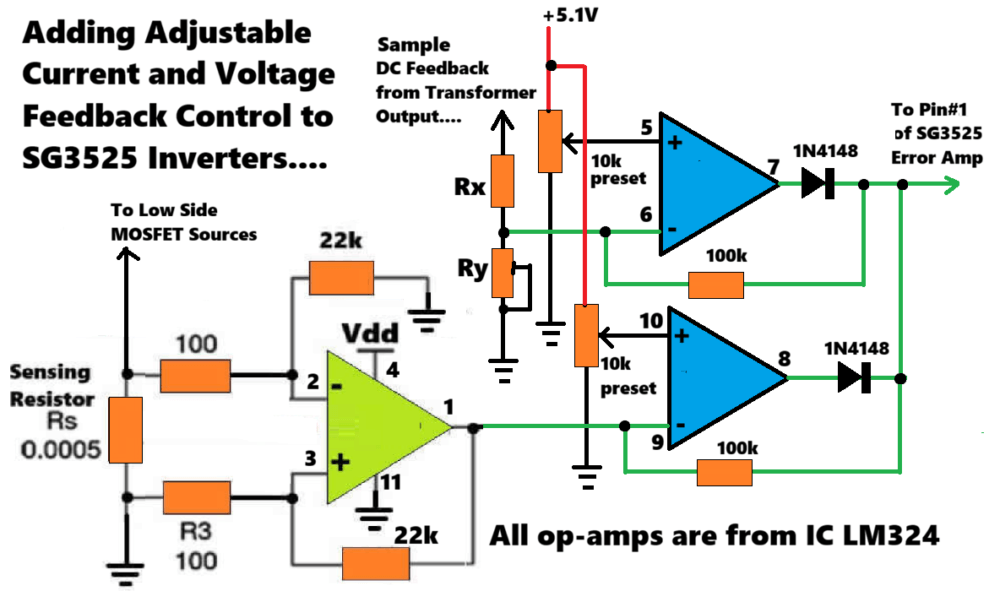
If you want to build a very heavy power inverter or when you want to make a high frequency induction heater, or when you want to make a lab grade variable SMPS, then getting precise control over both output voltage and current is a major engineering hurdle. Most standard designs using the classic SG3525 PWM […]
High Voltage, High Current Buck Converter Circuit using Isolated Gate Driver
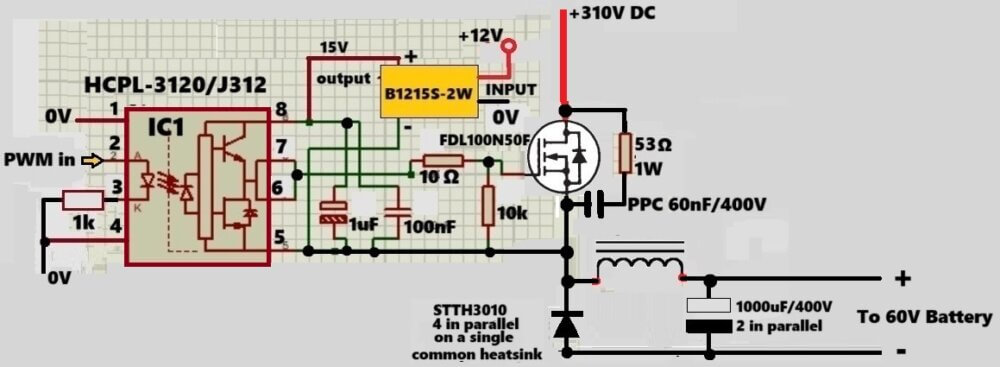
This is a high voltage 310V to 60V buck converter, so we have that big 310V DC coming in which we usually get after rectifying 220V AC mains. So now that high DC is there and we want to push it down to something like 60V or lower for battery charging or similar work. Audio/Video […]
How to Use IC LM393 as a Current Controller Circuit

In this post we will understand a current controller and current limiter circuit using the IC LM393 comparator. This circuit is using a low power voltage comparator integrated circuit LM393 and one power Metal Oxide Semiconductor Field Effect Transistor, so the idea is simple but the working looks a little deep when we see it […]
FET Current Source: Explained with Formulas

An FET Current Source is one special type of active circuit that is using a Field Effect Transistor for giving a steady and constant current into a circuit. We are doing this because sometimes we want that current should not change, it should remain fixed and stable. Why We Need Constant Current Now you may […]