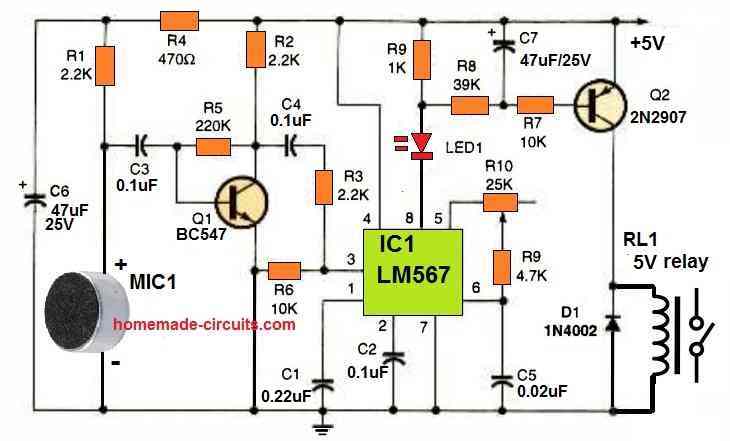
In this post I have explained how to build a simple whistle sound operated relay circuit, which can be used for switching ON/OFF a 220 V load through whistle sounds. You can consider this circuit to be a whistle operated remote control circuit which will operate a connected load remotely through the sound of whistling. […]
Switch
Temperature Controlled Relay Switch Circuit
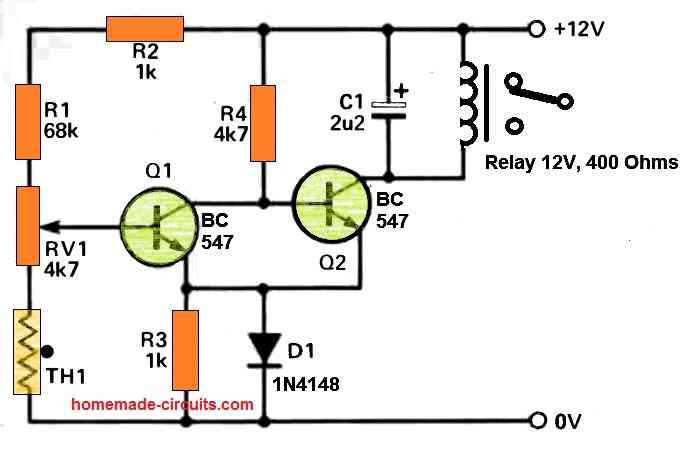
In this article I have explained a simple temperature controlled relay circuit which can be switched ON/OFF depending on the temperature on its temperature sensor. Meaning, when the temperature on its temperature sensor rises above a set threshold point, the relay switches ON, and when the temperature drops below the threshold, the relay switches OFF. […]
Pressure Switch Water Pump Controller Circuit
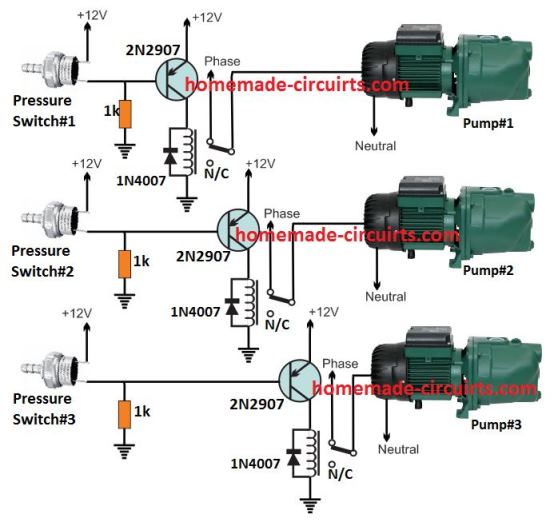
A pressure switch is a device which can be used for detecting water pressure in a tank and operate a water pump motor when the pressure gets too low, or the water in the tank goes lower than a desired minimum level. In this post I have explained a water pressure controller circuit for maintaining […]
Touch Operated Code Lock Switch Circuit
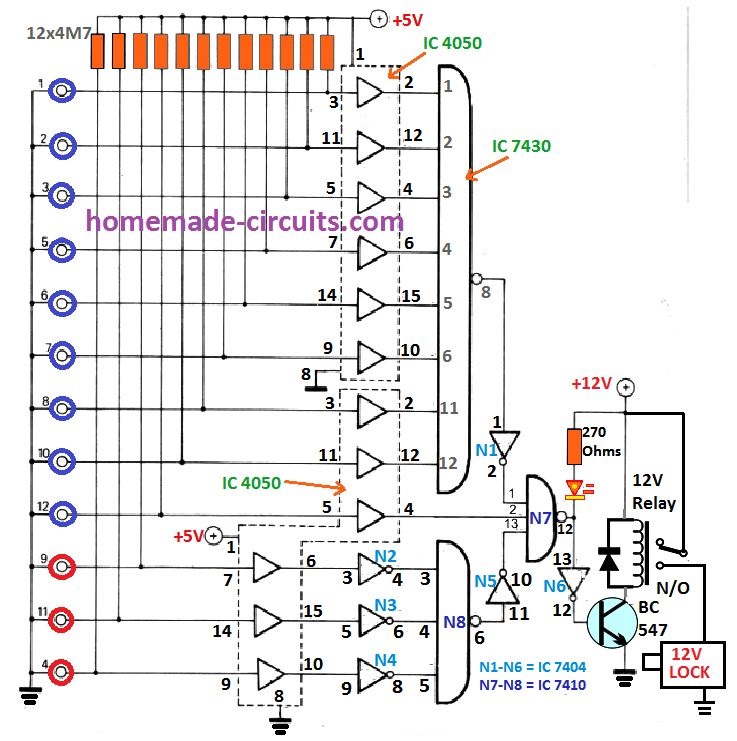
This touch operated electronic door lock can be used for locking any entrance through a touch keypad. The lock’s touch feature is foolproof and impossible to crack since the touch function is required to be on 3 programmed pads together or simultaneously, otherwise the lock doesn’t respond. It is a lot convenient to open a […]
Reed Switch – Working, Application Circuits
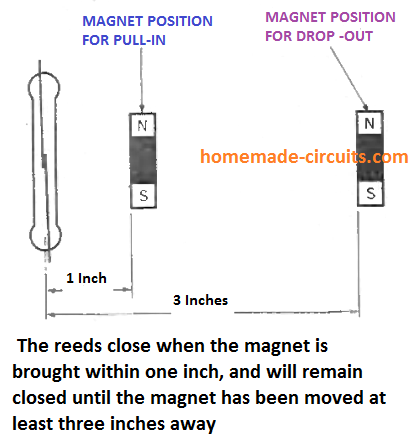
In this post I will comprehensively explain about reed switch functioning, and how to make simple reed switch circuits. What is Reed Switch Reed switch also called reed relay, is a low current magnetic switch with a concealed pair of contacts that close and open in response to magnetic field near it. The contacts are […]
Calculating Transistor as a Switch
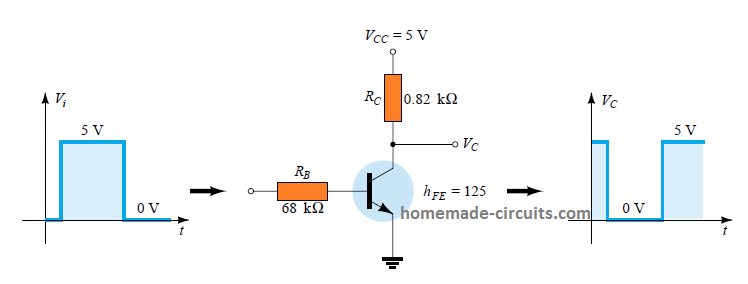
Although transistors (BJTs) are popularly used for making amplifier circuits, these can be also effectively used for switching applications. A transistor switch is a circuit in which the collector of the transistor is switched ON/OFF with relatively larger current in response to a correspondingly switching low current ON/OFF signal at its base emitter. As an […]