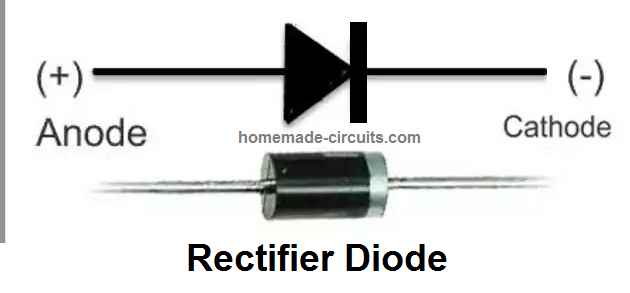
In this post I have explained how to use rectifier diodes for building some practical and useful electronic circuits. A diode is the most basic semiconductor electronic component, which is built with a single pn semiconductor junction. It has only two terminals, which are referred to as the anode and the cathode. Diodes can be […]
Simple
Simple IC 4017 Circuits
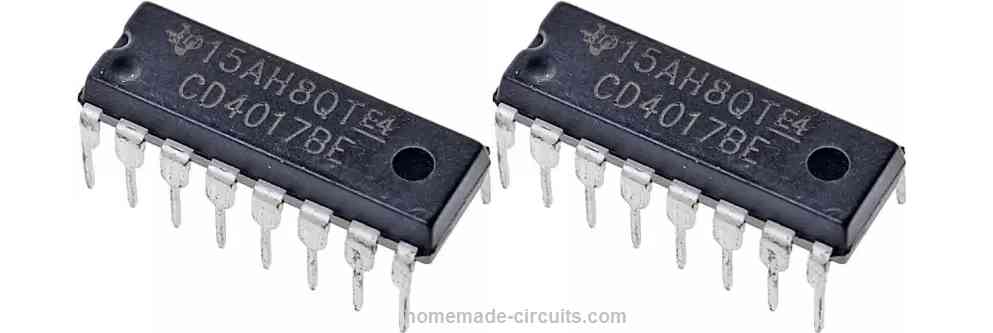
The IC 4017 is a versatile counter divider IC which can be applied for making many different interesting electronic circuits. In this post I have explained about a few useful yet simple 4017 IC circuits and projects, assorted and compiled from this blog. How to Understand IC 4017 Pinouts Before we delve into the many […]
Simple Crystal Tester Circuit
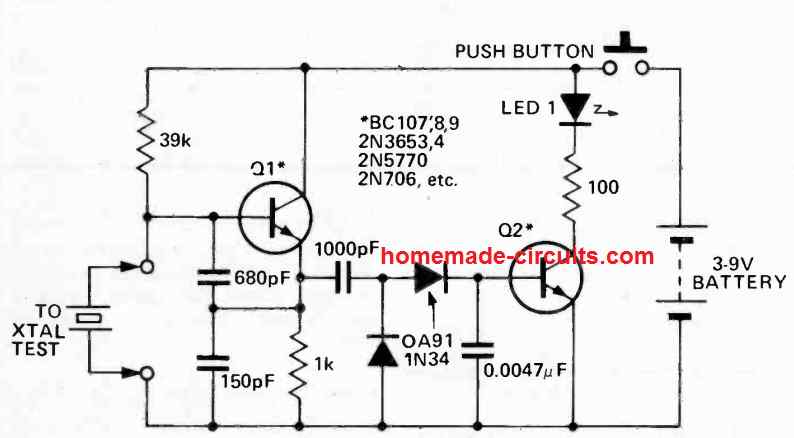
In this post I have explained how to build a simple crystal tester circuit using ordinary parts like transistors, resistors, diodes and capacitors. What is a Crystal A crystal can be used for making an electronic oscillator circuit by using the mechanical resonance of a piezoelectric vibrating crystal to generate an electrical frequency having a […]
5 Simple Electronic Dice Circuits Explained [Digital Dice]
We all know what a dice is and how manually a dice is shuffled and thrown to get a random number. In older times when we did not have computer games or mobile games, we used to play with various indoor games that required tossing a cubical thing called dice having 1 to 6 dots […]
6 Simple AC Bridge Circuits Explained
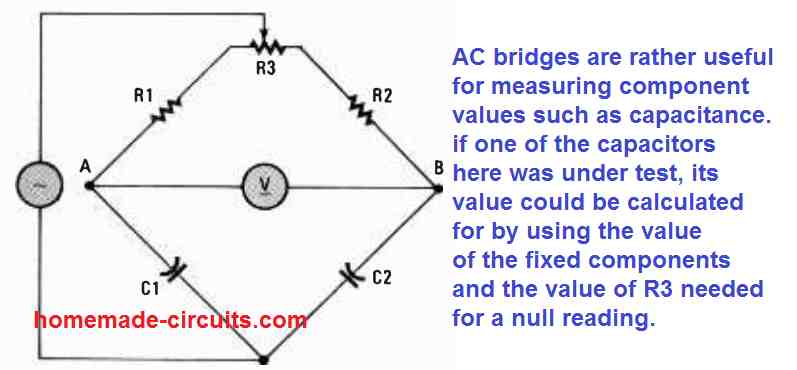
An AC bridge is a circuit which can be used for measuring parameters like capacitance, resistance, Inductance using differential method, by comparing them with known values of similar components, positioned diagonally across a bridge circuit, and through an analogue meter placed at the center of the bridge. Before we begin talking about the AC bridge […]
2 Simple Milliohm Meter Circuits [Measure Low Resistances below 1 Ohm with these Circuits]
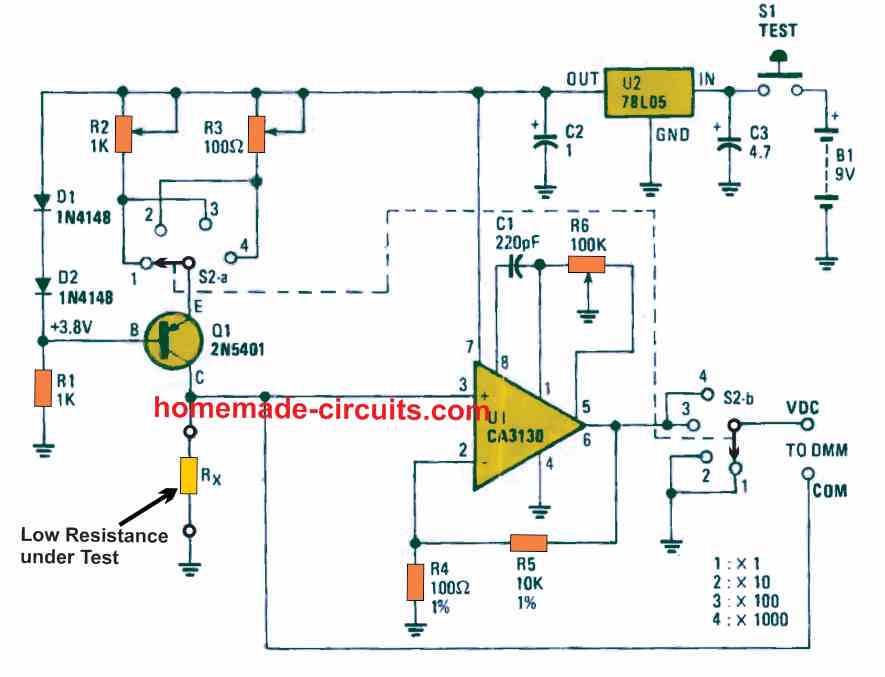
The low resistance measuring circuit I have explained below can be used for measuring all milliohm resistances below 1 ohm with extreme accuracy. The resistance to be measured can be as low as 0.01 ohm or 10 milliohm. The output of the circuit converts the resistance value to exactly equivalent volts, which means the output […]