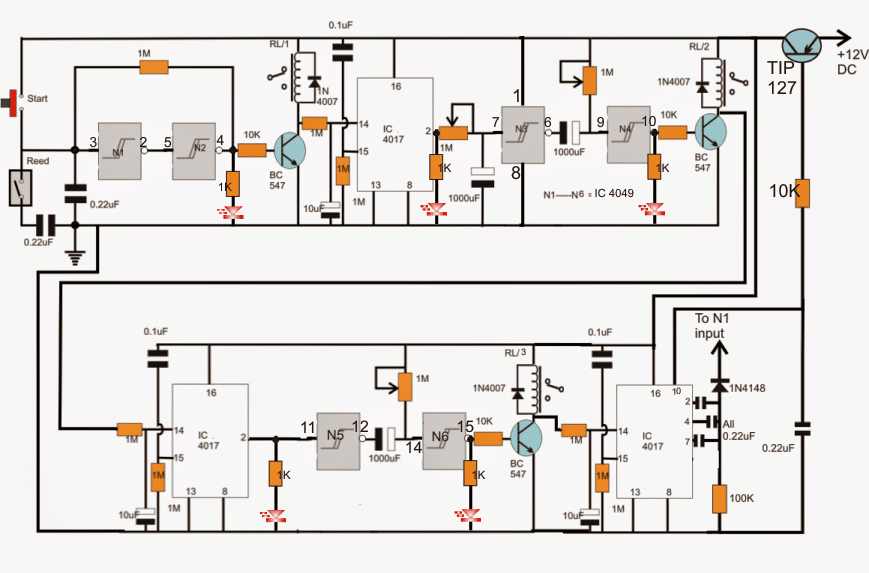
The post presents an industrial water level controller with drain timer circuit. The idea was requested by Mr. Lanfrank. Technical Specifications I saw your blog and was impressed by your knowledge and the service you render to all electronics enthusiasts. I am a hobbyist and mechanical engineer by profession based in Thane. I need help […]
Newly Updated Circuit Projects:
How to Make a Car Power Window Controller Circuit
In this article I have explained a car power window controller circuit using a single push button or a couple of push buttons. The idea was requested by Mr. Win. Technical Specifications I’m winantiyo from Indonesia, i’ve read your post in your blog and i’m very like it.i have 2 project: 1. auto roll up power […]
Simple 1.5 V Inductance Meter Circuit
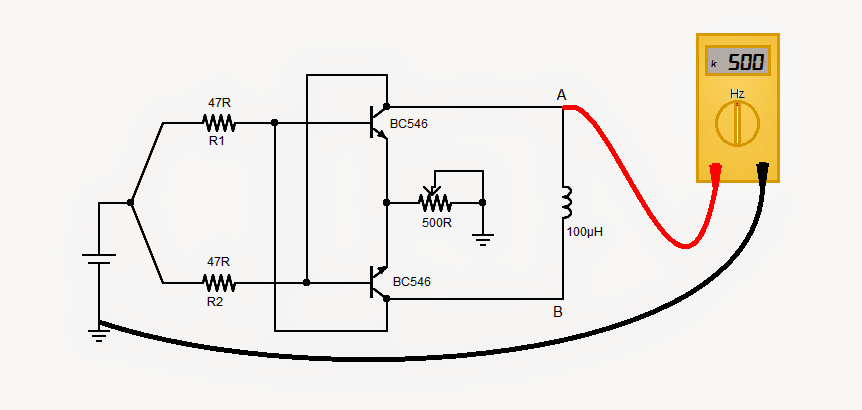
Here a simplest yet quite accurate inductance meter is presented, which can be built within few minutes. Furthermore, the circuit can be powered-up with a single 1.5V cell. However, a frequency meter would be required to work-out the inductance. Designed and Presented by: Abu-Hafss Using Cross-Coupled NPN BJTs The circuit is pretty straight forward wherein, […]
Lithium Polymer (Lipo) Battery Charger Circuit
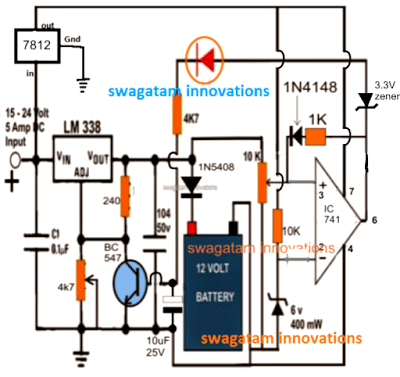
In this post I have explained a simple lithium polymer (Lipo )battery with over charge cut off feature. The idea was requested by Mr. Arun Prashan. Charging a Single Lipo Cell with CC and CV I came across your work on “Bicycle Dynamo Battery Charger Circuit” in Homemade circuit design blog. It was really informative. I […]
Cellphone Controlled Car Starter Circuit
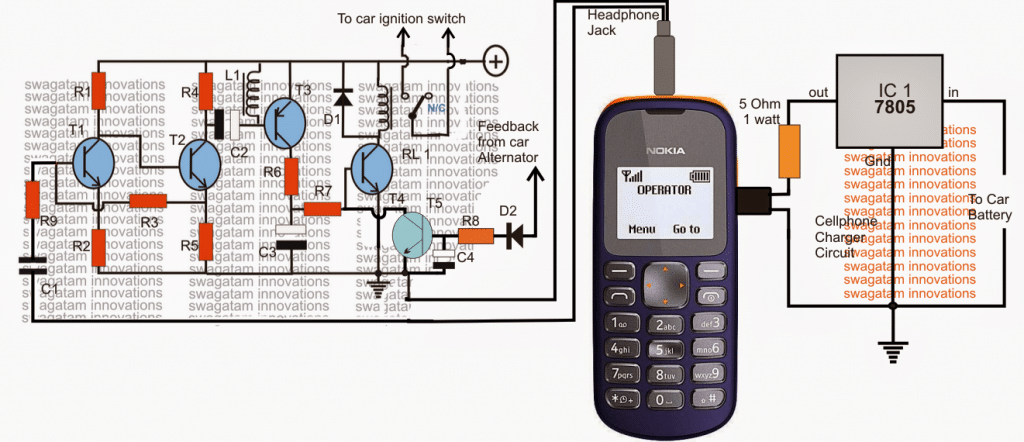
The post presents a simple cellphone triggered remote control circuit that can be applied as a cellphone operated remote car starter. The unit would cost less than $20 to build. I have already covered quite a few interesting cellphone remote control circuits in this blog, all of which can be implemented to control or toggle […]
3.7 V Class D Speaker Amplifier Circuit for Differential Analog Input
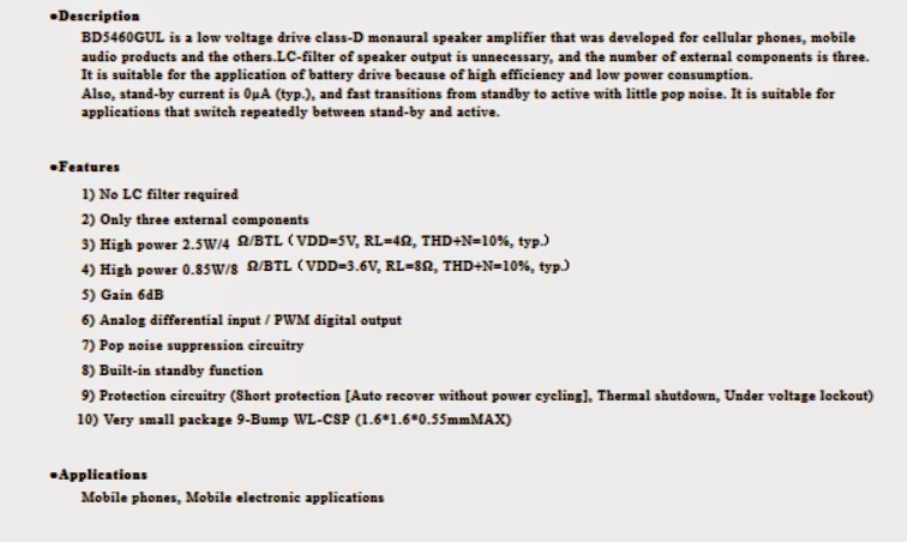
A class D amplifier is basically a category of amplifier in which the power devices (mosfets and BJTs) are operated like switches. The associated output devices in such amplifier circuits either turn fully ON or fully OFF, but never switch between other undefined levels ensuring minimal heat dissipation and maximum efficiency from the devices. […]