
An efficient solid state single pole double throw or SPDT switch can be built using triacs for replacing a mechanical SPDT. In this post I have explained a simple solid state triac SPDT relay circuit, using an optocoupler and a couple of triacs, which can be used as an effective replacement for mechanical relays. The […] READ MORE:
Triac
Triac Battery Charger Circuit

This post shows how to build a big battery charger that cuts off power by itself when the battery gets full, using a triac instead of a regular relay. You press a start button to kick things off, an op-amp watches the battery voltage and keeps the triac latched ON with a red LED glowing, and once full charge is reached it drops the gate drive so the whole thing shuts OFF and waits for the next press. READ MORE:
Simple Triac Timer Circuit

Here’s a simple triac timer circuit which can be used for switching ON a particular device after a predetermined time, set through the given pot or the variable resistor. The shown circuit diagram of a simple triac timer can be understood by referring to the following explanation: How it Works The left hand side section […] READ MORE:
High Current Triac BTA41/600B – Datasheet, Application Note
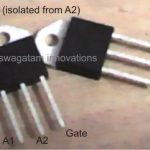
Triacs are one of the most important active electronic components which are exclusively used for power switching applications, these devices are especially suited to AC mains loads, and are able to switch large currents consistently. Triacs are the solid state replacements to mechanical relays, and come configured as static relays. The modern triacs today are highly sophisticated […] READ MORE:
220V Operated LED Flasher Circuit using Triac

The following triac/diac based mains operated LED flasher circuit which is actually an astable multivibrator circuit utilizes only a diac and resistor arrangement for implementing interesting wig wag flashing of two LEDs. The simple 220V flasher circuit was shared with me by Mr.Vineesh, who is one of the keen followers of this blog. I would […] READ MORE:
SCR/Triac Controlled Automatic Voltage Stabilizer Circuit

In this article I have explained a relatively simple triac controlled automatic mains voltage stabilizer circuit, which uses logic ICs and a few triacs for controlling the mains voltage levels. Why Solid State Being solid state in design, the voltage switching transitions are very smooth with minimum wear and tear, resulting in efficient voltage stabilization. […] READ MORE: