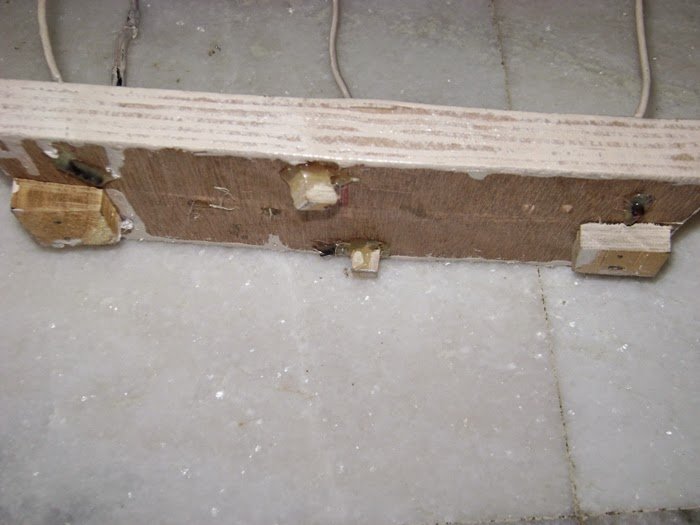
In this post I have explained a step by step construction of a “helping third hand” unit for assisting PCB soldering jobs in order to make the job much hassle free. The gadget could be very handy especially for the new hobbyists. The project was constructed and submitted by Master Ss kopparthy. I have explained […]
Newly Updated Circuit Projects:
0.6V to 6V/12V Boost Converter Circuit Diagram
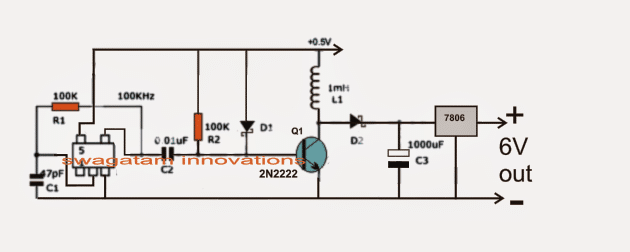
In this post I have explained how to make a 0.6V to 6V or 12V boost converter circuit using a single chip MC74VHC1G14, which uses under 1V to operate. About the IC MC74VHC1G14 Normally, we all know that a silicon transistor would find it difficult functioning below 0.7V, unlike germanium counterparts which are capable of doing it […]
Fishing YoYo Stop-Motion Switch Circuit with Indicator

In this post I have explained a stop-motion switch circuit or a strike indicator for aiding fishing yo yo applications. The idea was requested by Mr. Mike. Technical Specifications (kindly bear the long discussion) Hello Sir, My name is Mike. I am the one requesting help with this stop-motion switch from the “Homemade Circuits” Blog […]
ATmega32, Pinouts Explained
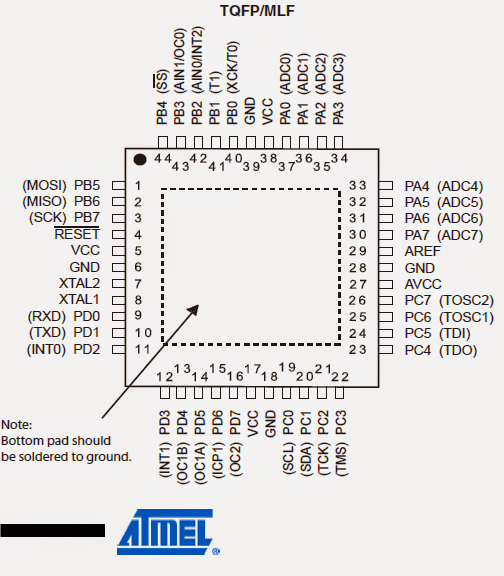
The Atmel AVR Atmega32 is a low power CMOS based microcontroller chip manufactured on the AVR advanced RISC architecture. It is featured for carrying out technologically powerful instructions within each of its clock cycles. The chip is also equipped with the capability of achieving throughputs rated at 1MIPS per MHz enabling the system manager to enforce […]
Programmable Automatic Starter Circuit for Diesel Water Pump

In this post I have explained a programmable Auto-Starter circuit which may be used for getting a pre-programmed set of automatic sequential operations over a Diesel Water Pump as intended by the user. The idea was requested by Mr. Scott. Technical Specifications I am currently trying to figure out how to make up an auto […]
Making a Float Switch Circuit for a Corrosion-free Water Level Control
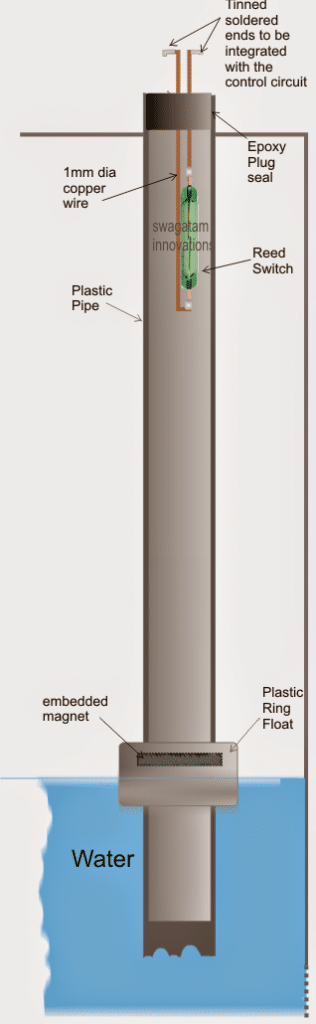
A float switch is a device which detects a fluid level (such as water) and activates a set of contacts which may be further integrated to a control circuit for restricting the fluid flow behavior. Why a Float Switch The advantage of a float switch is that it works without a direct contact with the […]