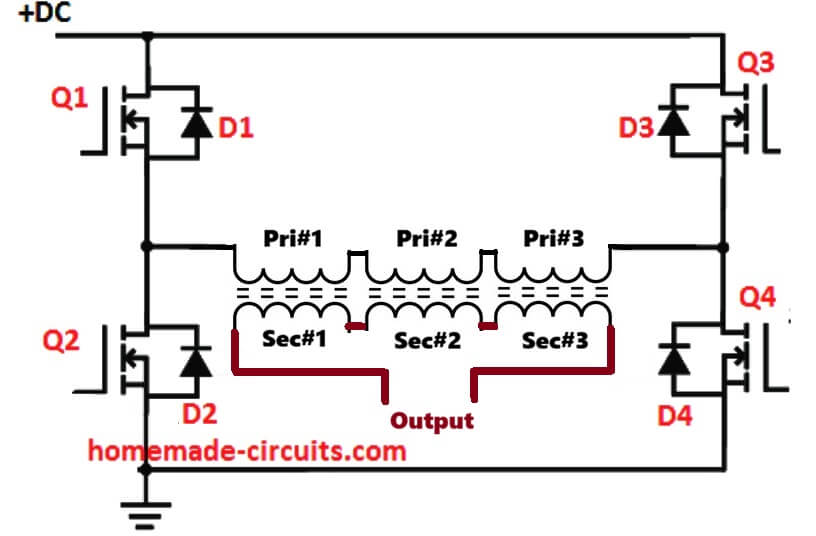
In an H-bridge inverter, we normally use a transformer to convert the input power into the required output voltage. But sometimes instead of using one big ferrite transformer, we may want to use two, three, four, or even more small ferrite transformers. In this type of arrangement, all the primary windings are connected in series […]
Series
How to Connect Two TRIACs in Series for High Voltage Loads
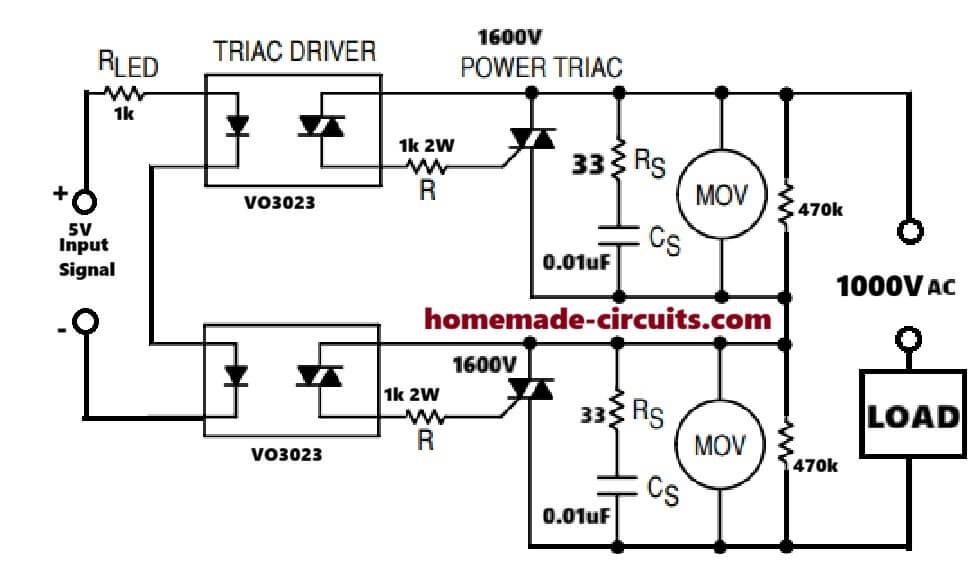
Normally, for standard 220V AC household projects, a single 600V or 800V TRIAC is more than enough. But what if you are working with a very high voltage line, like 1000V AC? A single common TRIAC will immediately burn and short circuit because it cannot handle that much voltage stress. To solve this, we can […]
LED String Series Resistor Calculator
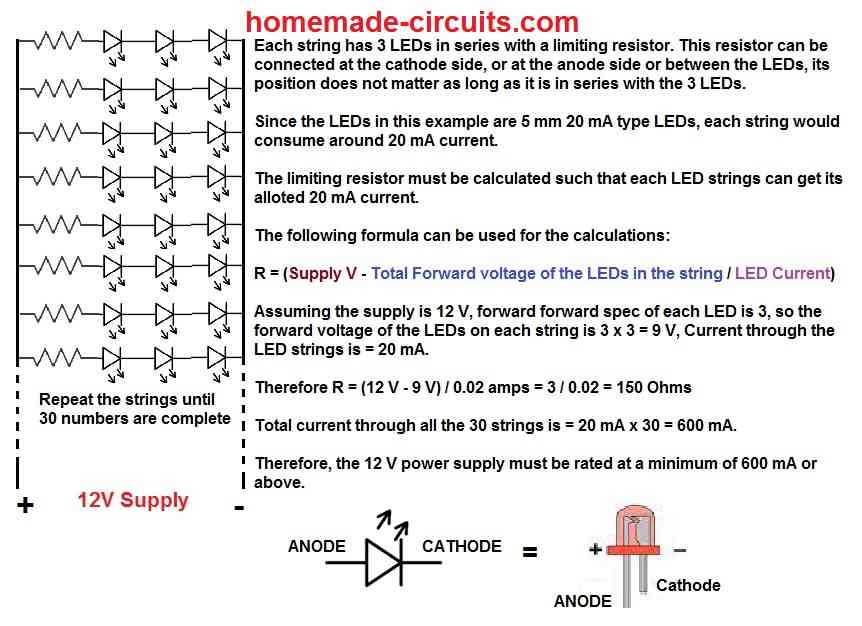
Want to know the exact current limiter resistor value for a specific LED series string? You can now use this calculator toll to quickly get the precise LED series string resistor value. Calculator by homemade-circuits.com LED Series Resistor Calculator Supply Voltage (Volts) LED Forward Voltage (Volts) LED Current (mA) Number Of LEDs In Series Calculate […]
How to Connect Solar Panels in Series and Parallel
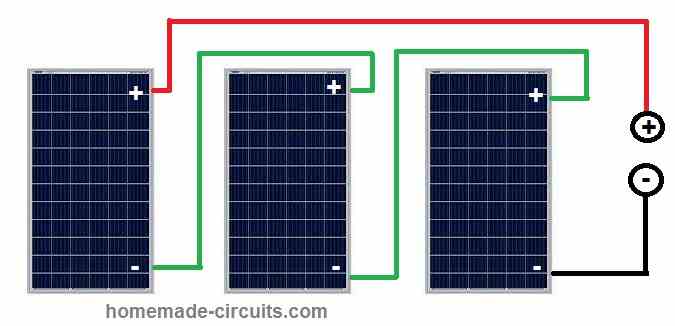
In this post we will study how to connect solar panels in series and parallel and also learn how to calculate solar panels in series and parallel. Before I have explained the connection details, it would be important for us to learn some of the important parameters and specifications related to solar panels. Solar Panel […]
How to Calculate Capacitors in Series and Parallel
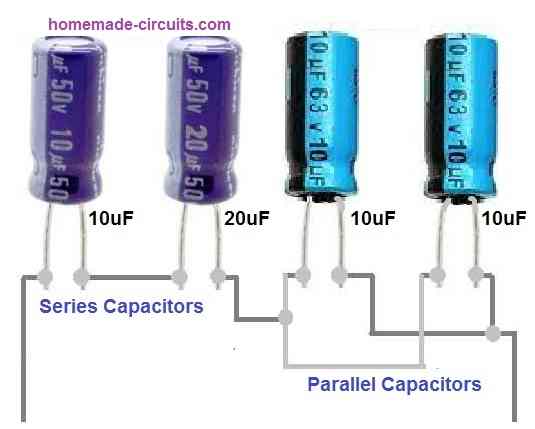
Capacitors connected in series or parallel are very common in electronic circuits. This is done in order to achieve the desired capacitance value and also to make the performance of the circuit accurate. In the following post I have explained how to connect capacitors in series and parallel: Connecting Capacitors in Series When we connect […]
How to Connect Resistors in Series and Parallel
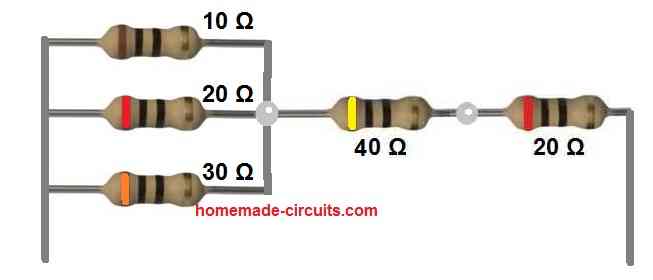
There are three ways to interconnect resistors: series, parallel and in combination of series/parallel. When resistors are joined in series, the current passing via one resistor also passes through the next. When resistors are joined in parallel, they are wired across each other, resulting in the same voltage across each resistor. When resistors are connected […]