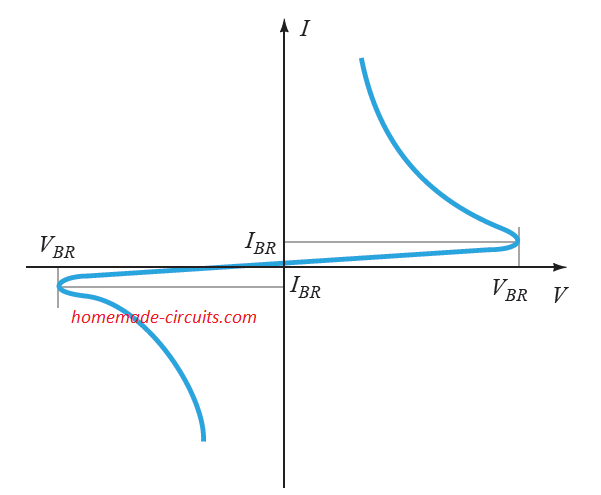
The diac is a two-terminal device having a combination of parallel-inverse semiconductor layers, which allows the device to be triggered through both directions regardless of the supply polarity. Diac Characteristics The characteristics of a typical diac can be seen in the following Figure, which distinctly reveals the presence of a breakover voltage in across both […]
Application
Reed Switch – Working, Application Circuits
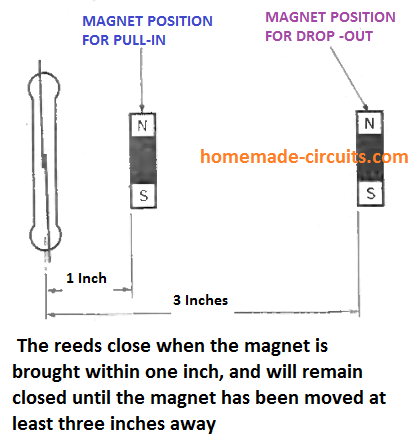
In this post I will comprehensively explain about reed switch functioning, and how to make simple reed switch circuits. What is Reed Switch Reed switch also called reed relay, is a low current magnetic switch with a concealed pair of contacts that close and open in response to magnetic field near it. The contacts are […]
3 Terminal Fixed Voltage Regulators – Working and Application Circuits
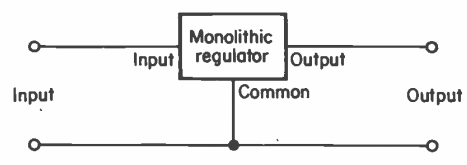
The popular 3 terminal fixed regulators available today are in the form of IC 7805, IC 7809, IC 7812, IC 7815, and IC 7824, which correspond to fixed voltage outputs of 5 V, 9 V, 12 V, 15V, and 24 V. These are called fixed voltage regulators since these ICs are able to produce excellent […]
IC 723 Voltage Regulator – Working, Application Circuit
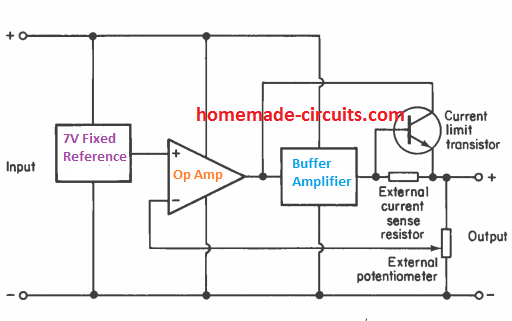
In this post I have explained the main electrical features, pinout specifications, datasheet, and application circuit of the IC 723. The IC 723 is a general purpose, extremely versatile voltage regulator IC, which can be used for making various types of regulated power supplies such as: Main Features ABSOLUTE MAXIMUM RATINGS Pinout Functions Pin 1 […]
Photodiode, Phototransistor – Working and Application Circuits
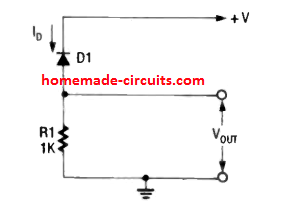
Photodiodes and phototransistors are semiconductor devices which have their p-n semiconductor junction exposed to light through a transparent cover, so that external light can react and force an electrical conduction through the junction. How Photodiodes Work A photodiode is just like a regular semiconductor diode (example 1N4148) consisting of a p-n junction, but it has […]
Triacs – Working and Application Circuits
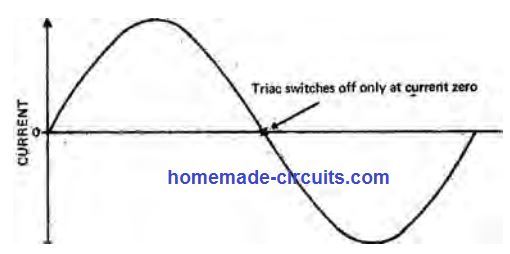
A triac can be compared to a latching relay. It will instantly switch ON and close as soon as it’s triggered, and will remain closed as long as the supply voltage remains above zero volts or the supply polarity is not changed. If the supply is an AC (alternating current), the triac will open during […]