
In this article we are going to understand in detail how we can create air gap in a ferrite core based transformer which we are using in smps circuits like flyback or boost or forward type. Introduction We must understand that ferrite cores have very high permeability and they saturate very fast if we do […]
Transformer
How to Measure Transformer’s Current Capacity

We can use a shunt resistor and ammeter concept to find out how much maximum current a transformer can give, in other words, we are trying to know the current rating or amp capacity of a transformer. If you do not wish to read the full article below, you can feel free to watch the […]
How to Modify a Transformer
Commonly, the perfect transformer might not be readily accessible for purchase, or if it is available, it can be costly. Nonetheless, there is a possibility of modifying the transformer’s secondary winding, especially when producing small voltage and current outputs. This approach can provide a highly cost-effective solution for creating a customized power supply. Transformer Power […]
Monitoring 220V AC Load Current using Current Transformer [Circuit Diagram]

In this post I have explained a circuit which can be used for monitoring or controlling AC 220V load current by sensing the load current through a contactless current transformer. Figure 1 below depicts a circuit diagram designed for a non contact load current sensing through a current transformer, which seemed to work well. It is […]
Simple Transformer Winding Tester Circuit
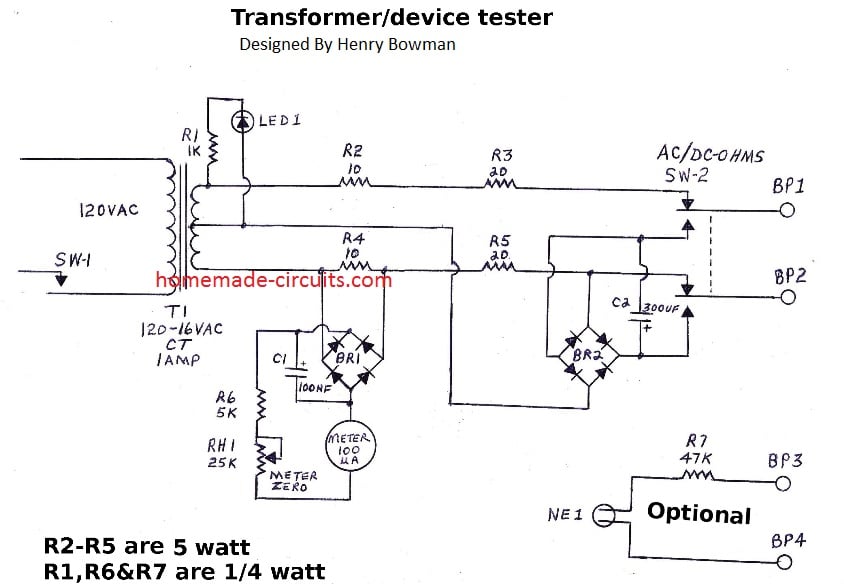
This test set is primarily designed to test step-down, step-up transformers, for open and shorted winding. It can determine if the device under test has a low resistance to ac current. It can also measure the dc current resistancein ohms. By Henry Bowman Introduction The test set uses a 16 VAC, 60hz signal to determine […]
How to Make a Transformer Winding Counter Circuit
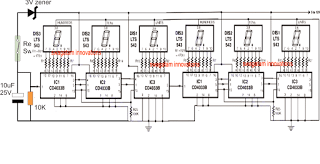
In this post I have explained how to make a simple transformer winding counter circuit using ordinary LEDs and also through an advanced digital display circuit. The idea was requested by one of the dedicated readers of this blog Circuit Objectives and Requirements I want a circuit which counts a number of turns for winding […]