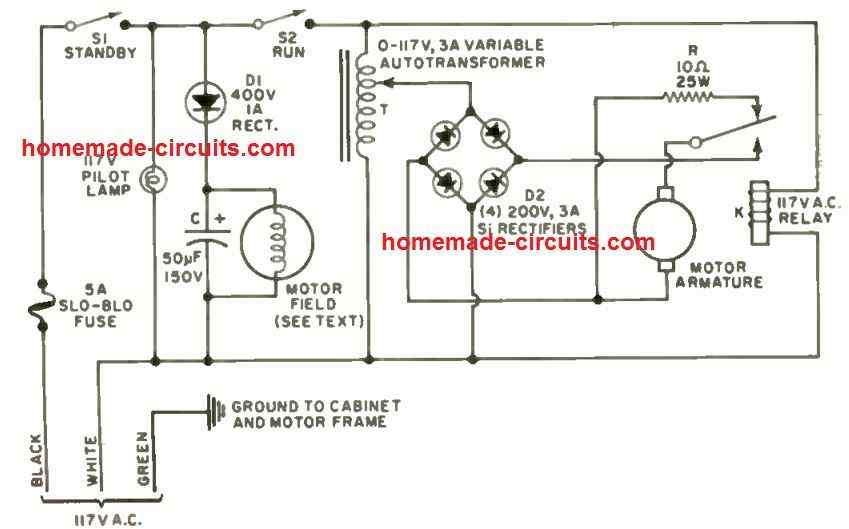
The simple DC shunt motor controller circuit presented in the following article uses a variac. This design facilitates an instant stopping of the motor at any stage with a flick of a switch, along with reversing the motor direction. It also provides speed control for the motor with a high level of accuracy. Overview TRIAC […]
Controller
Adjustable Drill Machine Speed Controller Circuit
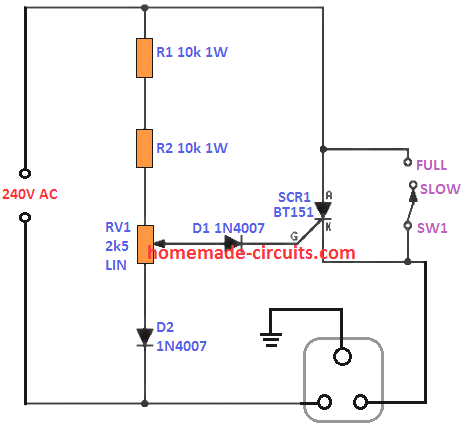
The proposed variable drill speed controller circuit maintains a constant (adjustable) speed over the drill machine motor, regardless of the load. One of the most used power tools is the power drill machine. Despite its innumerable advantages, the power drill has one major setback – constant high speed for many applications. Even when there are […]
Solar Charge Controller for 100 Ah Battery
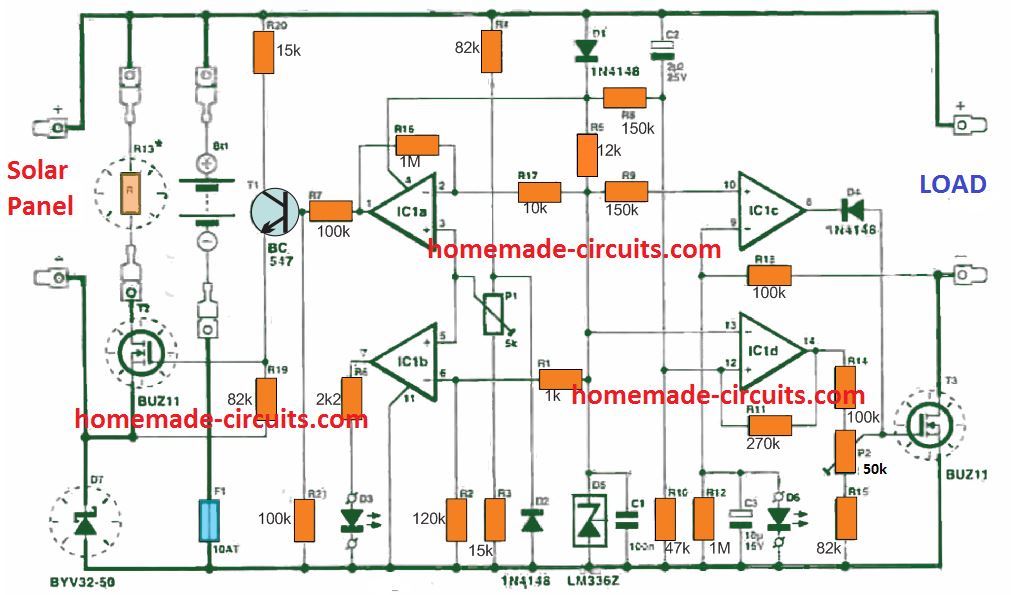
This comprehensive solar charge controller is designed to effectively charge a big 12 V 100 Ah battery with utmost efficiency. The solar charger is practically foolproof in terms of battery over charge, load short circuit, or over current conditions. By Vismit Singh The key elements of this 100 Ah solar regulator circuit are, obviously the […]
Constant Torque Motor Speed Controller Circuit
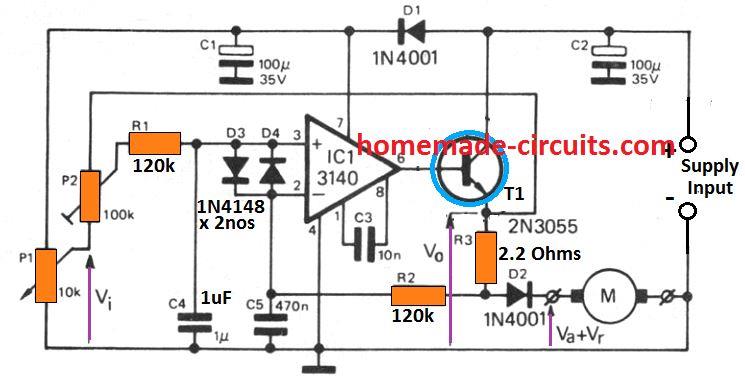
In this post I have explained a DC Motor controller which features a constant torque compensation for enabling the motor to run at a consistent speed irrespective of the load on it. Drawback of Ordinary Speed Controllers One drawback of the majority of simple speed controllers is they only provide the motor with a predetermined […]
Pressure Switch Water Pump Controller Circuit
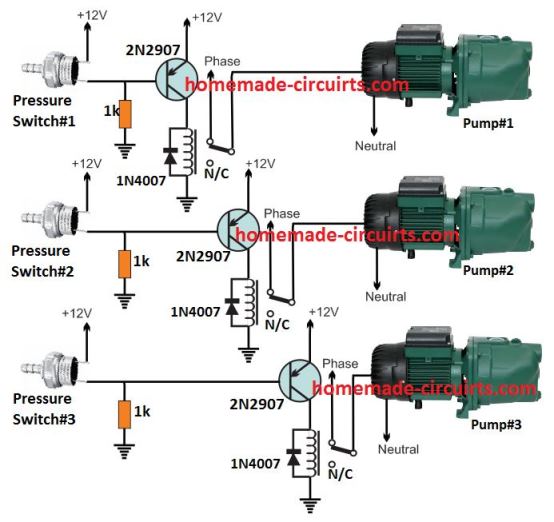
A pressure switch is a device which can be used for detecting water pressure in a tank and operate a water pump motor when the pressure gets too low, or the water in the tank goes lower than a desired minimum level. In this post I have explained a water pressure controller circuit for maintaining […]
UP DOWN Logic Sequence Controller Circuit
Using a set of latch/reset networks it becomes possible to allow a logic to move in a forward sequence, switching ON a given set of outputs HIGH, in response to an alternating input clock. And once the max limit is reached, the input clocks begin shutting down or withdrawing the sequence in the opposite order. […]