This capacitive voltage divider calculator helps us to find the C1 and C2 capacitor values for dividing an AC input voltage into a lower AC output voltage. We just have to enter the input AC voltage and the required output AC voltage. We also have to enter the AC frequency and the assumed AC current for which we want to calculate the capacitor values.
Capacitive Voltage Divider Calculator
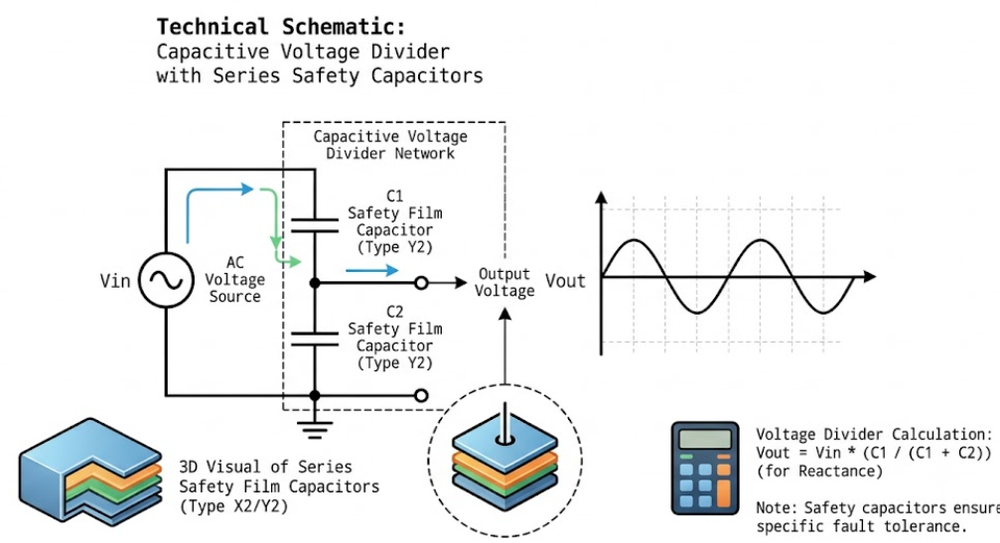
This calculator finds the theoretical capacitor values required to divide an AC voltage using two capacitors connected in series.
A capacitive voltage divider does not provide electrical isolation. Its output voltage can change with the load. The calculations below are based on an ideal unloaded divider and do not certify a circuit as safe for practical use.
Enter the values and click Calculate.
The calculator uses the ideal unloaded voltage ratio Vout / Vin = C1 / (C1 + C2). The assumed current sets the theoretical capacitance scale.
Actual output voltage and current depend on the connected load and circuit conditions. The calculated values are theoretical and are not a substitute for proper circuit design.
How it Works
After entering all the values we can click the calculate button and the calculator will show us the required C1 and C2 values in microfarads.
C1 is connected in series with the AC input supply and C2 is connected between the output point and the return line. Both capacitors work together to divide the AC voltage. The ratio between these two capacitors decides how much voltage will appear at the output point.
The input AC voltage and output AC voltage decide the required voltage ratio. The frequency also affects the capacitor values because the capacitive reactance changes with frequency. The assumed AC current is used to decide the approximate size of the capacitors.
For example if we enter 230V AC input and 110V AC output along with 50Hz frequency and 50mA assumed AC current then the calculator will work out the theoretical C1 and C2 values for these conditions.
The calculated values are only for an ideal unloaded capacitive divider. When we connect a load to the output the voltage can change and the actual current may also be different. So these values should not be taken as guaranteed working values for a practical circuit.
One important thing to remember is that this type of capacitive divider does not provide electrical isolation from the mains supply. So the output can be dangerous even when the voltage looks low. So the calculator is mainly meant for understanding the capacitor voltage divider principle and doing theoretical calculations.


Need Help? Please Leave a Comment! We value your input—Kindly keep it relevant to the above topic!