
A digital-to-analog converter (DAC, D/A, D2A, or D-to-A) is a circuit designed to convert a digital input signal into an analog output signal. The analog-to-digital converter (ADC) works in the opposite way and transforms an analog input signal into a digital output. In this article I will comprehensively discuss how digital to analog, and analog to digital converter circuits work, using diagrams and formulas. In […]
Electronics Theory
Understanding MOSFET Turn-ON Process
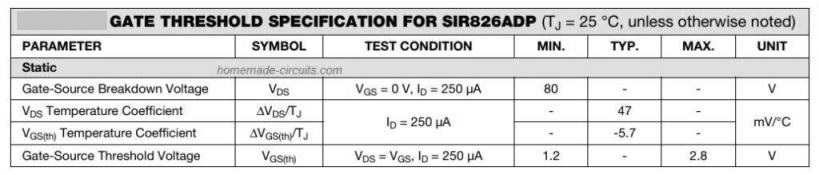
A correctly calculated MOSFET turn-ON process ensures that the device is switched ON with optimal efficiency. While designing MOSFET based circuits you might have wondered what is the correct way of turning ON a MOSFET? Or simply what is the minimum voltage that should be applied across gate/source of the device to switch it ON […]
BJT Transfer Characteristics
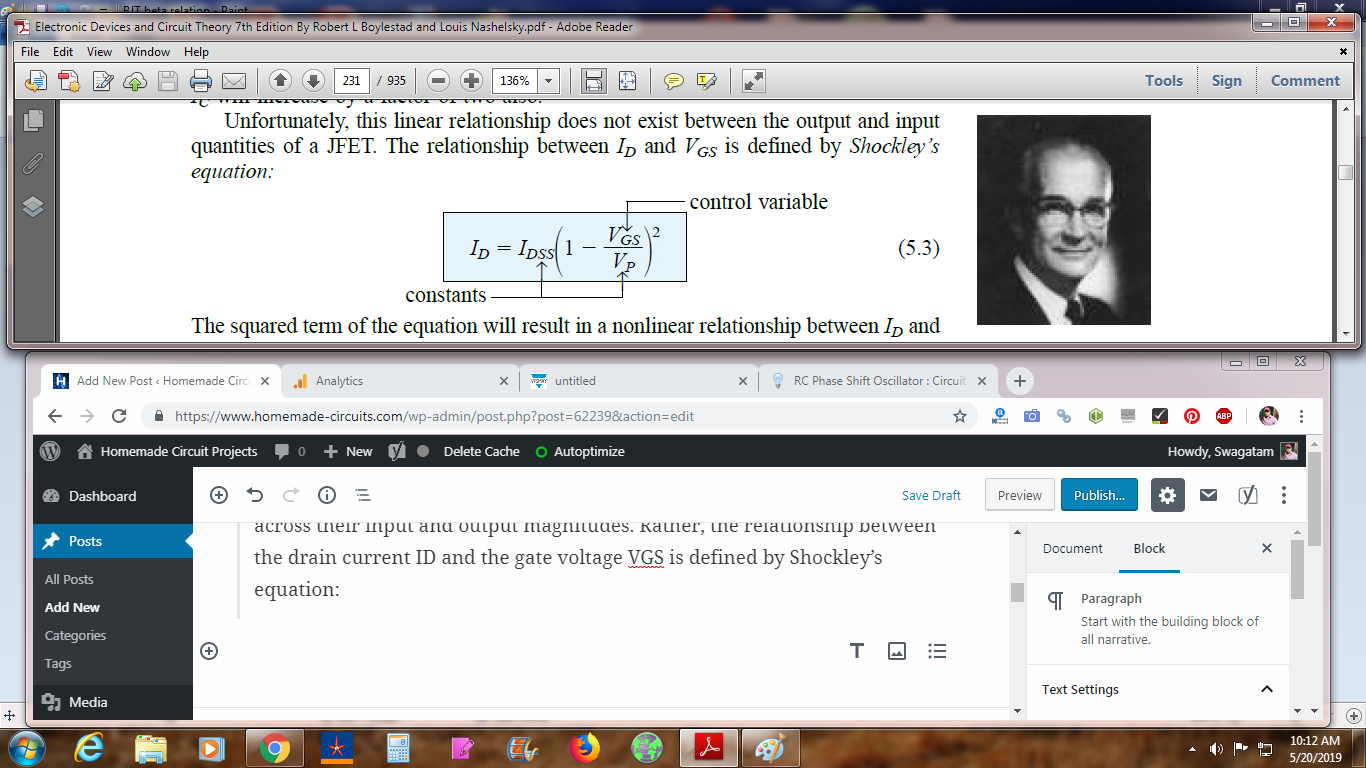
In BJTs or bipolar transistors, transfer characteristics can be understood as plotting of an output current against an input-controlling magnitude, which consequently exhibits a direct “transfer” of variables from input to output in the curve represented in the graph. We know that for a bipolar junction transistor (BJT), the output collector current IC and the […]
How MOSFETs Work: Depletion Type, Enhancement Type
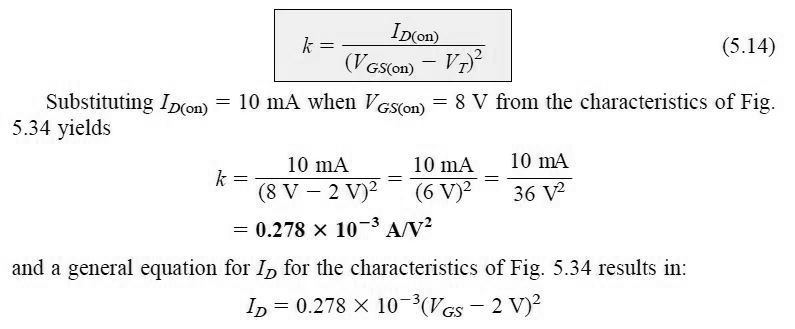
Two main types of FETs that presently exist are: JFETs and MOSFETs. MOSFETs can be further classified into depletion type and enhancement type. Both these types define the fundamental mode of operation of MOSFETs, while the term MOSFET itself is the abbreviation of metal-oxide-semiconductor-field-effect transistor. Due to the fact that the two types have different […]
Darlington Transistor Calculations
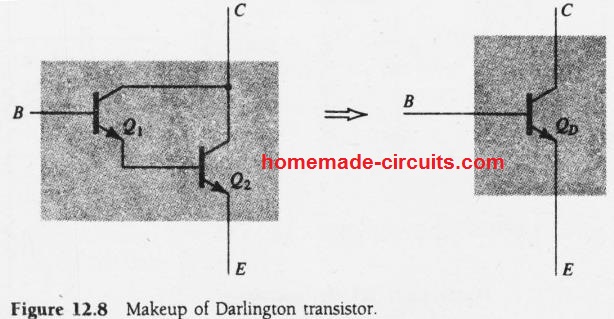
Darlington transistor is a well known and popular connection using a pair of bipolar transistor junction transistor (BJT), designed for operating like an unified “superbeta” transistor. The following diagram shows the details of the connection. Definition A Darlington transistor can be defined as a connection between two BJTs that allows them to form a single […]
P-Channel MOSFET in H-Bridge Applications
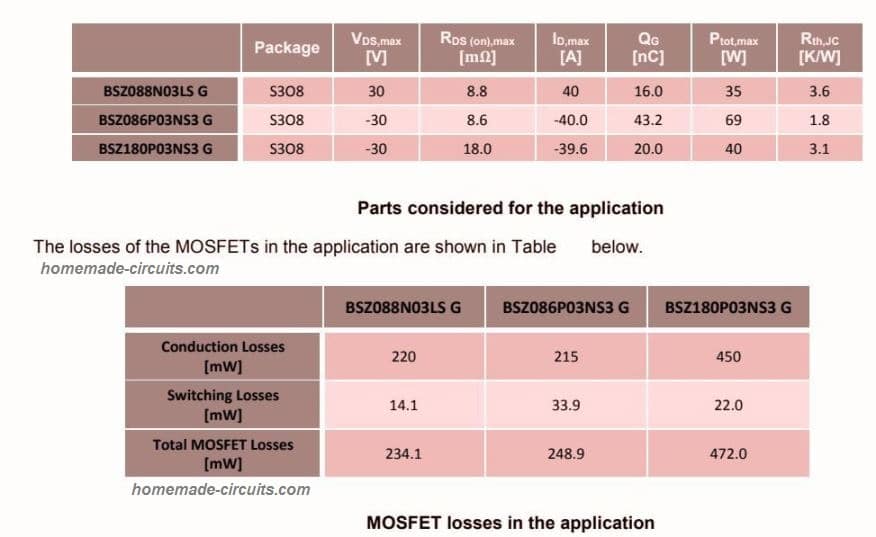
Implementing P-channel MOSFETs in an H-bridge circuit may look easy and enticing, however it may require some stringent calculations and parameters for achieving an optimal response. P-channel MOSFETs are usually implemented for load ON/OFF switching. The ease-of-use of P-channel options on the high side allows them to be very convenient for applications like Low-Voltage Drives […]