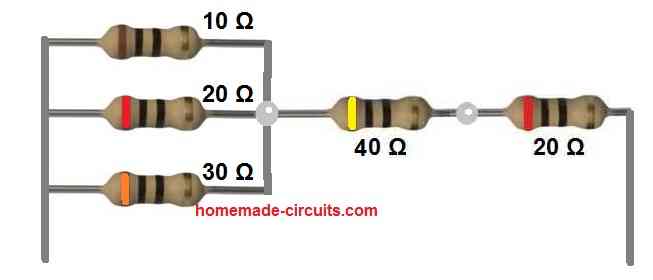
There are three ways to interconnect resistors: series, parallel and in combination of series/parallel. When resistors are joined in series, the current passing via one resistor also passes through the next. When resistors are joined in parallel, they are wired across each other, resulting in the same voltage across each resistor. When resistors are connected […]
Newly Updated Circuit Projects:
How To Use Triac For AC Power Control

Here we are talking about controlling things like lamps, motors, heaters, and other similar electrical loads. The devices we use for this purpose are called thyristor and triac, OK? Both these devices, thyristor and triac, they can actually do this job like simple switch ON/OFF or they can also adjust the power given to these […]
Constant Current Generator Circuits Explained
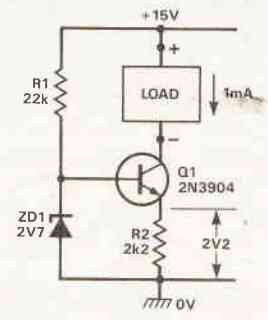
Constant current generators (CCGs), as the name suggests, are circuits designed to produce a steady load current regardless of significant fluctuations in load resistance or voltage levels. Basic Constant Current Generator Circuit Illustrated in Figure 1 is a basic example of such a circuit. In this configuration, Q1 operates in the common emitter mode. A […]
FET Current Source: Explained with Formulas

An FET Current Source is one special type of active circuit that is using a Field Effect Transistor for giving a steady and constant current into a circuit. We are doing this because sometimes we want that current should not change, it should remain fixed and stable. Why We Need Constant Current Now you may […]
SCR/Thyristor Circuit Configurations

Now in this article we will try to understand step by step how we can use this thyristor in practical work. That can be for controlling heavy loads like electric lamps, heaters, or motors and so on. So this part is more about real application and not only about theory. How We Trigger The Thyristor […]
How to Make Logic Gates using Transistors
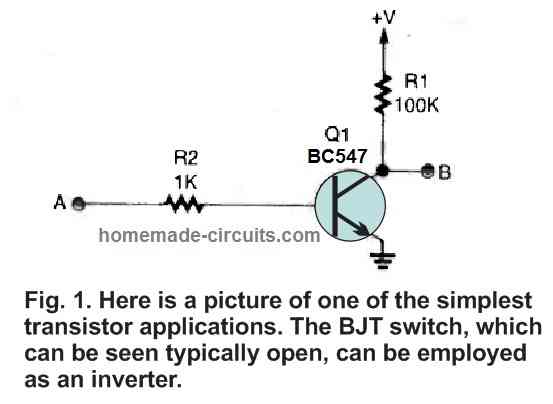
In this post I have explained how to build NOT, AND, NAND, OR, and NOR logic gates using discrete transistors. The main advantage of using transistor logic gates is that they can work even with voltages as low as 1.5 V. In some electronic applications the available voltage may be inadequate to power TTL or […]