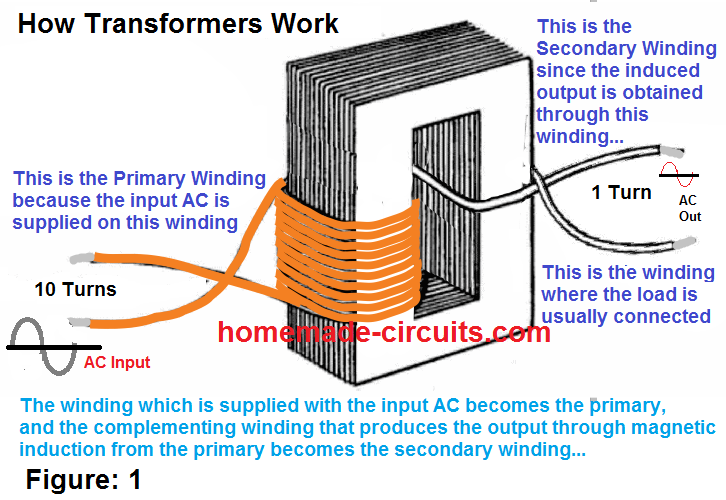
According to the definition given in Wikipedia an electrical transformer is a stationary equipment that exchanges electrical power across a couple of closely wound coils, through magnetic induction. A constantly altering current in one winding of the transformer generates a varying magnetic flux, which, consequently, induces a varying electromotive force over a second coil built […]
Newly Updated Circuit Projects:
Elementary Electronics Explained
For a beginner in electronics, constructing basic electronic projects from a circuit diagram could be overwhelming. This quick guide is intended to assist newbies by enabling them handy details about electronic parts as well as regarding techniques of building circuits. We will examine elementary parts like resistors, capacitors, inductors, transformers and potentiometers. RESISTORS A resistor […]
Tunnel Diode – Working and Application Circuit
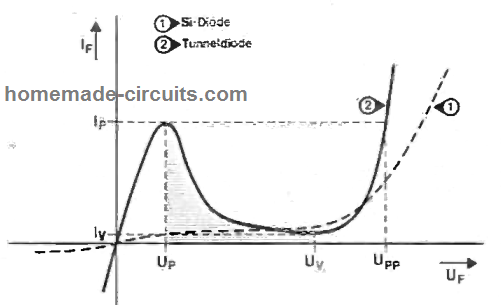
A tunnel diode is a type of semiconductor diode which features a negative resistance on account of a quantum mechanical effect known as tunneling. In this post I have explained the basic characteristics and working of tunnel diodes, and also a simple application circuit using this device. We will see how a tunnel diode could […]
Calculating Transistor as a Switch
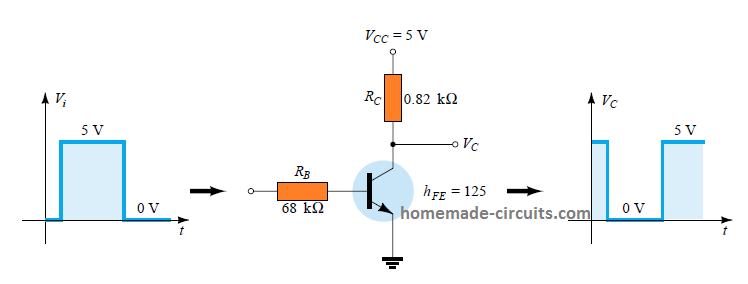
Although transistors (BJTs) are popularly used for making amplifier circuits, these can be also effectively used for switching applications. A transistor switch is a circuit in which the collector of the transistor is switched ON/OFF with relatively larger current in response to a correspondingly switching low current ON/OFF signal at its base emitter. As an […]
Triacs – Working and Application Circuits
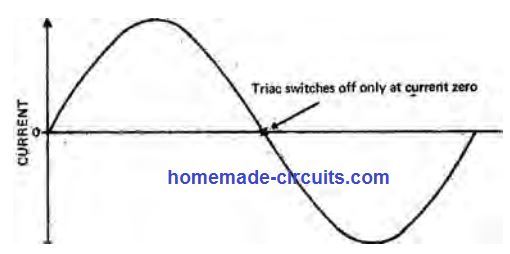
A triac can be compared to a latching relay. It will instantly switch ON and close as soon as it’s triggered, and will remain closed as long as the supply voltage remains above zero volts or the supply polarity is not changed. If the supply is an AC (alternating current), the triac will open during […]
Digital-to-Analog (DAC), Analog-to-Digital (ADC) Converter Circuits Explained

A digital-to-analog converter (DAC, D/A, D2A, or D-to-A) is a circuit designed to convert a digital input signal into an analog output signal. The analog-to-digital converter (ADC) works in the opposite way and transforms an analog input signal into a digital output. In this article I will comprehensively discuss how digital to analog, and analog to digital converter circuits work, using diagrams and formulas. In […]