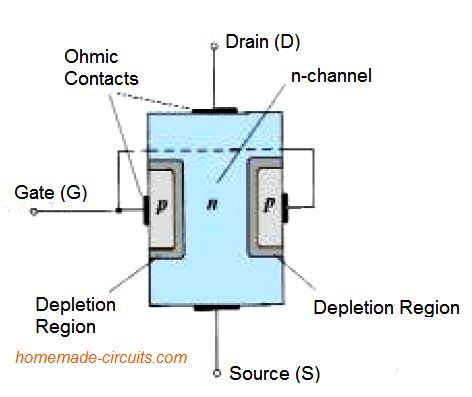
The field-effect transistor (FET) is an electronic device in which an electric field is used to regulate the flow of current. To implement this a potential difference is applied across the gate and source terminals of the device, which alters the conductivity between the drain and source terminals causing a controlled current to flow across […]
Newly Updated Circuit Projects:
Cathode Ray Oscilloscopes – Working and Operational Details
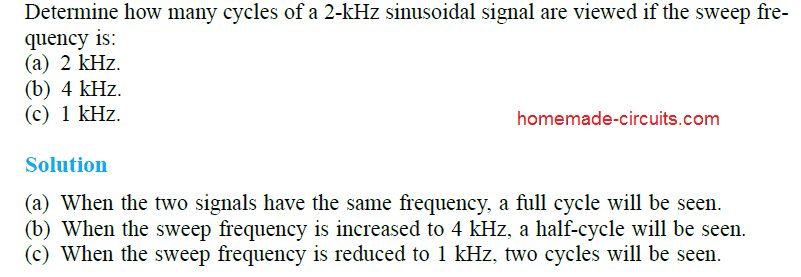
In this post I will elaborately explain how Cathode Ray Oscilloscopes (CRO) work and its internal construction. We will also learn how to use a CRO using the various controls and understand the graphical representations of the various input signals on the display screen of the scope. Importance of Cathode Ray Oscilloscopes (CRO) We know that majority […]
Capacitor Inductor Calculations
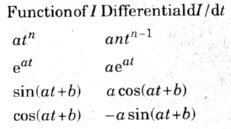
Inductors can be imagined as the opposite of capacitors. The main difference between a capacitor and an inductor is that a capacitor carries a protective dielectric between its plates, which inhibits the conduction of current across its terminals. Here it acts like an open circuit. On the other hand the inductance of an inductor is […]
Learning Basics of Semiconductors
In this post I will comprehensively explain regarding the fundamental working principles of semiconductor devices, and how the internal structure of semiconductors function under the influence of electricity. The resistivity value between these semiconductor materials neither has a complete conductor characteristic nor a complete insulator, it is in between these two limits. This feature may […]
How to Troubleshoot Transistor (BJT) Circuits Correctly
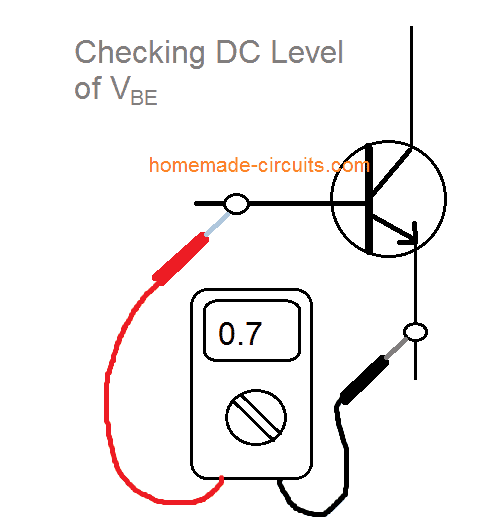
Troubleshooting BJT circuits is basically a process of identifying the electrical faults in the network using multimeters across the various nodes in the circuit. BJT troubleshooting techniques is a huge topic and therefore including 100 % solutions and strategies can be perhaps difficult within a single article. Basically, the user should know about a handful […]
How to Connect Transistors (BJT) and MOSFET with Arduino
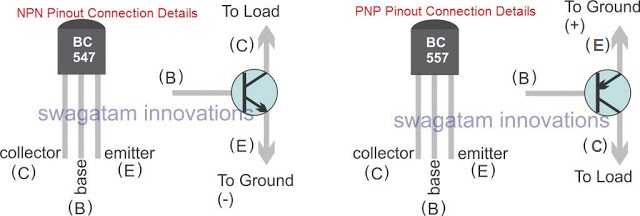
The interfacing of power devices like BJTs, and MOSFETs with Arduino output is a crucial configuration which allows switching high power loads through low power outputs of an Arduino. In this article we elaborately discuss the correct methods of using or connecting transistors like BJTs and mosfets with any microcontroller or an Arduino. Such stages […]