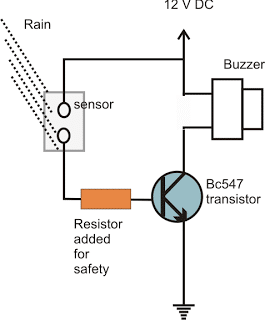
In this post we try to evaluate how to configure or connect electronic components such as resistors, capacitors withing electronic circuits through correct calculation Kindly read my previous post regarding what is voltage and current, in order to grasp the below explained basic electronic facts more effectively. What is a Resistor – It is an […]
Transistors
How to Make Any Light a Strobe Light Using Just Two Transistors
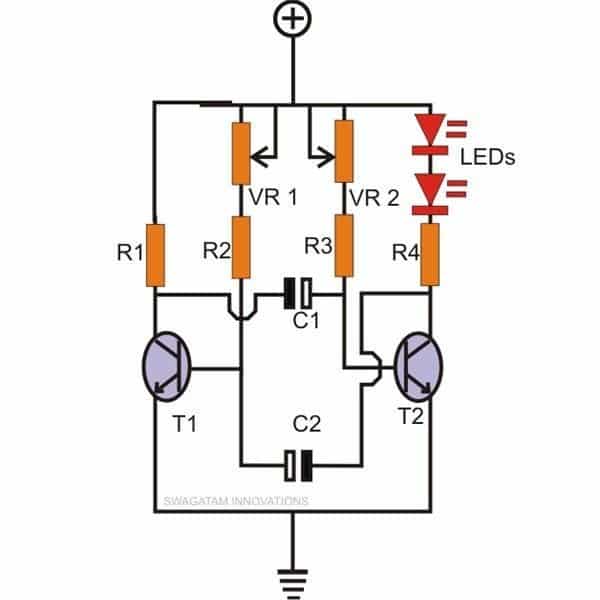
If you feel strobe lights very interesting but are disappointed by the fact that these wonderful light effects can be produced only through complex xenon tube then probably you are quite mistaken. It is very much possible to make any light a strobe light if you are equipped with a proper driving circuit capable of […]
How to Use Transistors
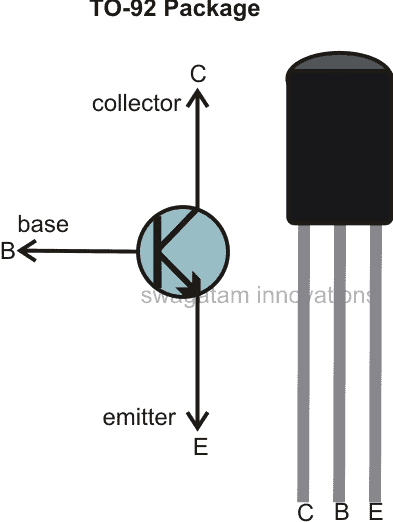
If you have understood correctly, how to use transistors in circuits, you might have already conquered half of electronics and its principles. In this post we make an effort in this direction. Introduction Transistors are 3 terminal semiconductor devices which is able to conduct relatively high power across their two terminals, in response to a […]
Hi-Fi 100 Watt Amplifier Circuit Using 2N3055 Transistors – Mini Crescendo
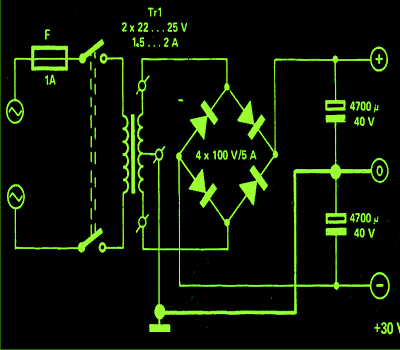
Video Demonstration of the Crescendo Amplifier The mini crescendo 100 watt transistorized amplifier circuit explained here was built and tested by me and am extremely pleased by its performance and also its ruggedness as far as maintenance and handling is concerned. Amplifier Class Basically, the entire configuration is a symmetrical class A amplifier incorporating an […]
How to Connect Two or More Transistors in Parallel
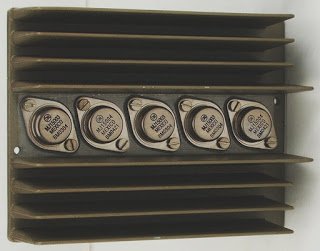
Connecting transistors in parallel is a process in which the identical pinouts of two or more transistors are connected together in a circuit in order to multiply the power handling capacity of the combined parallel transistor set. In this post I have explained how to safely connect multiple transistors in parallel, these can be BJTs […]