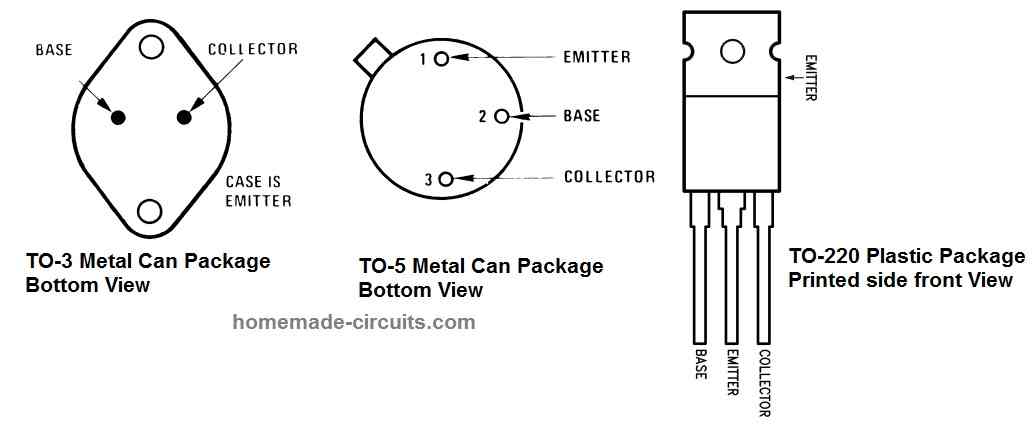
The LM195 and LM395 are both high efficiency power transistors that were initially manufactured by National Semiconductor Corporation, and later acquired by “Texas Instruments”. These special power transistors are intended to be used in high power switching applications, where low power dissipation and high current gain are critical parameters. These special power transistors are virtually […]
Newly Updated Circuit Projects:
LED Flashlight Circuit using 1.5 V Cell
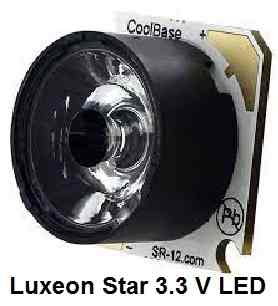
This LED flashlight circuit is able to power a Luxeon type LED with a single 1.5 V battery. This results in a miniature flashlight that will not run out quickly. By: P. Martin Basically it is a boost converter circuit which boosts the 1.5 V DC from a AAA cell and converts it into a […]
Delay OFF Lamp Timer Circuit
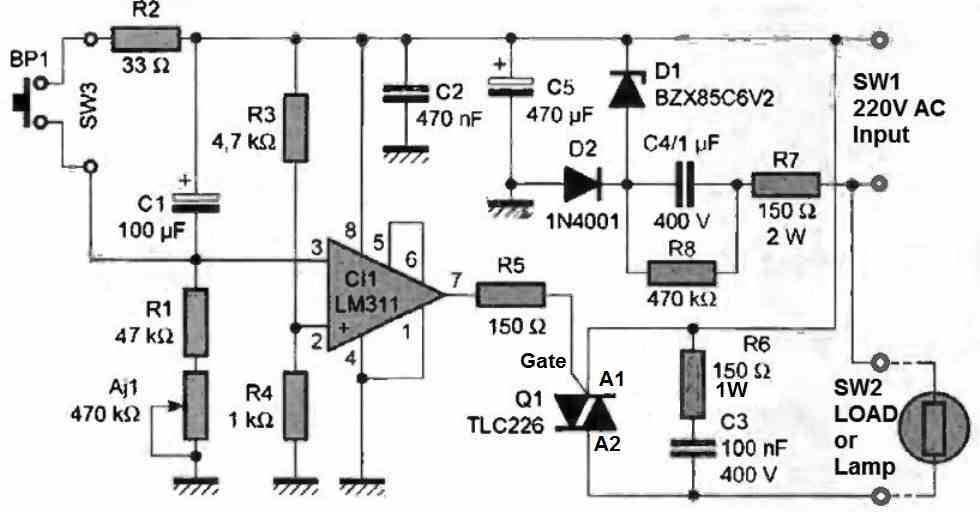
This delay off lamp timer circuit will automatically switch OFF a connected lamp after a predetermined time has elapsed. This time delay can be adjusted with a variable resistor or a potentiometer. The circuit is initiated by pressing a push button, which causes the connected lamp to switch ON. The lamp will continue to remain […]
LM311 Datasheet, Circuit Applications
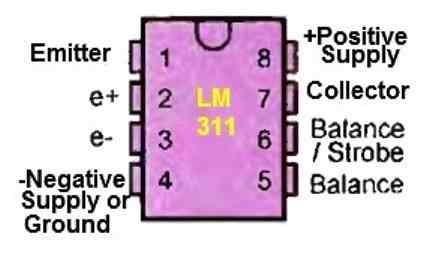
The LM311 is a versatile, fast voltage comparator with multiple capabilities. Its output stage is “open collector” and “open emitter,” allowing for various configurations. It can directly control relays and its output can be compatible with several logics, including TTL. Technical Specifications and Datasheet Here are some of the technical specifications of the LM311 comparator […]
Proximity Detector using Hall Effect Sensor Circuit
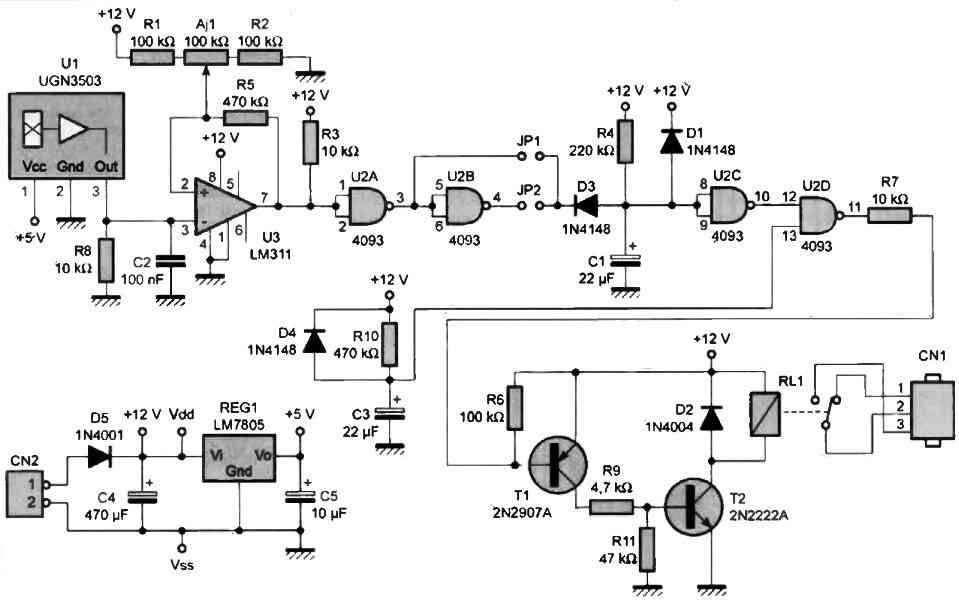
This proximity detector circuit uses a Hall effect sensor to detect the approach of a magnetic object, such as a magnet fixed to the frame of a door. The application is simple, but widely used. The use of a Hall effect sensor solves many problems that arise when one wants to detect the opening of […]
Temperature Regulator Circuits using IC LM335
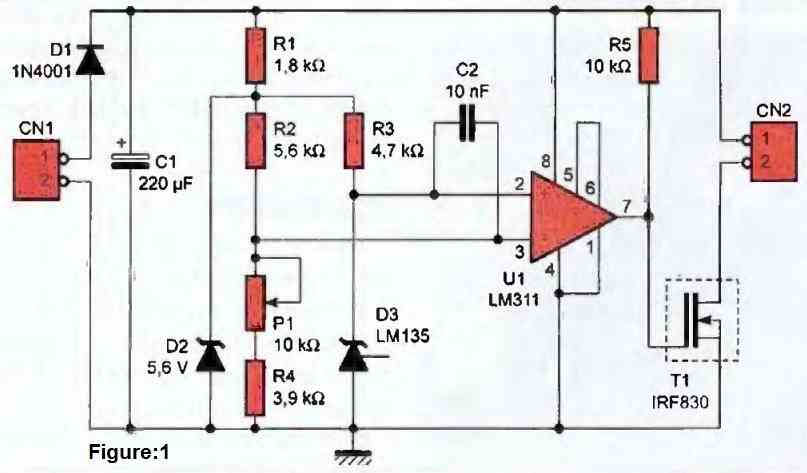
There are many cases where it is desirable to actively regulate the operating temperature of an electronic assembly. Sometimes, it is imperative to dissipate the heat generated by the components (this is the case for the majority of microprocessors in our modern PCs). On the contrary, it is necessary to artificially increase the operating temperature […]