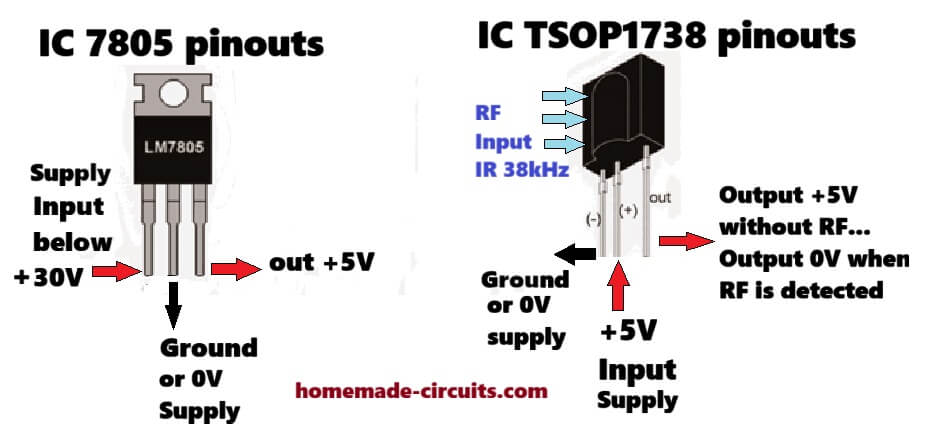
TSOP17XX series devices are advanced infrared sensors having a specified center frequency of operation which makes their detection extremely reliable and foolproof. In this post I have explained how to connect a TSOP series infrared sensor and use it for a specified IR remote control operations. TSOP IR Sensor Specifications A TSOP series of IR […]
Archives for 2015
USB Isolator Diagram and Working
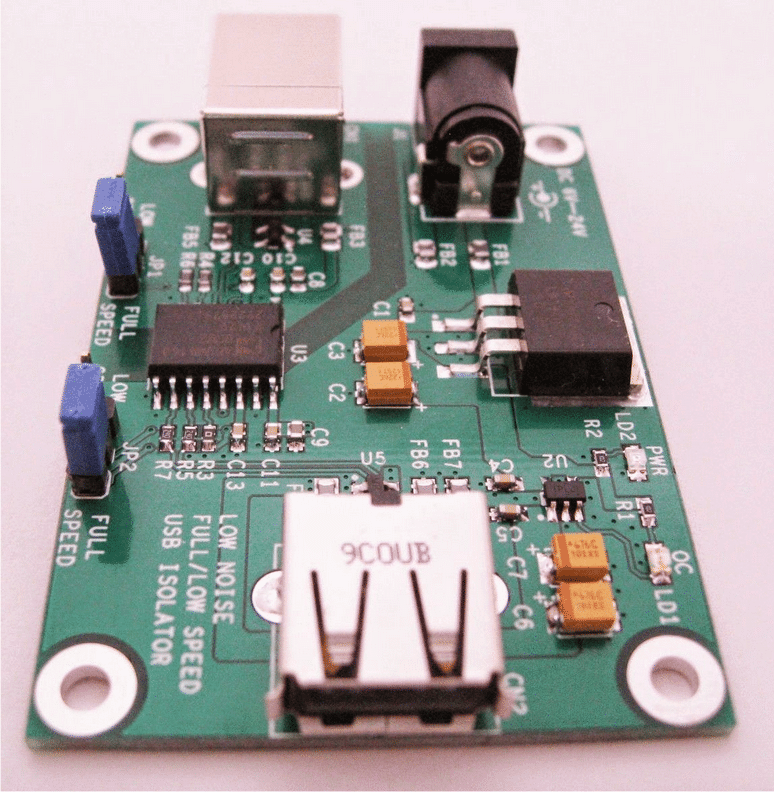
The following email discussions were sent to me by Mr John Sweden who is one of the avid readers of this blog, here he explains about an USB isolator device, and how it may be incorporated while using an oscilloscope with a PC, in order to safeguard the oscilloscope and the test circuit from accidental […]
Sine wave PWM (SPWM) Circuit using Opamp
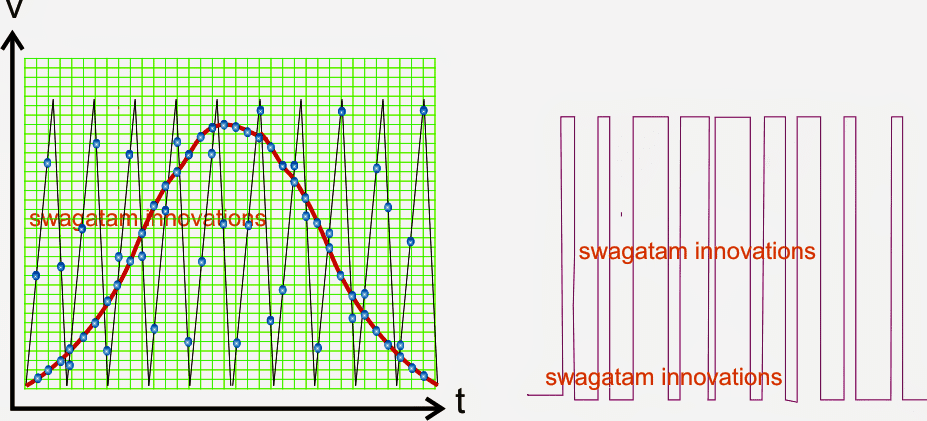
SPWM refers to Sine Wave Pulse Width Modulation which is a pulse width arrangement in which the pulses are narrower at the start, which gradually get broader at the middle, and then narrower again of the end of the arrangement. This set of pulses when implemented in an inductive application like inverter enables the output […]
How Thyristors (SCR) Work – Tutorial
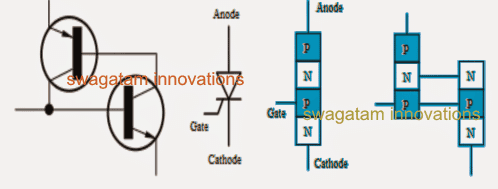
Basically an SCR ( Silicon Controlled Rectifier) which is also known by the name Thyristor works quite like a transistor. What SCR Stands for The device gets its name (SCR) due to its multi layered semiconductor internal structure which refers to the “silicon” word in the beginning of its name. The second part of the […]
What’s PWM, How to Measure it
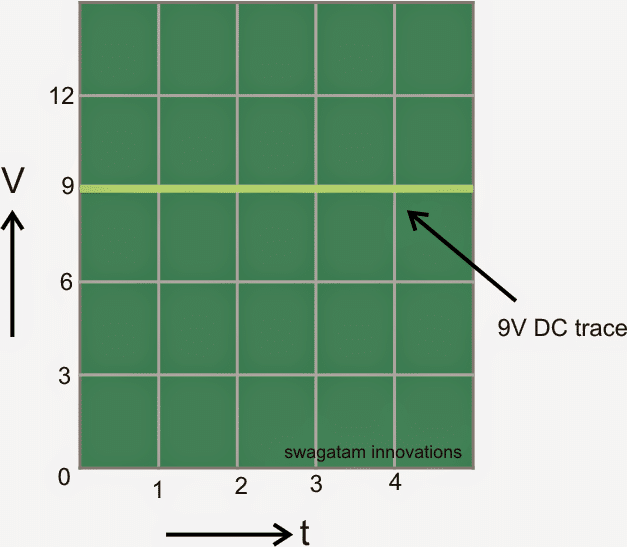
PWM stands for pulse width modulation which signifies the variable nature of the pulse widths that may be generated from a particular source such as a discrete IC, MCU, or a transistorized circuit. What’s PWM In simple terms a PWM process is nothing but switching ON and OFF a supply voltage at a particular rate […]
Calculating Filter Capacitor for Smoothing Ripple
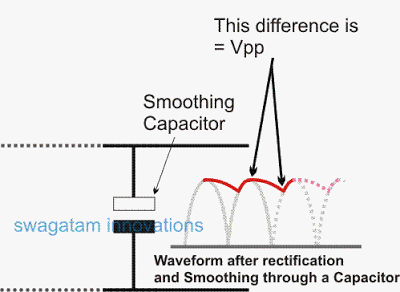
In the previous article I explained about ripple factor in power supply circuits, here we continue and evaluate the formula for calculating ripple current, and consequently the filter capacitor value for eliminating the ripple content in the DC output. The previous post explained how a DC content after rectification may carry the maximum possible amount […]