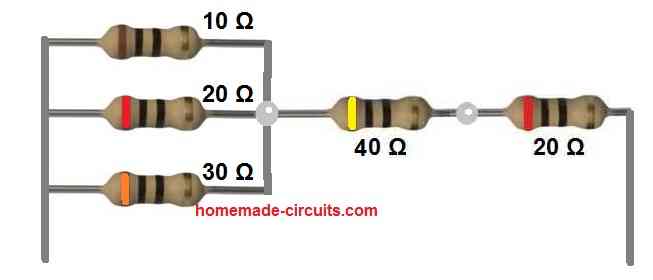
There are three ways to interconnect resistors: series, parallel and in combination of series/parallel. When resistors are joined in series, the current passing via one resistor also passes through the next. When resistors are joined in parallel, they are wired across each other, resulting in the same voltage across each resistor. When resistors are connected […]
Resistors
Understanding Color Codes of Resistors with Practical Examples

In this post I will comprehensively explain regarding the various standard resistor color codes, and systems employed for assigning resistors their specific values. The post also explains how to read and identify resistor values from their color codes. By: S. Prakash The color codes used in resistors denote a leaded resistor’s value. These color codes […]
Types of Resistors and their Working Differences Explored
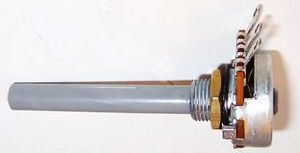
The industry of electronic circuits uses resistors of various different types available in the market. The properties of these resistors vary and are different for each type being ruled by their manufacturing and construction process. By: S. Prakash Over a time period, the resistors of various types which were and are being used in the […]
SMD Resistors – Introduction and Working
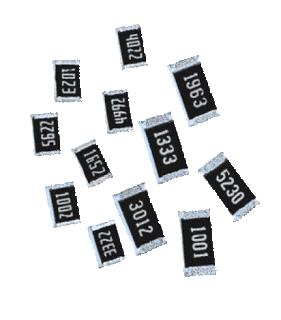
Resistors which are based on SMT technology are called SMT resistors which are one of the members of the SMD family or surface mount device family. By: S. Prakash The electronic equipment of various types such as televisions, commercial communication equipment, cell phones, research equipment of high technology and MP3 player uses the SMD resistors. […]
How Flex Resistors Work and how to Interface it with Arduino for Practical Implementation
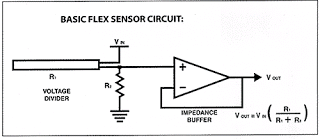
As electronics enthusiasts we may come across many kinds of resistors, from small fixed resistor to high current bulk rheostat. There are humongous classifications among resistors, but here we will focus on a particular kind of resistor called “flex resistor” and learn how it works. As the name signifies a flex resistor is flexible and […]
Blinking LED Circuit using LDR and Resistors
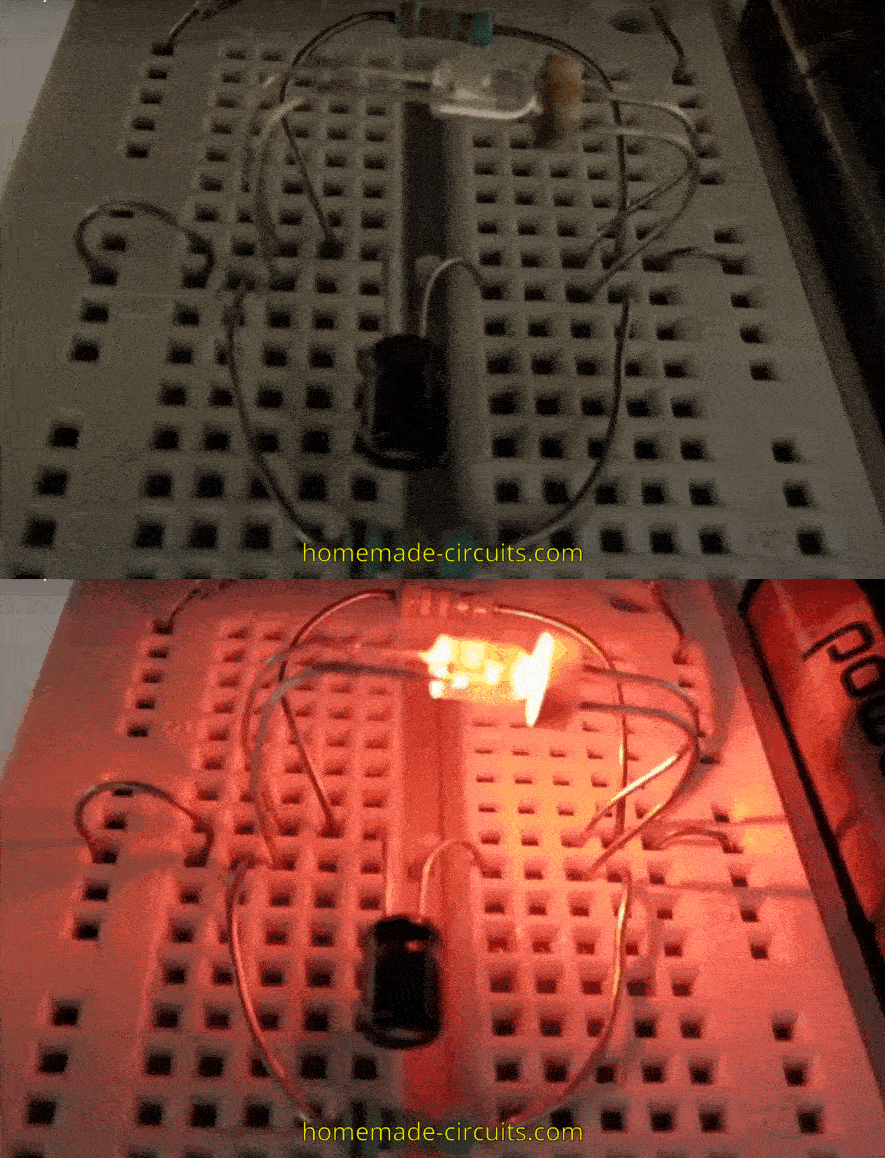
This is perhaps the most simplest looking LED flasher that does not depend on any semiconductor. This LED blinker circuit utilizes ordinary passive components like a few resistors, a capacitor and an LDR. Meaning, this LED flasher does not depend on transistors or ICs to create the blinking effect. Circuit Description The LED-LDR combination is […]