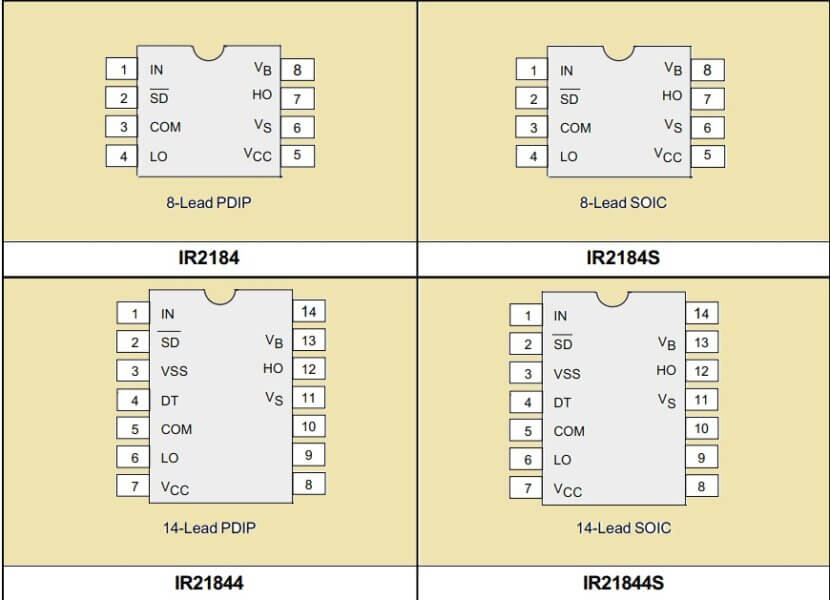
In this article we are going to learn about one very useful IC called IR2184 or IR21844. This one is a smart half-bridge gate driver IC which we can use for driving both high-side and low-side MOSFETs or IGBTs, mainly when we are making full bridge inverters, or DC motor controllers, or even induction heater […]
Bridge
Explained: Snubber Circuit for MOSFET H-Bridge

Here we are going to talk deeply about snubber circuits and why we must use them with MOSFET H-bridge circuits. Because if we do not put snubber in H-bridge then that MOSFETs might blow off during switching. Specially when we drive inductive loads like transformer, motor, relay, solenoid, etc. then this thing becomes very serious. […]
H-Bridge Sine Wave Inverter Circuit using Arduino
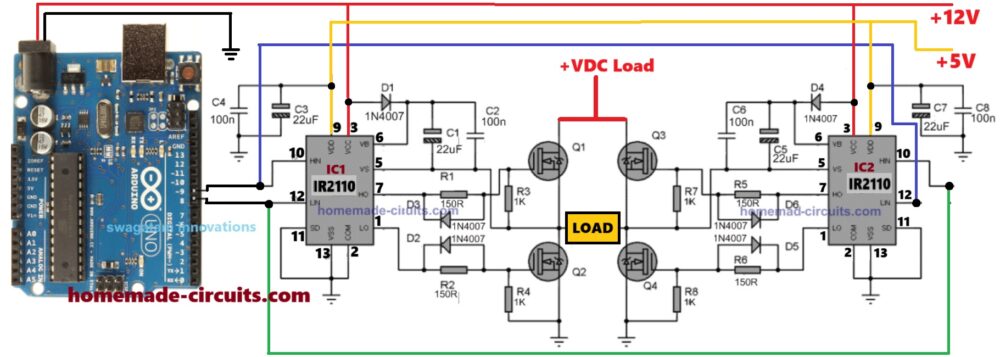
In this article I will explain how we can build an Arduino-controlled H-Bridge sine wave inverter circuit using some easy parts. So this thing will basically convert DC into AC but in a way that looks like a sine wave, right? We are using an Arduino to generate PWM signals and these signals will drive […]
How Load Conducts in Half-Bridge Driver Circuits like IR2184 or IR2110
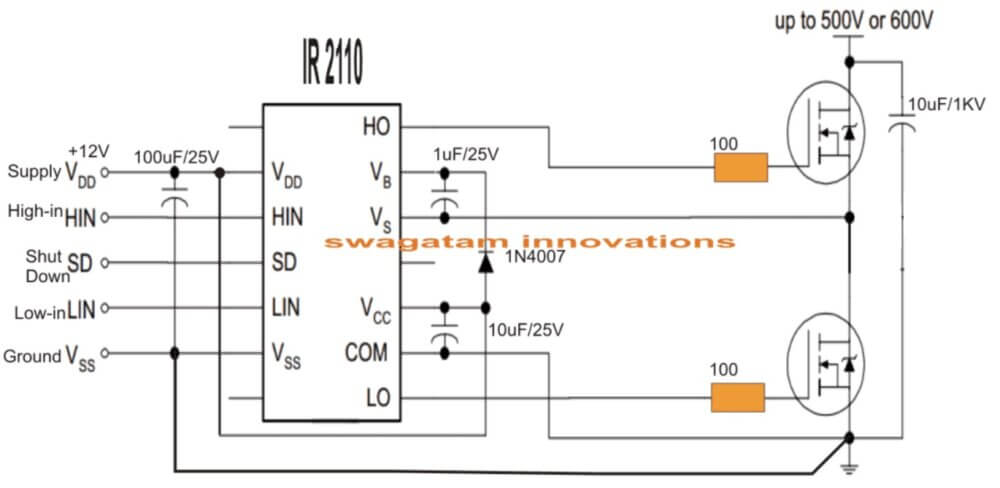
Many folks, especially beginners, they get fully confused when they try to use a half-bridge driver circuits using ICs like IR2184 or IR2110. They look at the datasheet diagram and start thinking, “Bro, how the load will conduct? The MOSFETs are switching one by one so how the current will pass through the load? Looks […]
Universal H-Bridge Circuit Module
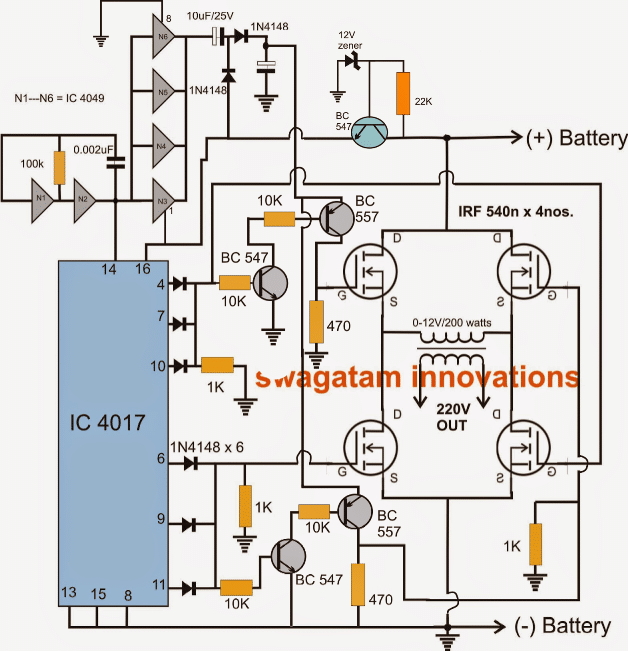
In this article I will elucidate a simple universal H-bridge module using BJTs and N-channel MOSFETs. This module can be integrated with any standard oscillator ICs such as IC 4047 or IC SG3525 or even IC 555, to create a highly efficient H-bridge inverter circuits. Why using 4 N-channel MOSFET H-Bridge is the Most Efficient […]
Simplest Full Bridge Inverter Circuit
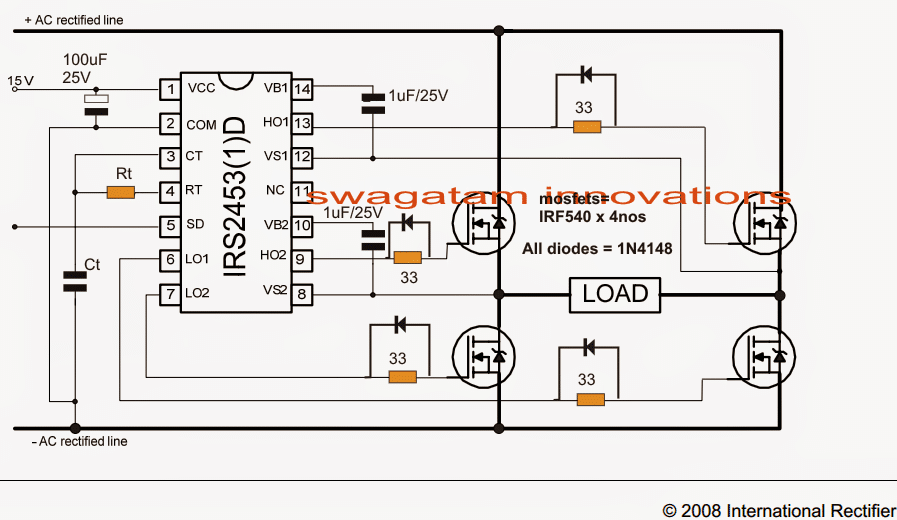
Among the different existing inverter topologies, the full bridge or the H-bridge inverter topology is considered to be the most efficient and effective. Configuring a full bridge topology could involve too many criticality, however with the advent of full bridge driver ICs these have now become one of the simplest inverters one can build. What’s […]