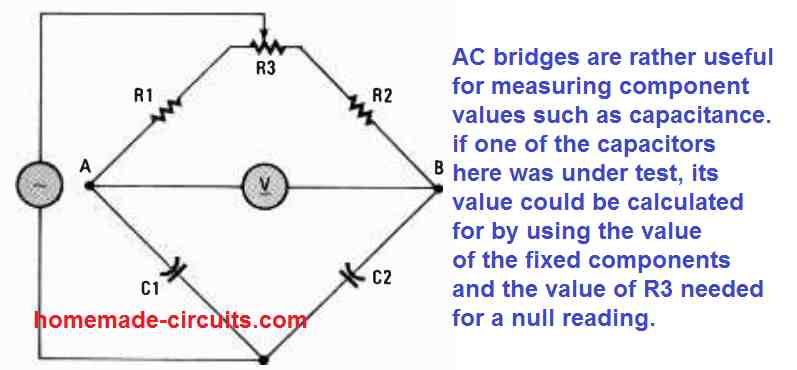
An AC bridge is a circuit which can be used for measuring parameters like capacitance, resistance, Inductance using differential method, by comparing them with known values of similar components, positioned diagonally across a bridge circuit, and through an analogue meter placed at the center of the bridge. Before we begin talking about the AC bridge […]
Bridge
Easy H-Bridge MOSFET Driver Module for Inverters and Motors
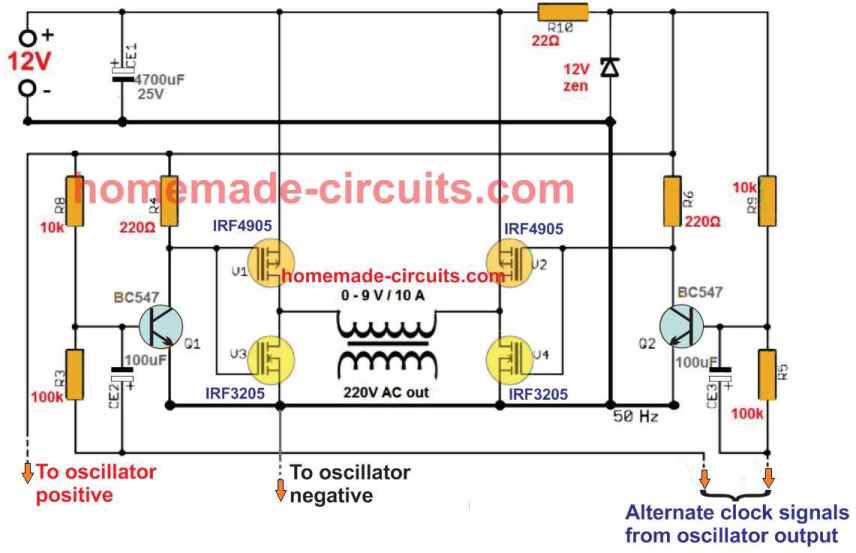
If you are wondering if there’s an easy way to implement an H-bridge driver circuit without using the complex bootstrapping stage, the following idea will precisely solve your query. In this article I have explained how to build an universal full-bridge or H-bridge MOSFET driver circuit, using P-channel and N-channel MOSFETs, which can be used […]
P-Channel MOSFET in H-Bridge Applications
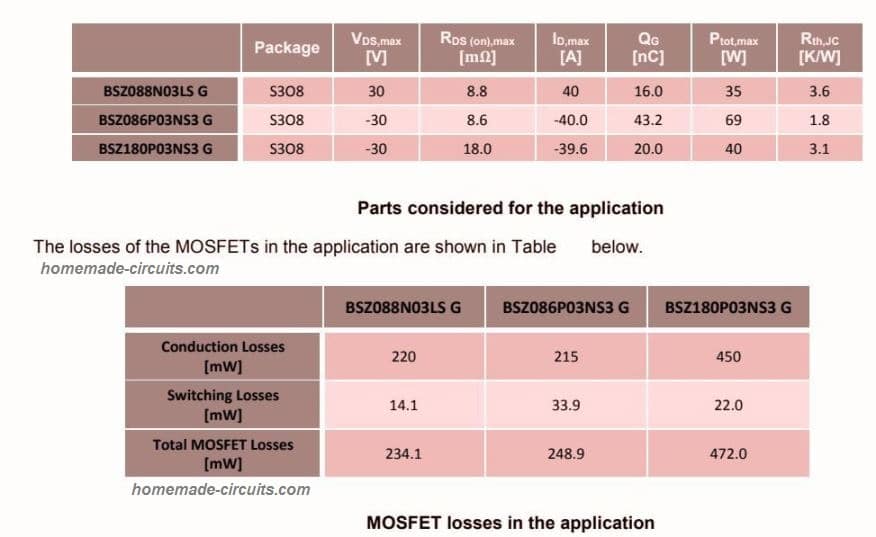
Implementing P-channel MOSFETs in an H-bridge circuit may look easy and enticing, however it may require some stringent calculations and parameters for achieving an optimal response. P-channel MOSFETs are usually implemented for load ON/OFF switching. The ease-of-use of P-channel options on the high side allows them to be very convenient for applications like Low-Voltage Drives […]
H-Bridge Bootstrapping
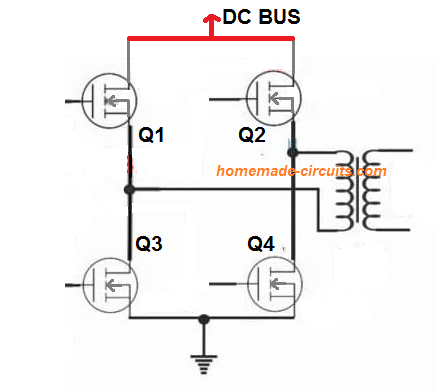
Bootstrapping is a crucial aspect that you will find in all H-bridge or full bridge networks with N-channel mosfets. It is a process in which the gate/source terminals of the high side mosfets are switched with a voltage that’s at least 10V higher than its drain voltage. Meaning, if the drain voltage is 100V, then […]
Phase Shift Oscillator Circuits – Wien-Bridge, Buffered, Quadrature, Bubba
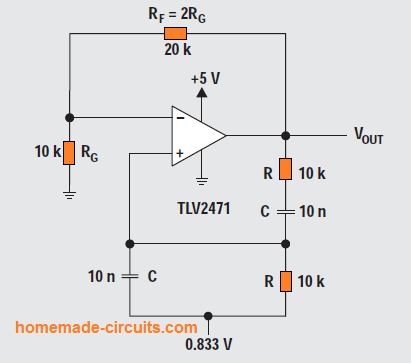
A phase-shift oscillator is an oscillator circuit designed to generate a sinewave output. It operates with a single active element such as a BJT or an op amp configured in an inverting amplifier mode. The circuit arrangement creates a feedback from the output to the input through using an RC (resistor/capacitor) circuit arranged in a […]
Arduino Full-Bridge (H-Bridge) Inverter Circuit
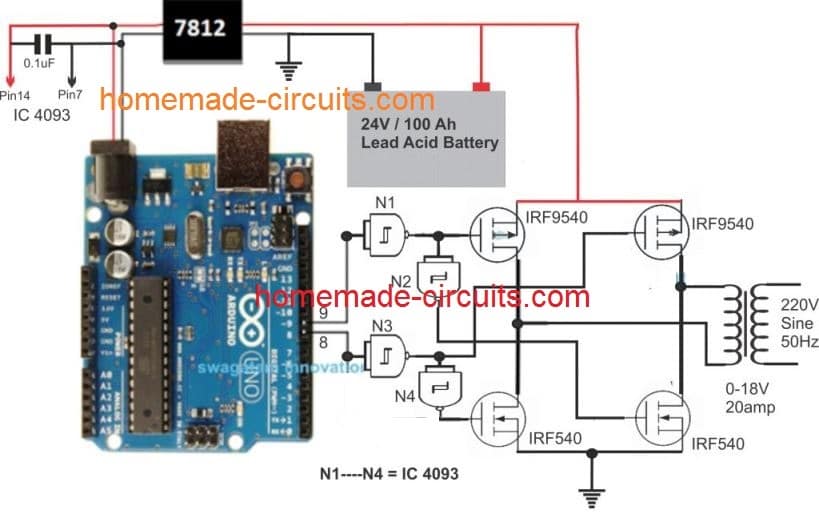
A simple yet useful Microprocessor based Arduino full-bridge inverter circuit can be built by programming an Arduino board with SPWM and by integrating a few mosfets with in H-bridge topology, I have explained the details below: In one of our earlier articles I will comprehensively explained how to build a simple Arduino sine wave inverter, […]