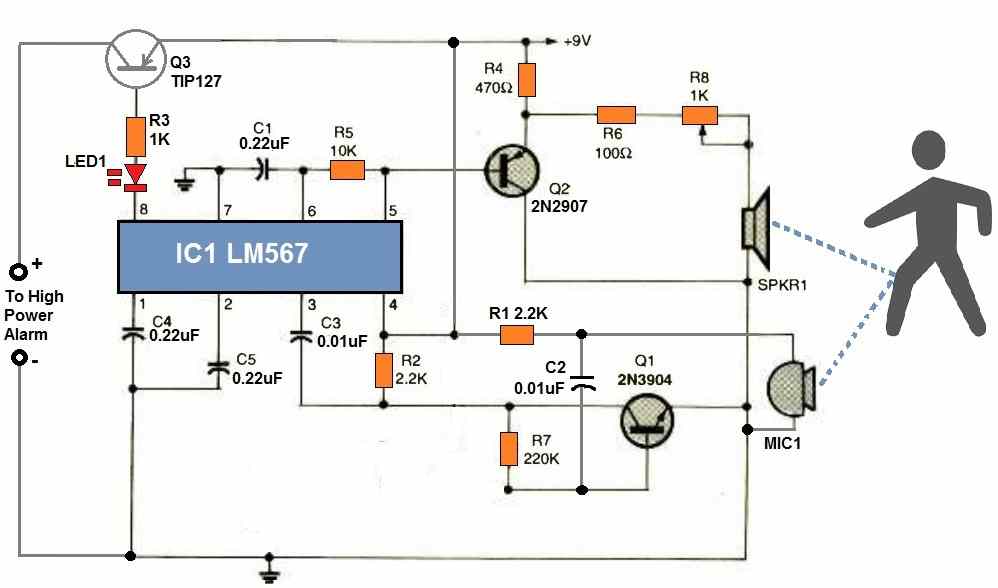
An ultrasonic burglar alarm circuit is an electronic device which transmits ultrasonic waves to detect the movement of an intruding person. The ultrasonic waves hit the intruder and the reflected waves are picked up by the circuit. This reflected wave is used to activate a loud alarm which alerts the owner about the presence of […]
Newly Updated Circuit Projects:
What is a Gunn Diode? How it Works?
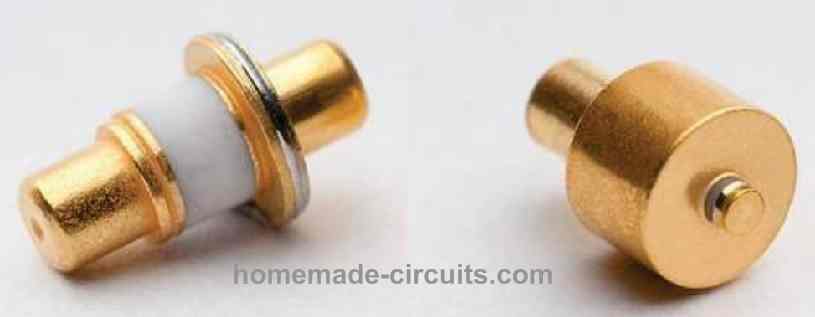
Gunn diodes are semiconductor devices which are used to generate low-power microwave signals in a simple and low-cost manner. These have been in use for more than 60 years now. Gunn diodes can work with frequencies ranging from a few gigahertz to over 100 GHz. It was first discovered by J. B. Gunn of IBM […]
Blinking LED Circuit using LDR and Resistors
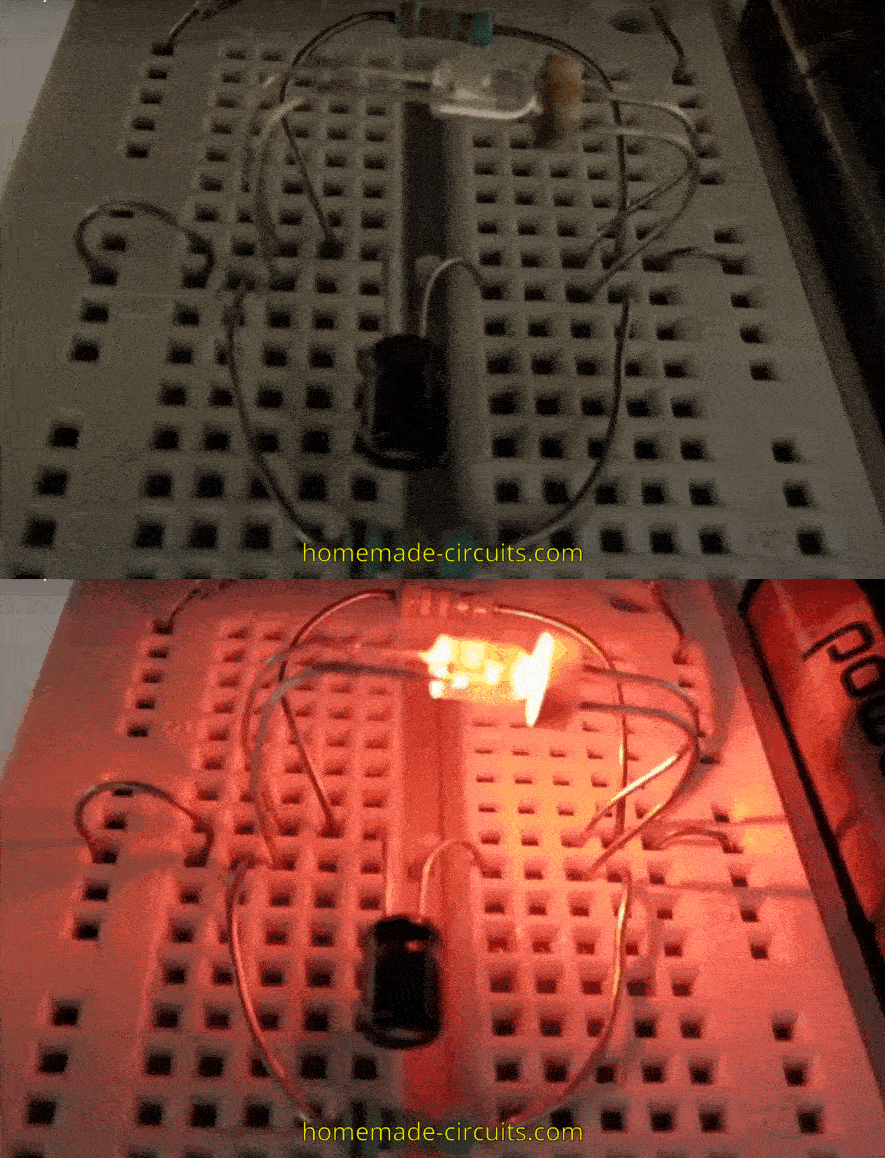
This is perhaps the most simplest looking LED flasher that does not depend on any semiconductor. This LED blinker circuit utilizes ordinary passive components like a few resistors, a capacitor and an LDR. Meaning, this LED flasher does not depend on transistors or ICs to create the blinking effect. Circuit Description The LED-LDR combination is […]
Point Contact Diodes [History, Construction, Application Circuit]
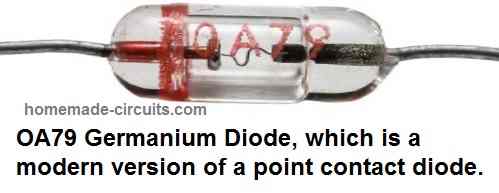
In this article I will comprehensively explain about the early point contact diodes, and their modern versions which are Germanium diodes. Here I have explained the following facts: Brief history of point contact diodes Construction of point contact diodes and modern Germanium diodes Advantages of point contact diodes or Germanium diodes Applications of Germanium Diodes […]
DC Power Controller Circuit
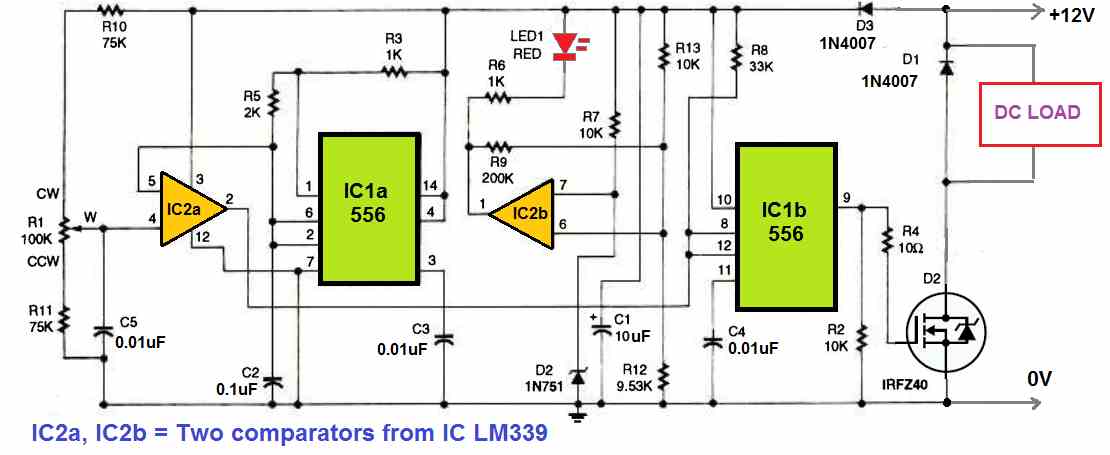
In this post I have explained a DC power controller circuit which can be used for controlling the power of motors and lamps with maximum efficiency. By Sangeeta Naik How MOSFETs conduct to Handle Power Efficiently A minimum amount of power is lost whenever a power transistor (BJT or MOSFET) is in the turned off […]
Diodes: Working, How to Use, Applications
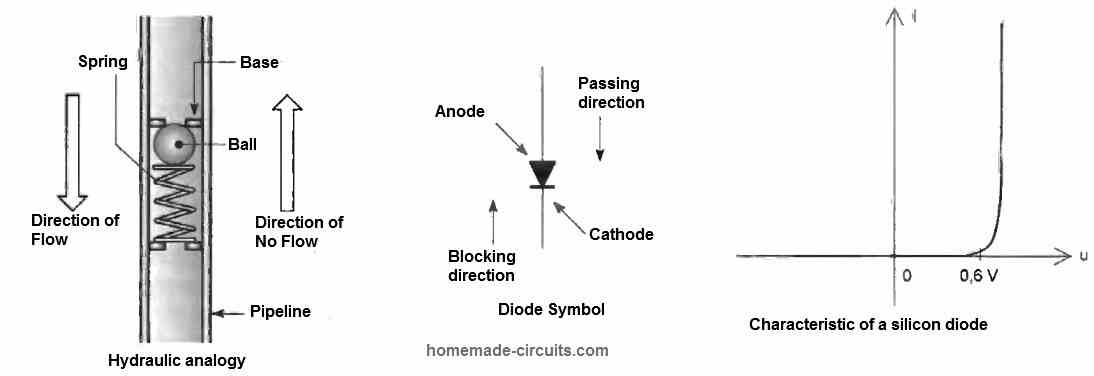
It’s John Ambrose Fleming (1849-1945), a British engineer, who invented the first diode in 1904, in the form of an electron tube. Later, with the development of semiconductor technology, the diode became a dipole consisting of two substrates: one, rich in free electrons, and of type N, the other deficient in electrons, and of type […]