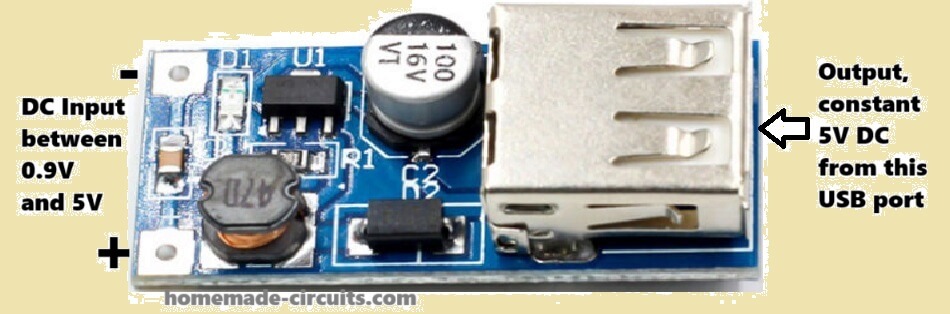
So this is a DC-DC boost converter that takes a low voltage (0.9V to 5V) and steps it up to a stable 5V. We use this when we have a small battery, but we need 5V output, like for USB devices. It is super useful for battery-powered projects and small electronics. Main Features How It […]
Step
Step-Down Adjustable Voltage, Current Regulator Circuit using LM2673
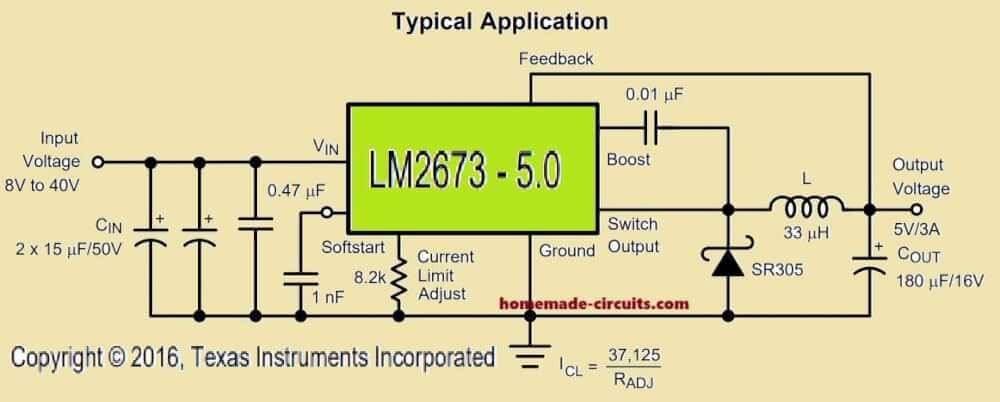
The LM2673 series of regulators is a collection of monolithic integrated circuits that are designed to provide all the active functions needed for making a step-down, or buck converter, switching regulator circuit. This means that they are capable of driving loads of up to 3 amps while maintaining excellent line and load regulation characteristics. One […]
Digital Step Sine wave Generator Circuit
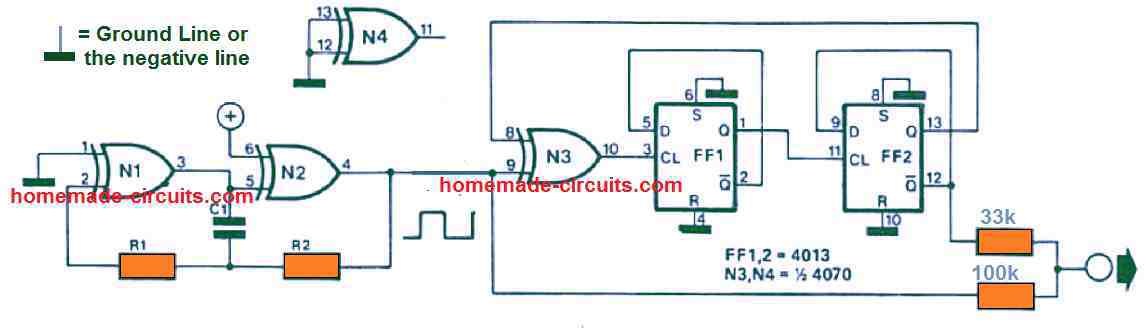
In this post I have explained how to build a simple yet accurate digital sine wave generator circuit, which is basically an oscillator circuit, enhanced to generate square waves through incrementing steps, which ultimately appears like a stepped sine waveform. By Ron Mackenzy The difference between analogue sine wave generator and digital sine wave generator […]
Arduino 2-Step Programmable Timer Circuit
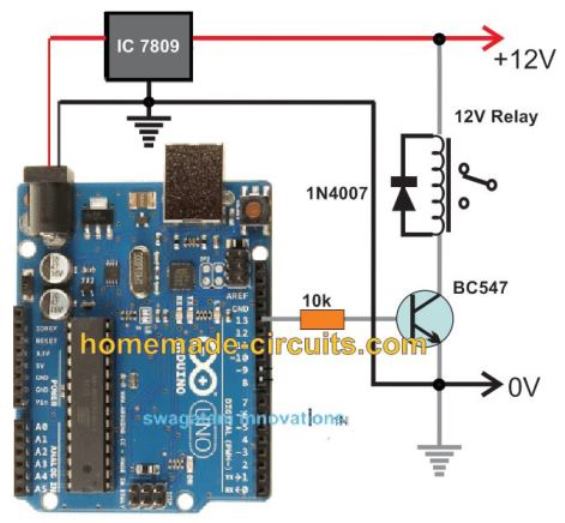
In this article I have explained how to make a simple 2-step Arduino programmable timer circuit, which can be used to switch an electrical load ON/OFF with independently adjustable ON and OFF timings. For example if you want a light to remain ON for 24 hours and OFF for 2 hours, you can simply do […]
How to Make Step Down Transformers

A step down transformer is a device which reduces a higher AC potential to a lower AC potential as per its winding ratio and specifications. In this article we are going to discuss how to design and construct a basic step down transformer which are typically applied in mains-operated power supplies. Introduction This will likely […]
How to Make Arduino on Breadboard – Step by Step Instructions

In this article I have explained how to make an Arduino on a breadboard. We are also going to see what is an Arduino, how to program it and how to assemble them as standalone microcontroller on a breadboard or PCB. Arduino was a boon for those who wanted to learn microcontrollers and embedded system […]