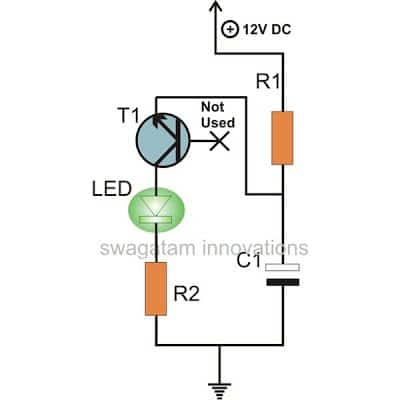
It is possibly the smallest LED flasher to date, which is able to flash an LED ON/OFF infinitely using a single transistor, a resistor, and a capacitor. Can you imagine making a great looking LED flasher or blinker with just a single transistor and a couple of other passive parts? That’s exactly what I have […]
Flasher
Mains AC Xenon Tube Flasher Circuit
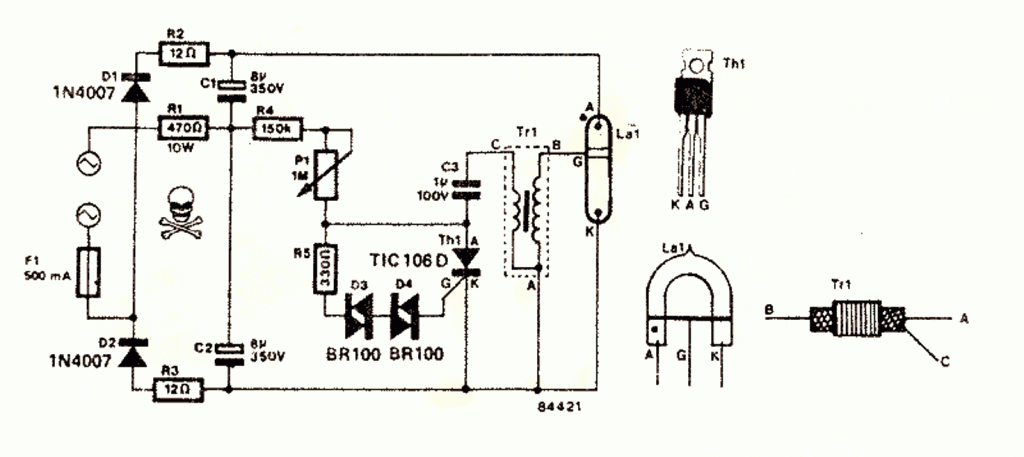
In this article I have explained a very simple yet amusing mains operated xenon tube flasher circuit using ordinary electronic components. Circuit Operation The circuit was taken from one of the old elektor electronics magazine and it is indeed a very cute little circuit which may be used for creating high intensity lighting effects during […]
220V Operated LED Flasher Circuit using Triac
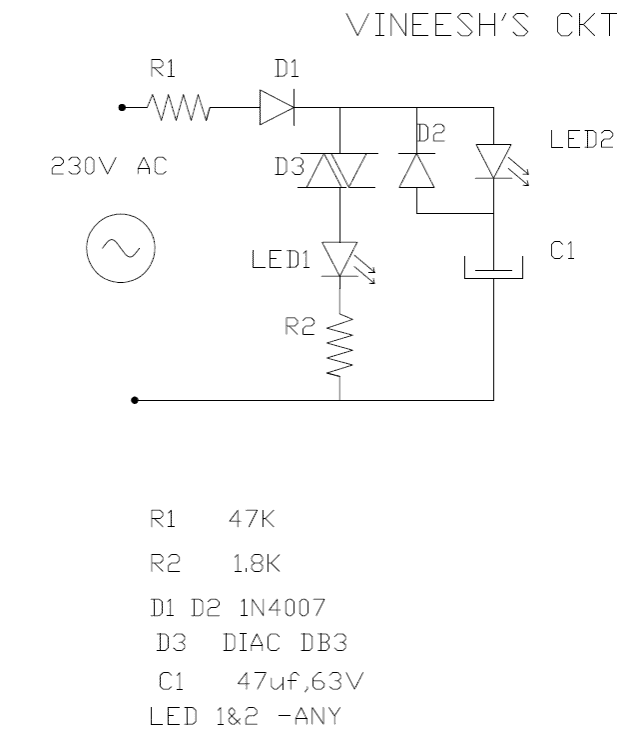
The following triac/diac based mains operated LED flasher circuit which is actually an astable multivibrator circuit utilizes only a diac and resistor arrangement for implementing interesting wig wag flashing of two LEDs. The simple 220V flasher circuit was shared with me by Mr.Vineesh, who is one of the keen followers of this blog. I would […]
12V LED String Light Flasher Circuit for Christmas Decoration
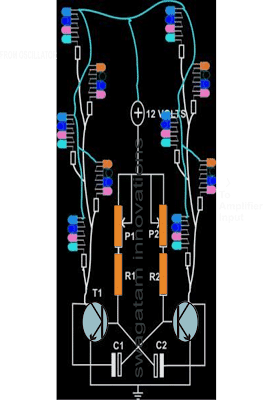
Looking for a simple 12 V LED string light flasher circuit for your next Christmas decoration project? Learn how easy it is to build a LED wig wag string light flasher using just a couple of transistors and few other passive components. LED Flashing String Lights for Decorating Homes A LED flasher schematic has also […]
220V Dual Alternate Lamp Flasher Circuit
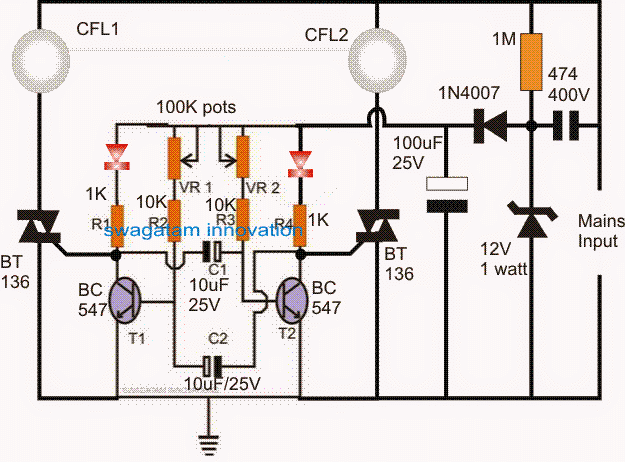
This is a mains operated transformerless flasher circuit that can be used for alternately switching a couple of CFL or similar 220V/120V lamp to produce a decorative lighting effect. Circuit Operation The below shown design depicts a simple mains operated dual or alternate lamp flasher, which is designed to flash or blink two mains operated […]
2-Pin Motorcycle Turn Signal Flasher Indicator Circuit with Buzzer
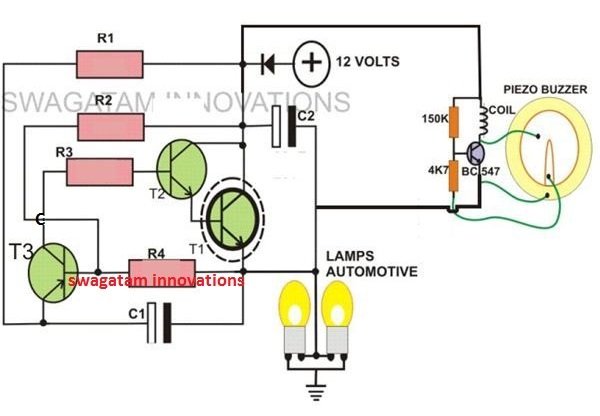
A simple construction procedure of a motorcycle electronic 2 pin turn signal indicator with beeper circuit has been thoroughly I have explained in this article. Normally, the electro-mechanical types of turn signal indicators are not reliable due to low consistency and vulnerability to changing weather conditions. The present design easily withstands the above parameters and […]