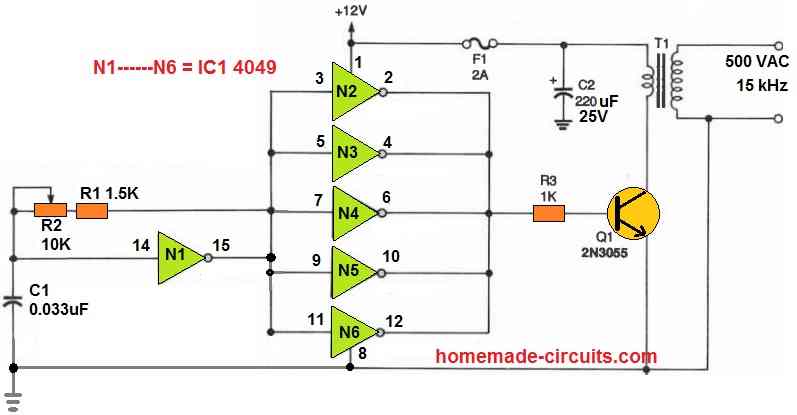
The high-voltage neon tube driver circuit discussed in this article generates 500 volts of high-frequency AC (15 kHz). This circuit may be used to brightly illuminate all types of neon tubes. Neon ranks among the best when it comes to striking, eye-catching lighting displays. Virtually every industry, from pizza restaurants to clothes boutiques, uses neon […]
Newly Updated Circuit Projects:
Darkness Activated PIR Lamp Circuit
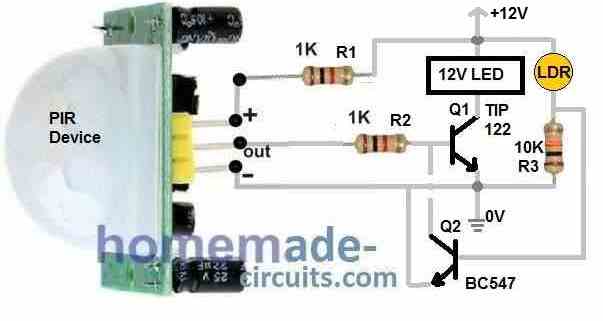
A very simple darkness activated or night activated PIR lamp circuit project has been explained in the following article. Further in the article we also learn how to upgrade this circuit with an additional emergency lamp facility. This darkness activated PIR lamp will work as I have explained below: It will remain deactivated or disabled […]
Automatic Night Activated Wireless Light Circuit for Paintings
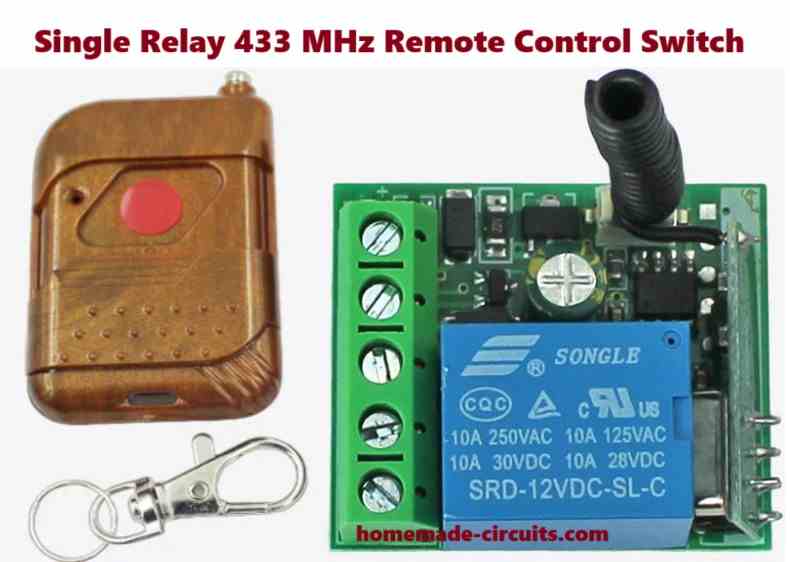
In this article I have explained a basic wireless LED light circuit that may be used to autonomously turn on LED lights to illuminate artworks at nighttime.
LM386 Amplifier Circuit [Working and Application Circuits]

The IC LM386 is a 8-pin tiny power amplifier chip, specially made for operating under relatively low voltage parameters, yet provide considerable amplification. IC LM386 amplifier circuit becomes suitable for applying in small low power audio gadgets like in FM radios, door bells, telephones etc. Let’s begin the IC LM386 amplifier explanation by studying its absolute maximum ratings […]
How Buck-Boost Circuits Work
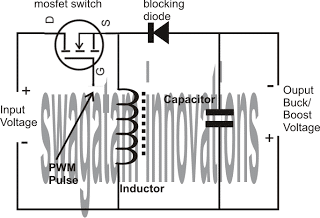
We all have heard a lot about buck and boost circuits and know that basically these circuits are used in SMPS designs for stepping up or stepping down a given voltage at the input. The interesting thing about this technology is that it allows the above functions with negligible heat generation which results in a […]
Electromagnetic Levitation Circuit [Anti-gravity]
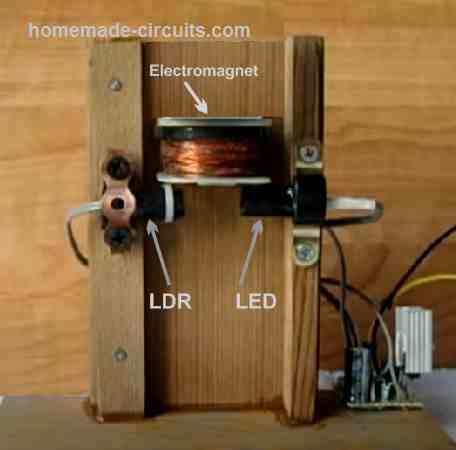
In this post I have explained how to build an electromagnetic levitation circuit which can imitate an anti-gravity phenomenon by ensuring that an iron object remains pulled above the ground by an electromagnet, so that it does not stick to the electromagnet, rather keeps floating between the electromagnet tip and the ground. Basic Working Principle […]