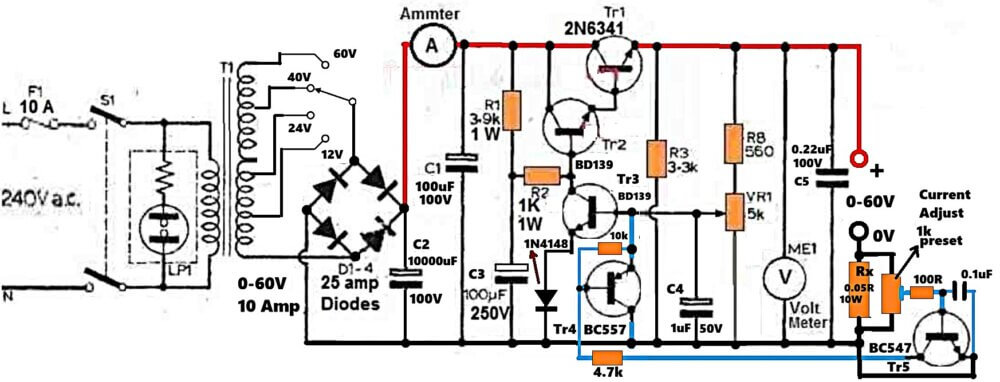
In this post I have explained how an effective and efficient, yet very cheap, and stabilized bench power supply can be designed by any electronic hobbyist for safely testing all types electronic projects and prototypes. The main features that a bench power supply must have are: Audio/Video Representation General Description The majority of the power […]
Power
Passive Power Factor Correction (PFC) Calculator

This passive PFC calculator does not use any MOSFET or PWM or switching frequency. It only uses 50 Hz mains and it only works with inductors and capacitors, so the only thing that matters is the reactance of the inductor and the reactance of the capacitor at the mains frequency. That is why the calculator […]
Calculator to Design a High Power 3kW PFC (Power Factor Correction) Circuit

In this post I will explain how to use this active PFC calculator for calculating high current, high PFC designs. In our example we will be using 230 VAC input and 3 kW output and Vout equal to around 390 V, and we will try to see how each resistor and capacitor gets calculated in […]
Over Current Cut-off Power Supply Using Arduino
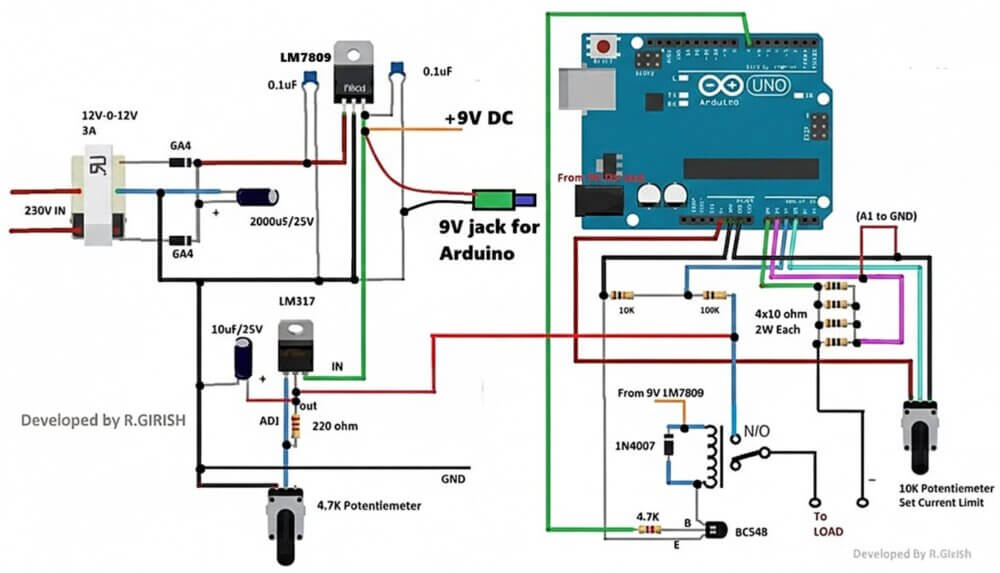
In this post I will show how to construct a battery eliminator / DC variable power supply which will automatically cut-off the supply, if the current flow through the load exceeds the preset threshold level. Main Technical Features The proposed over current cut-off power supply circuit using Arduino has 16 X 2 LCD display, which is […]
Simple SG3525 Sine Wave Inverter Circuit Explained
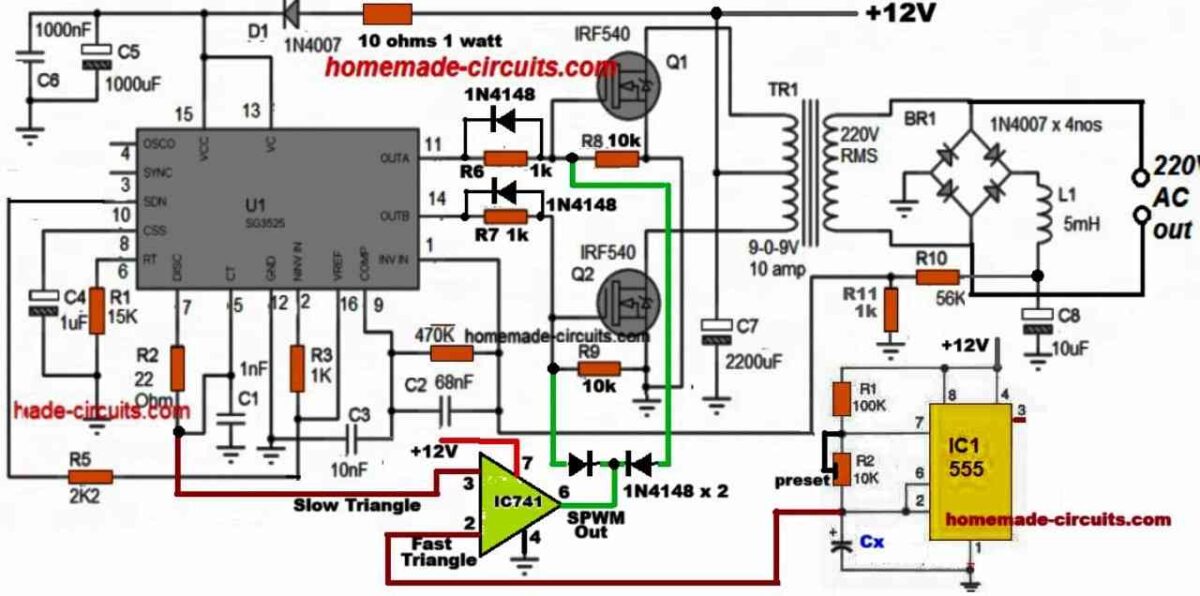
In this post we will discuss two methods of designing pure sine wave inverter circuits using 555 IC based SPWM processing. In the first concept we connect the 555 processors directly with the SG3525 outputs and do the sine wave conversion directly at the MOSFET gates. In the second concept we do it externally and […]
4 Simple Transformerless Power Supply Circuits Explained
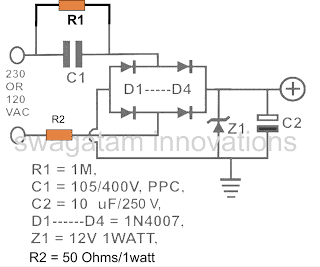
In this post I have explained 4 easy to build, compact simple transformerless power supply circuits. All the circuits presented here are built using capacitive reactance theory for stepping down the input AC mains voltage. All the designs presented here work independently without any transformer, or no transformer. The Transformerless Power Supply Concept As the […]