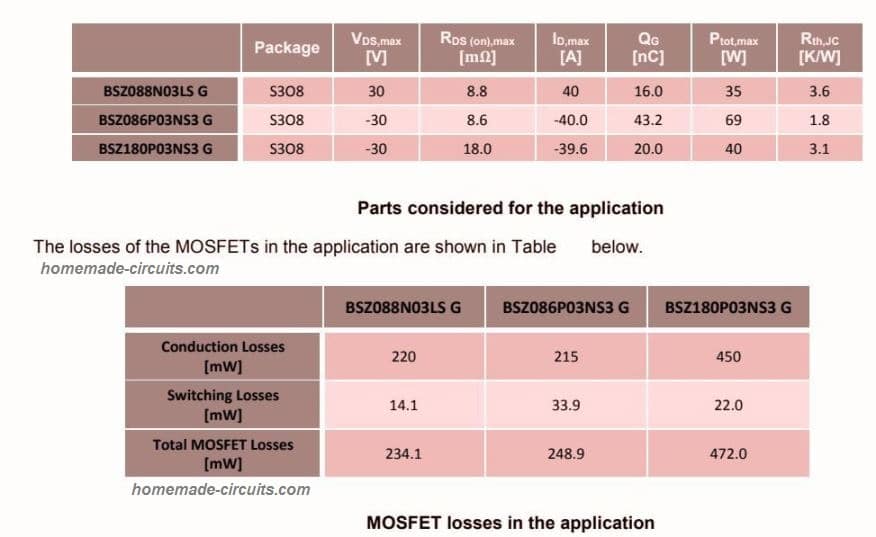
Implementing P-channel MOSFETs in an H-bridge circuit may look easy and enticing, however it may require some stringent calculations and parameters for achieving an optimal response. P-channel MOSFETs are usually implemented for load ON/OFF switching. The ease-of-use of P-channel options on the high side allows them to be very convenient for applications like Low-Voltage Drives […]
MOSFET
How to Connect MOSFET with Arduino using BJT as Level Shifters
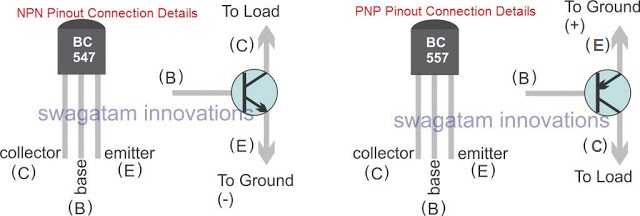
The interfacing of power devices like BJTs, and MOSFETs with Arduino output is a crucial configuration which allows switching high power loads through low power outputs of an Arduino. In this article we elaborately discuss the correct methods of using or connecting transistors like BJTs and mosfets with any microcontroller or an Arduino. Such stages […]
Simple MOSFET Tester and Sorter Circuit
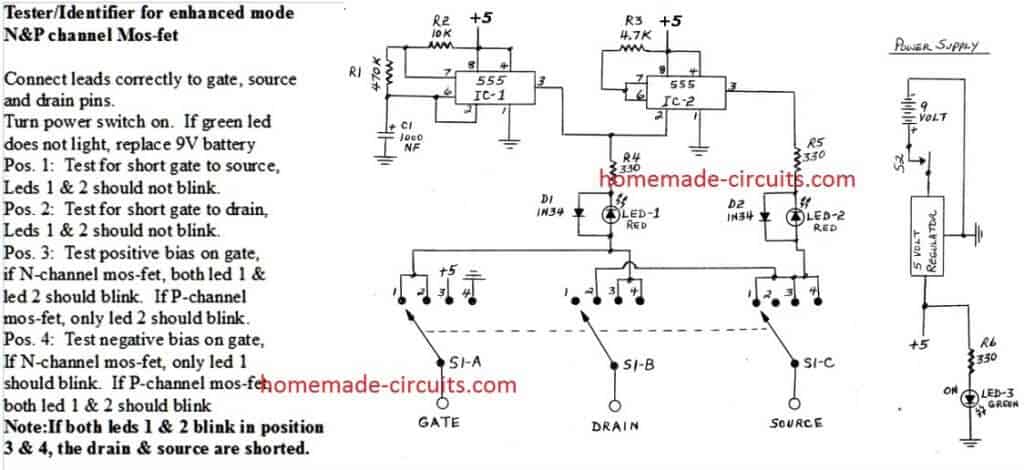
This simple MOSFET tester does a quick job of testing both enhanced mode type N and P-channel mosfets. It checks for shorts between gate, drain and source. Designed By: Henry Bowman It also distinguishes between N and P-channel mosfets. Once the connections are correctly made to the mosfet, all testing is done without reversing connections. […]
SPDT Solid State DC Relay Circuit using MOSFET
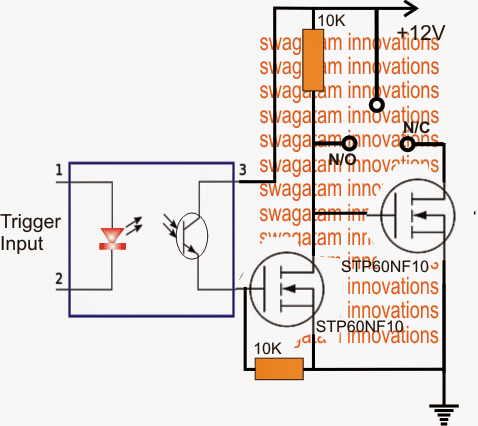
In this post we’ll study a simple high current mosfet based SPDT DC relay, which can be used in place conventional bulky SPDT mechanical relays. The idea was requested by Mr. Abu-Hafss. Working Concept A simple high current SPDT solid state DC relay or a DC SSR can be constructed using a couple of mosfets […]
12V, 24V, 1 Amp MOSFET SMPS Circuit
The post investigates a cheap Chinese made 12V, 1 amp MOSFET based smps circuit which can be modified into 24V 1 amp, or 12V 2 amp smps circuits also. The MOSFET used is STB9NK60Z which is a highly advanced, rugged 600V 7A device specially manufactured for high, unpredictable, voltage environment circuit applications. Reverse Engineering a 12V […]
Half-Bridge Mosfet Driver IC IRS2153(1)D Datasheet
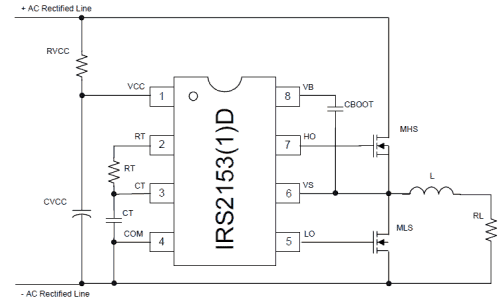
In this post I have explained the datasheet, specifications, pinout configurations and a few application circuit for the IC IRS2153 which is a half-bridge IC from Texas Instruments. The unique feature of this half bridge driver is that it does not have to depend on external logic sources for the operations, rather allows configuring its […]