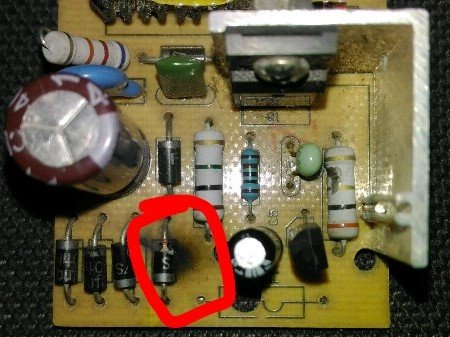
In this post we try to diagnose a burnt SMPS circuit and try to troubleshoot and repair the circuit. The shown unit is a cheap readymade Chinese make SMPS circuit. This article is written as per the request made by Mr. Kesava. My SMPS got Burnt The below attachment is 12v 1.3 amps SMPS for […]
SMPS and Converters
7 Watt LED Driver SMPS Circuit – Current Controlled
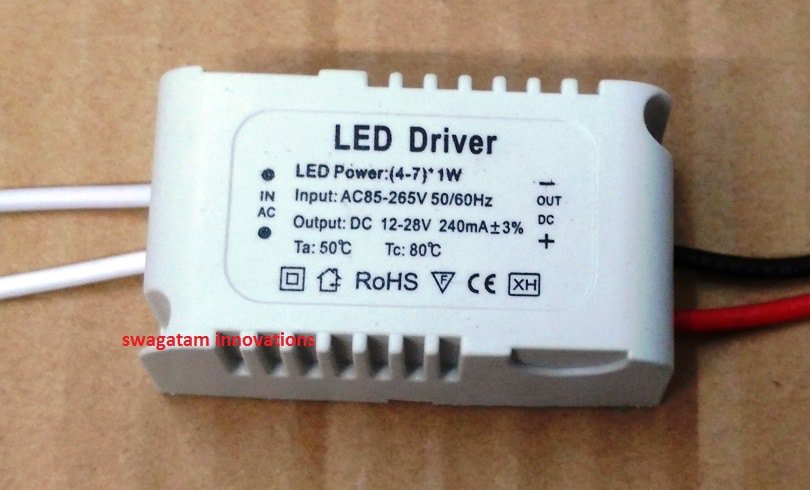
The presented 7 watt LED driver circuit is an SMPS based non-isolated, transformerless circuit which ensures a safe current controlled output for the attached LED, it is very affordable to build without involving complex transformer winding. Constant Current and Load Regulation Objective The aim behind the design of the IC TPS92310 (from TEXAS INSTRUMENTS) is […]
LM317 Variable Switch Mode Power Supply (SMPS)
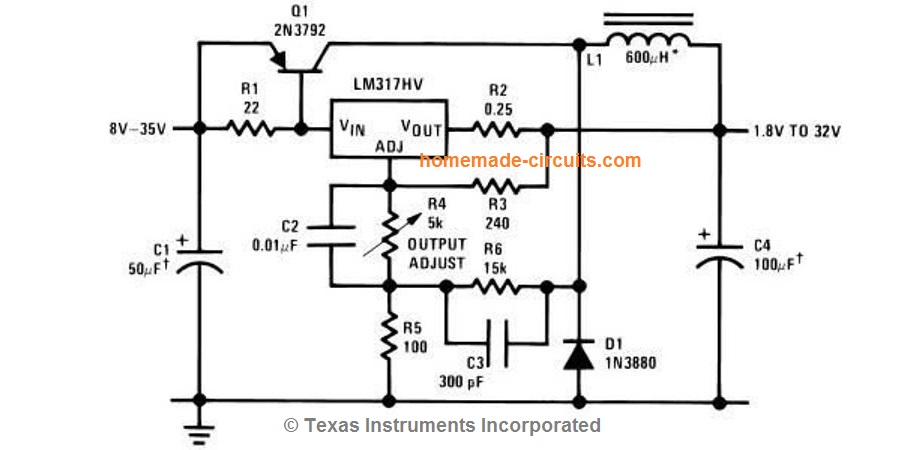
So far in this website we have studied LM317 based linear power supply circuits, here I have explained how an LM317 can be executed as a variable switch mode power or SMPS with zero loss. LM317 as Linear Regulator We all know that an LM317 IC is internally designed to work as a linear voltage […]
Make this 3.3V, 5V, 9V SMPS Circuit
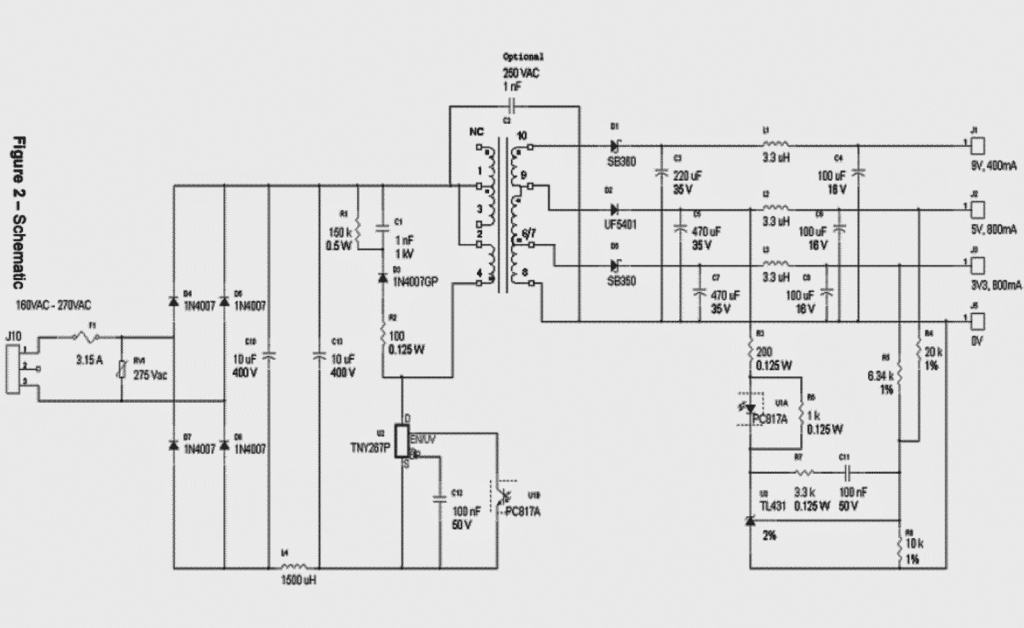
Here I have explained about a simple switch mode power supply (SMPS) circuit which is capable of delivering 3.3V, 5V, 9V at around 800mA from a Mains input range of 100V to 285V, with a complete isolation. The functioning of the proposed 3.3V, 5V, 9V flyback SMPS Circuit may be understood by going through the […]
How Buck Converters Work

The article below presents a comprehensive know how regarding how buck converters work. As the name suggests, a buck converter is designed to oppose or restrict an input current causing an output that may be much lower than the supplied input. In other words it can be considered a step down converter which could be […]
Ferrite Core Material Selection Guide for SMPS
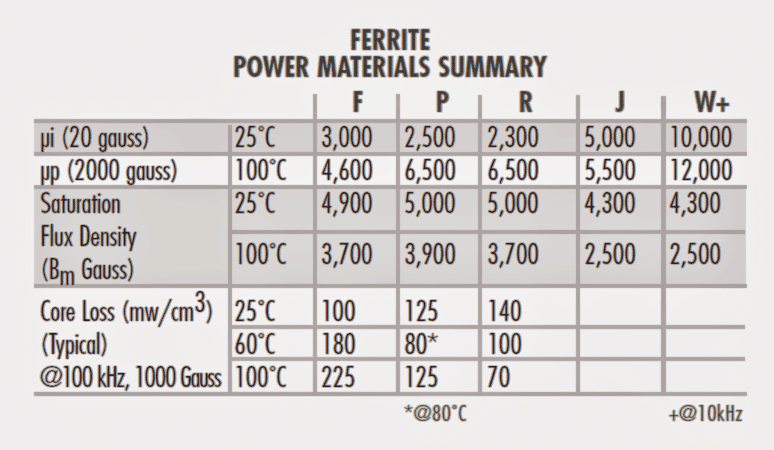
In this post I have explained how to select ferrite core material with the correct specifications for ensuring proper compatibility with a given SMPS circuit design Why Ferrite Core Ferrite is a wonderful core substance for transformers, inverters and inductors in the frequency spectrum 20 kHz to 3 MHz, owing to the benefits of reduced […]