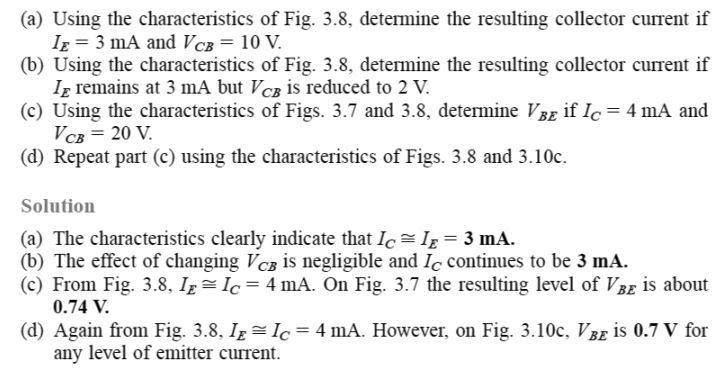
In this section we are going to analyze BJT common-base configuration, and learn regarding its driving point characteristics, reverse saturation current, base to emitter voltage and evaluate the parameters through a practical solved example. In the later parts we will also analyze how to configure a common-base amplifier circuit Introduction The symbols and annotations utilized […]
Common
Common Emitter Amplifier – Characteristics, Biasing, Solved Examples
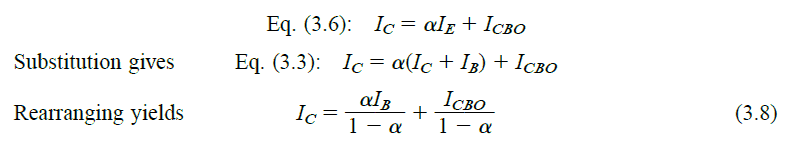
This configuration is known as common-emitter configuration because here the emitter is used as the common negative terminal for the input base signal and the output load. In other words, the emitter terminal becomes the reference terminal to both the input and output stages (meaning common to both the base and collector terminals). Common emitter […]
Transistor Common Collector
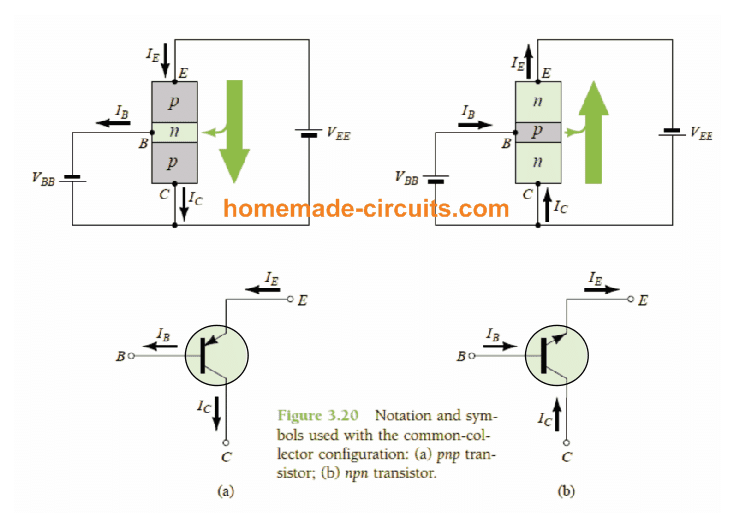
A BJT common collector amplifier is a circuit in which the collector and the base of the BJT share a common input supply, hence the name common collector. In our previous articles we have learned the other two transistor configurations, namely the common-base and the common-emitter. In this article I have explained the third and […]
Illuminating DRL and Turn Lights with Single Common Lamp
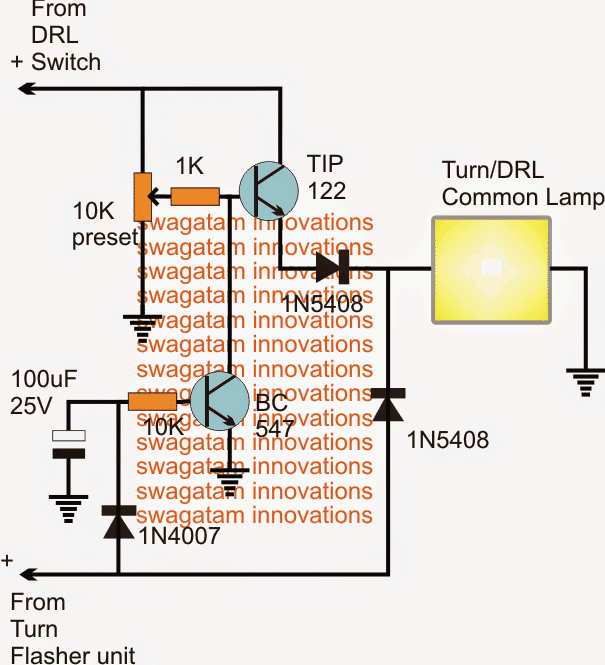
In this article I have explained a simple circuit for enabling the turn signal lamp of any car to carry out a two-way function of DRL lights as well as well the stipulated turn lights. The idea was requested by Mr. Artem. Technical Specifications Thank you for your fanaticism with electronics, this is really noticeable […]